

In the field of aluminum CNC machining, turning is one of the most common processes for manufacturing cylindrical, shaft, sleeve, and various rotationally symmetrical parts. Compared to milling, turning can produce parts with high coaxiality, high roundness, and high surface quality with higher efficiency, and is therefore widely used in the automotive, medical, electronics, robotics, and aerospace industries.
For product engineers, aluminum CNC turning is not just a machining method, but a key manufacturing tool for achieving lightweight design, high-precision assembly, and batch consistency. For the procurement team, choosing a supplier with mature turning capabilities means more stable quality, shorter lead times, and more competitive costs.
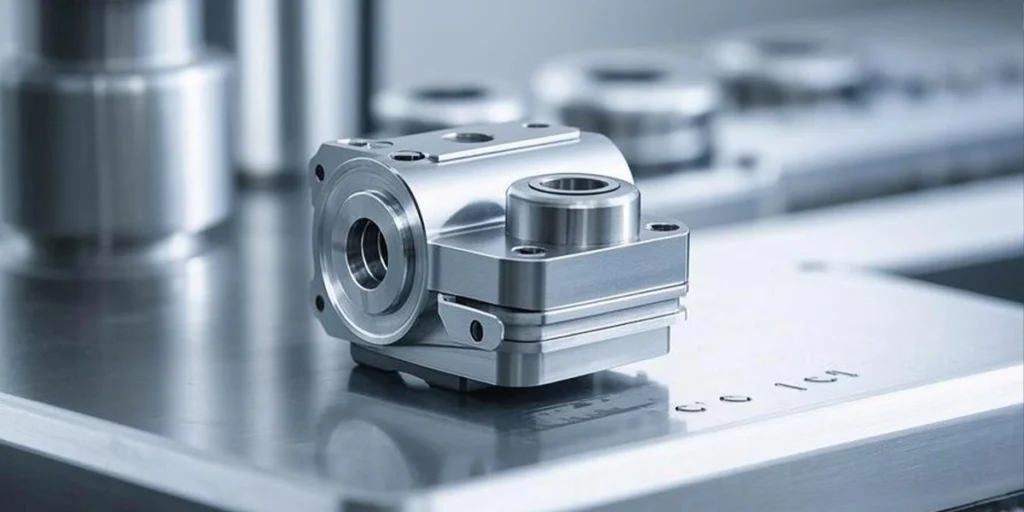
What are aluminum CNC turned parts?
Aluminum CNC turned parts are parts manufactured by rotary cutting of aluminum alloy bars, tubes or pre-made blanks using a CNC lathe.
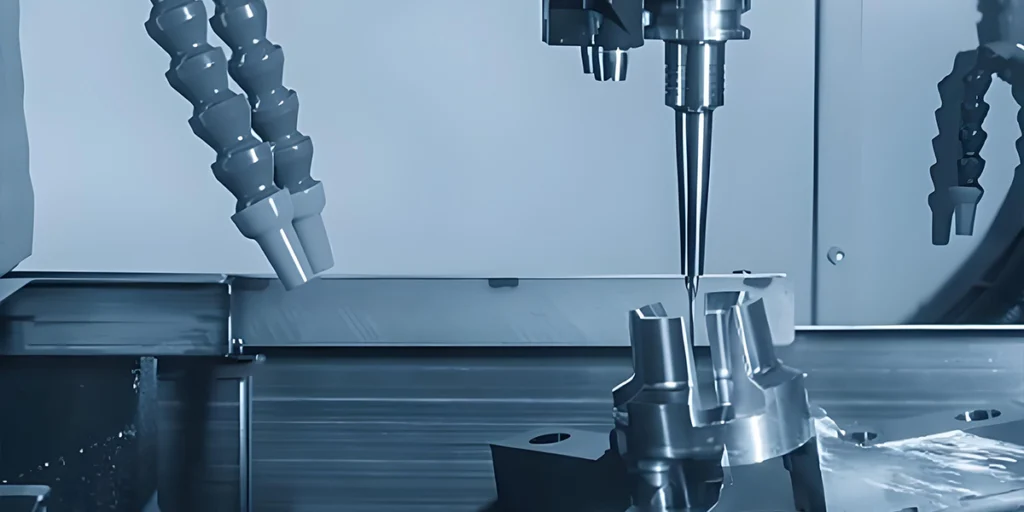
Unlike milling, where the cutting tool rotates, in turning, the workpiece itself rotates at high speed, while the cutting tool moves axially or radially according to a preset program, thereby gradually forming the target size and geometry.
Machining principle of aluminum CNC turning
Turning is particularly suitable for manufacturing parts with rotational characteristics, such as:
- Shaft-type parts
- Bushings and shaft sleeves
- Aluminum casing
- Coupling
- Connectors and fittings
- Precision threaded parts
- Medical device components
Because aluminum has low cutting resistance and good thermal conductivity, it can achieve high cutting speeds during turning while obtaining excellent surface finish.
For most industrial projects, aluminum turned parts are not only lightweight but also meet stringent dimensional tolerance requirements. On modern CNC lathes, many aluminum parts can even be machined in a single setup, including external diameters, internal holes, threads, end faces, and complex contours, thus reducing errors caused by process changeovers.
The difference between aluminum CNC turning and aluminum CNC milling
Although both processes involve CNC machining, they are better suited for different types of parts. Generally speaking:
- Circular or axisymmetric parts are more suitable for turning.
- Prismatic structures and complex planes are more suitable for milling.
- Complex products often require a combination of turning and milling to complete.
For example, an aluminum connector with external threads, internal holes, and side mounting holes may first have its main structure machined by turning, and then its side features machined by milling.
Therefore, suppliers with integrated turning and milling capabilities are often able to manufacture complex aluminum parts more efficiently.
At Zhuohua Hardware, we have approximately dozens of CNC turning and CNC milling machines, capable of supporting the complete manufacturing needs from simple turned parts to complex milling-turned composite parts, providing a one-stop service from prototype development to mass production.
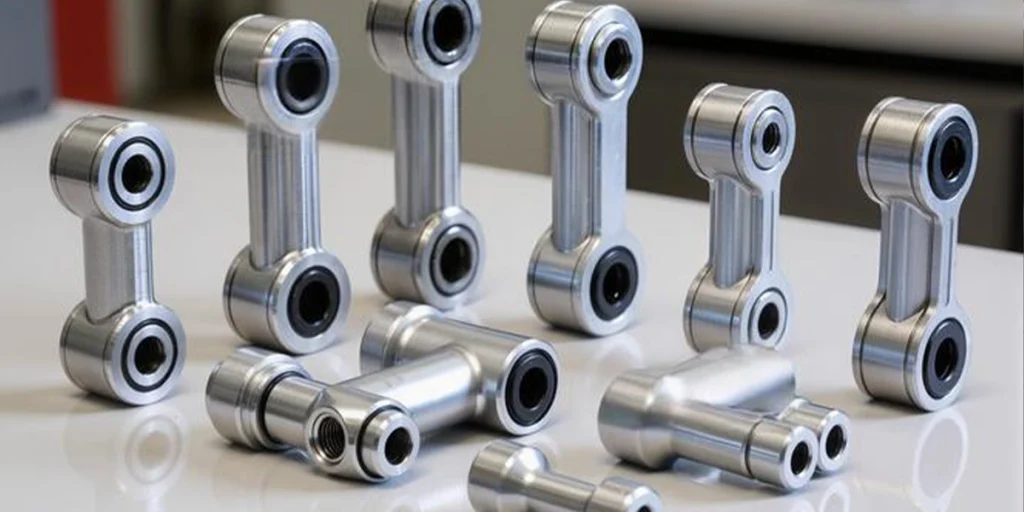
Which parts are suitable for aluminum turning services?
While CNC turning of aluminum is widely used, not all aluminum parts are suitable for this process. The most crucial factor in determining suitability for turning is whether the part possesses a rotationally symmetrical structure.
If the main geometry of a part is shaped around a central axis, then turning is usually the most economical and efficient manufacturing method.
Typical aluminum turning parts
The most common aluminum machined parts include:
- Precision shaft parts
- Aluminum connectors
- Sensor housings
- Motor end caps
- Hydraulic fittings
- Medical device components
- Radiator bodies
- Camera equipment housings
- UAV structural components
These parts typically need to have:
- High roundness
- High coaxiality
- Stable surface roughness
- Precise thread dimensions
Turning processes can meet these requirements.
Aluminum parts suitable for mass production
One of the biggest advantages of turning is its production efficiency. For projects with large batch requirements, such as:
- Automotive connectors
- Industrial automation components
- Electronic product casing
- Medical device components
Turning can achieve extremely high consistency and low unit cost.
Especially with the adoption of automatic feeding systems and multi-axis CNC lathes, production efficiency can be further improved, making it ideal for OEM projects and long-term bulk orders.
Why is turning the preferred machining method for high-precision parts?
Many engineers prioritize turning processes during the design phase because turning inherently offers a high degree of geometric precision control.
For the following key dimensions:
- Outer diameter tolerance
- Inner hole tolerance
- Circular jumping
- Coaxiality
Turning is generally easier to control stably than milling.
In real-world projects, medical device connectors, robot transmission components, and aerospace equipment mounting parts often require strict coaxial precision and assembly consistency. In these cases, high-precision CNC turning becomes the preferred solution.
Leveraging its mature turning processes and quality control system, Zhuohua Hardware can achieve machining accuracy of ±0.02mm and supports machining of various materials such as aluminum alloys, stainless steel, brass, and engineering plastics, providing customers with stable and reliable precision parts manufacturing services.
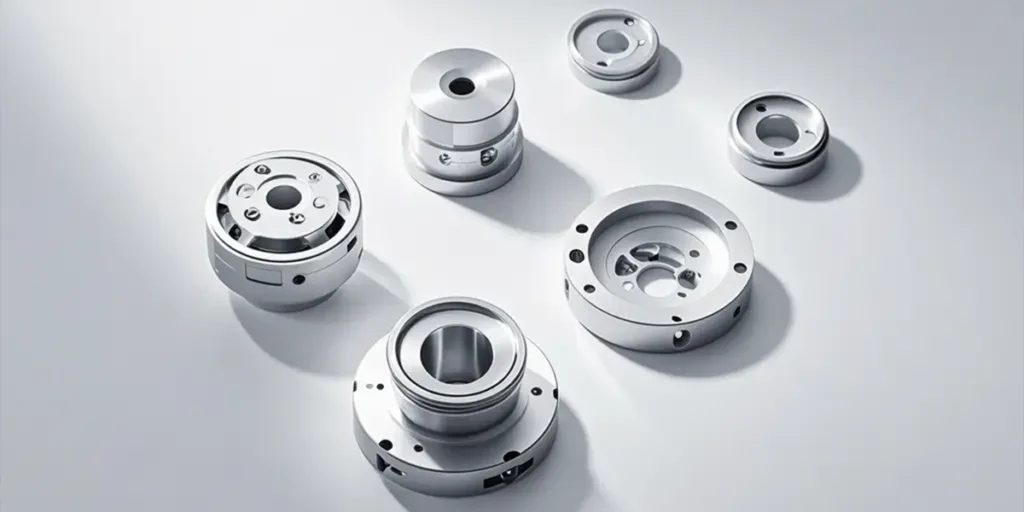
Application of CNC turning of aluminum parts
With the growing demand for lightweight design and high-performance manufacturing, aluminum CNC-machined parts have been widely used in various high-end manufacturing industries. Compared to steel, aluminum alloys can significantly reduce weight while maintaining sufficient strength, and compared to plastic materials, aluminum parts have better mechanical properties and durability. Therefore, more and more engineering teams are choosing aluminum-machined parts as the preferred solution for core structural and functional components.
Automotive industry
The automotive industry is one of the key application areas for aluminum machined parts. Lightweighting has become a crucial direction in product development for both new energy vehicles and traditional vehicles. Every kilogram of weight reduction can potentially lead to better fuel economy or longer driving range.
Common machined aluminum automotive parts include:
- Sensor housing
- Motor connectors
- Heat dissipation components
- Steering system parts
- Suspension system components
- Precision shaft parts
Especially in the field of new energy vehicles, aluminum parts can not only reduce the weight of the whole vehicle, but also have excellent heat dissipation performance, which is particularly important for battery systems and electronic control modules.
Robots and Automated Equipment
The robotics industry has extremely high requirements for the weight and precision of parts. Whether it’s industrial robots, collaborative robots, or automated equipment, the lighter the structural components and the smaller the moment of inertia, the faster the system response speed.
Therefore, a large number of robot components are manufactured using a combination of aluminum CNC turning and milling, for example:
- Robot joint connectors
- Servo motor mounts
- Precision bushings
- Transmission components
- Robot end effector components
In many projects, turning is responsible for completing high-precision rotary structures, while milling is responsible for machining mounting surfaces and functional features.
Medical equipment
The medical industry has extremely strict requirements for dimensional accuracy, surface quality, and batch consistency.
Common aluminum-machined medical parts include:
- Surgical equipment components
- Diagnostic equipment housings
- Medical connectors
- Precision positioning components
These products not only require stable tolerance control, but also good surface treatment to meet equipment reliability and appearance requirements.
Aerospace
The aerospace industry is extremely sensitive to weight control and material properties. Many auxiliary structural components, connectors, and instrument assemblies in aerospace equipment are made of high-strength aluminum alloys.
Common materials include:
- 6061-T6
- 7075-T6
- 7050
These materials can achieve excellent dimensional stability through precision turning, while meeting strict weight control requirements.
For aerospace projects, suppliers not only need to have processing capabilities, but also need to have a sound quality control system and traceable production processes to ensure that every part meets industry standards.
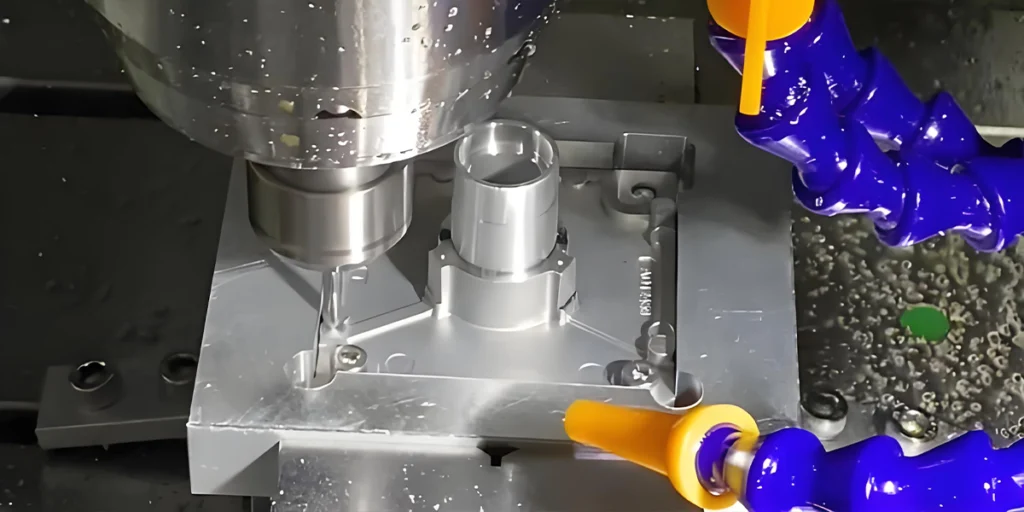
How to ensure surface quality when turning aluminum?
For many customers, dimensional accuracy is only one aspect of product quality. In fact, in projects involving exterior parts, seals, and assemblies, surface quality often directly impacts product performance and customer experience.
A part with acceptable machining precision but a rough surface can still lead to assembly difficulties, seal failure, or substandard appearance. Therefore, high-quality aluminum turning services require attention not only to dimensional control but also to surface quality management.
Choose the right aluminum alloy material
Different aluminum grades have a direct impact on surface quality.
For example:
- 6061 typically achieves a good surface finish.
- 7075 has higher strength, but its cutting texture is more pronounced.
- 5052 is suitable for machining exterior parts.
- 5083 is more suitable for corrosion-resistant structural components
In the initial stage of a project, the choice of materials often determines the effect of subsequent processing and surface treatment.
Optimize tool and cutting parameters
Although aluminum is easy to process, it does not mean that the cutting speed can be increased at will.
To achieve better surface quality, a comprehensive approach is usually required:
- Tool geometry
- Spindle speed
- Feed rate
- Depth of cut
A reasonable combination of parameters can reduce problems such as vibratory cutter, built-up edge, and burrs, thereby improving the final surface quality.
Control of clamping and vibration
Many surface defects actually originate from tiny vibrations during the processing.
Especially in:
- Thin-walled parts
- Long shaft parts
- Large diameter parts
If the clamping is unstable during the processing, it can easily cause vibration marks and dimensional fluctuations.
Therefore, specialized factories usually design special fixtures based on the structure of the parts to improve machining stability.
The Importance of Post-processing
For high-end aluminum parts, turning alone is usually insufficient to meet the final usage requirements.
Common post-processing methods include:
- Anodizing
- Sandblasting
- Polishing
- Wire drawing
- Electropolishing
These processes not only improve the appearance, but also enhance wear resistance and corrosion resistance.
At Zhuohua Hardware, we not only provide precision turning services , but also complete surface treatment solutions to help customers obtain finished parts that meet end-market requirements.
Aluminum CNC turning shell case
Aluminum housings are among the most typical products used in aluminum CNC turning applications. From industrial automation equipment to medical instruments, from sensor modules to high-end electronic products, more and more companies are choosing aluminum alloy housings to replace plastic or die-cast solutions.
Why choose to machine aluminum casings by turning?
For cylindrical or axisymmetric shells, turning offers significant advantages. Compared to other processes, turning can achieve:
- Higher coaxiality
- Better roundness control
- Superior surface finish
- Shorter production cycle
Furthermore, it can be completed in a single clamping operation:
- External diameter machining
- Internal cavity machining
- Thread machining
- Sealing groove machining
This reduces clamping errors and improves production efficiency.
Typical Project Cases
For example, in an industrial sensor housing project, the customer initially used die casting to produce the housing, but due to continuous optimization of the product design during the development phase, the cost of mold modification continued to increase.
Later, the CNC turning solution using 6061 aluminum alloy was adopted:
- Prototyping cycle shortened to a few days
- No mold investment required.
- Improved surface anodizing quality
- Product iteration speed has significantly accelerated.
Ultimately, this significantly reduced development costs and time investment before the product was finalized.
From prototype to mass production
For aluminum casing projects, many clients experience the following:
- Proof of Concept
- Functional testing
- Small-batch trial production
- Mass production
Complete life cycle.
Therefore, suppliers not only need to have the ability to produce samples, but also the ability to scale up production.
Zhuohua Hardware supports the entire production process from single prototype to mass orders. It has dozens of CNC turning and CNC milling machines that can process a variety of aluminum alloy materials and provides post-processing services such as anodizing, sandblasting, and polishing to help customers quickly bring their products to market from the design stage.