

With the development of industries such as robotics, automation equipment, medical devices, aerospace, and new energy vehicles, the market demands increasingly higher levels of precision aluminum machining for parts. Modern products not only require lighter weight and better heat dissipation, but also demand parts with strict dimensional tolerances, stable assembly accuracy, and consistent batch quality.
For engineers, a 0.1mm error might just be a number; but for precision assembly systems, such an error can lead to bearing failure, mechanism jamming, increased vibration, and even a decline in overall machine performance. Therefore, precision aluminum CNC machining is no longer just a matter of material cutting, but a systematic engineering project involving equipment capabilities, process control, inspection systems, and manufacturing experience.
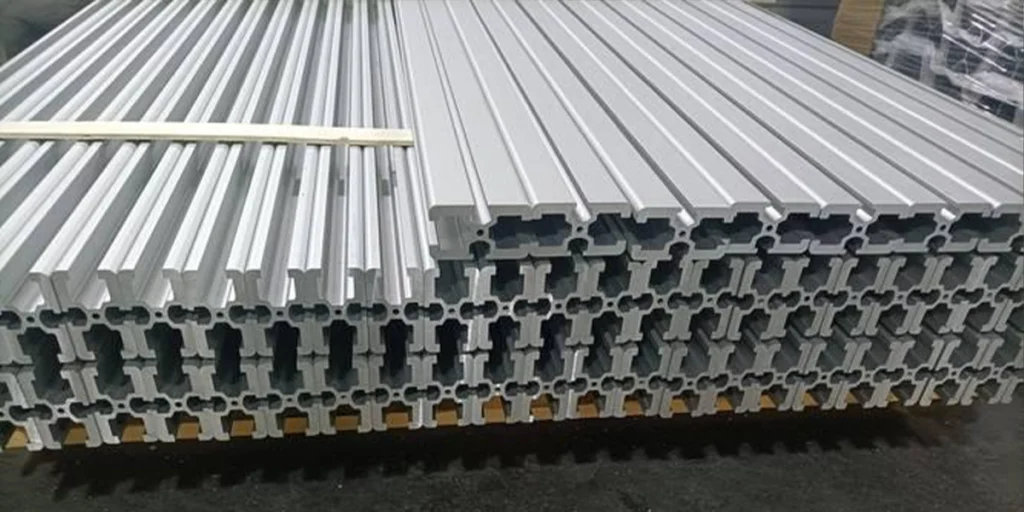
What is precision aluminum machining?
Precision aluminum machining refers to the process of machining aluminum alloy materials using high-precision CNC equipment and strict process control to achieve strict dimensional tolerances, excellent surface quality, and stable batch consistency.
Compared to conventional machining, precision machining focuses more on:
- Size consistency
- Geometric tolerance control
- Surface roughness
- Assembly accuracy
- Long-term batch stability
Many customers believe that precision machining is simply about making dimensions more accurate, but in reality, true precision machining involves the entire manufacturing process.
Precision machining is more than just dimensional control
For high-end aluminum CNC machining projects, the engineering team typically needs to control the following simultaneously:
- Flatness
- Verticality
- Coaxiality
- Position
- Roundness
- Surface roughness
For example, if the hole deviation of a robot joint housing exceeds the allowable range, even if the appearance of the part is completely qualified, it may affect the installation accuracy of the reducer.
Similarly, even if the dimensions of an aluminum component in a medical device meet the requirements, if the surface roughness does not meet the standards, it may affect the sealing performance and long-term reliability.
Therefore, the core objective of precision machining is to ensure that parts operate stably in real-world application environments, rather than simply meeting the numerical requirements on the drawings.
Which industries require precision aluminum machining?
Precision aluminum machining is widely used in:
- Aerospace aluminum components
- Medical equipment parts
- Structural components of automated equipment
- Optical equipment components
- Semiconductor equipment components
- Robot frame and joint system
- High-performance automotive parts
These industries typically require not only that parts conform to design dimensions, but also that they maintain stable performance over a long period of time.
For these types of projects, whether a supplier has mature precision machining experience is often more important than simply comparing prices.
Why is aluminum suitable for precision machining?
Aluminum alloys possess excellent machinability. Compared to stainless steel or titanium alloys, aluminum materials have:
- Lower cutting resistance
- Higher processing efficiency
- Better thermal conductivity
- Easier to obtain high-quality surfaces
At the same time, different aluminum grades can meet different strength requirements.
For example:
- 6061 is suitable for general industrial parts
- 7075 is suitable for high-strength structural components.
- 7050 is suitable for aerospace applications
- 5052 and 5083 are suitable for corrosive environments.
For this reason, aluminum has become one of the most important metallic materials in the global precision manufacturing industry.
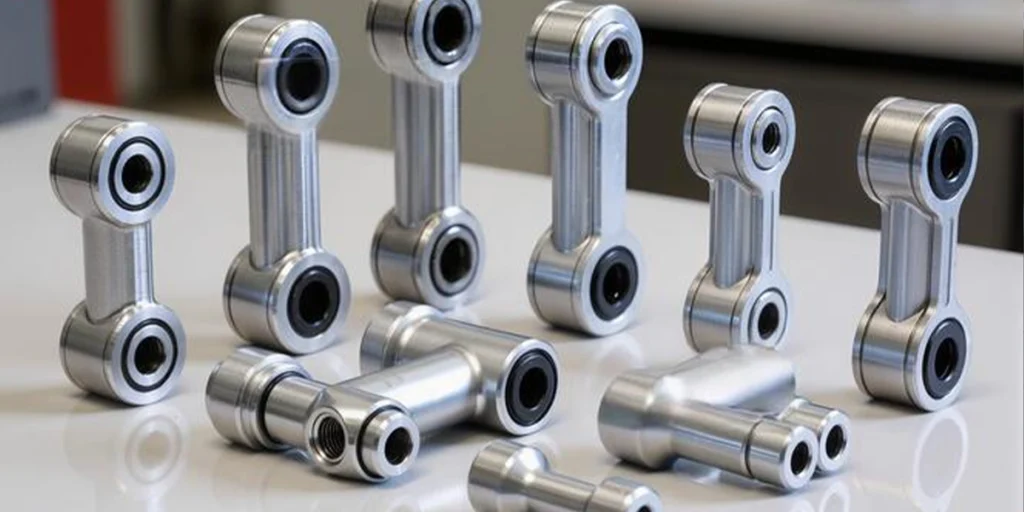
High-precision aluminum parts tolerance standards
When purchasing aluminum CNC parts, many customers ask the same question: What level of precision can you achieve?
In fact, there is no single answer to the question of precision, because different parts, different structures, and different material conditions will all affect the final tolerance capability.
Common tolerance ranges for aluminum CNC machining
In the field of industrial manufacturing, common machining precision is typically as follows:
| Processing grade | Common tolerances |
| General processing | ±0.10mm |
| Precision machining | ±0.05mm |
| High-precision machining | ±0.02mm |
| Ultra-precision machining | ±0.01mm or higher |
For most industrial applications, ±0.05mm is sufficient.
However, higher precision is often necessary in the following applications:
- Optical equipment
- Medical equipment
- Precision automation systems
- Aerospace components
- High-end robotics institutions
Dimensional tolerance is not the only standard
Many customers focus on dimensional tolerances in drawings, but in actual manufacturing, geometric tolerances are often just as important.
For example:
- Coaxiality affects the running accuracy of shaft parts
- Flatness affects sealing performance.
- Verticality affects assembly quality
- Positional accuracy affects the installation of porous structures
Therefore, a truly high-quality aluminum part must not only be dimensionally accurate, but also meet all GD&T requirements.
The importance of surface roughness
In addition to dimensional accuracy, surface quality is also an important indicator for evaluating precision machining capabilities.
Depending on the application, common surface roughness requirements include:
- Ra 3.2 μm
- Ra 1.6 μm
- Ra 0.8 μm
- Ra 0.4 μm
For example:
- Medical devices typically require smoother surfaces.
- Aerospace components require stable contact surfaces.
- Robotic motion mechanisms need to reduce friction.
This not only relates to the product’s appearance, but also directly affects the functional performance of the components.
Consistency control in mass production
What truly tests a supplier’s capabilities is not producing a high-precision sample, but maintaining the same precision consistently across production runs of 100, 1000, or even 10,000 pieces.
This requires the processing plant to have:
- Stable equipment system
- Standardized process flow
- Strict quality control
- Complete detection capabilities
For long-term mass production projects, batch consistency is often more important than individual piece accuracy.
At Zhuohua Hardware, we have long served clients in the robotics, medical, industrial automation, and aerospace industries. Leveraging dozens of CNC machines, a mature process system, and rigorous quality control procedures, we can consistently achieve machining accuracy of ±0.02mm and support one-stop precision CNC aluminum machining services from rapid prototyping to mass production .
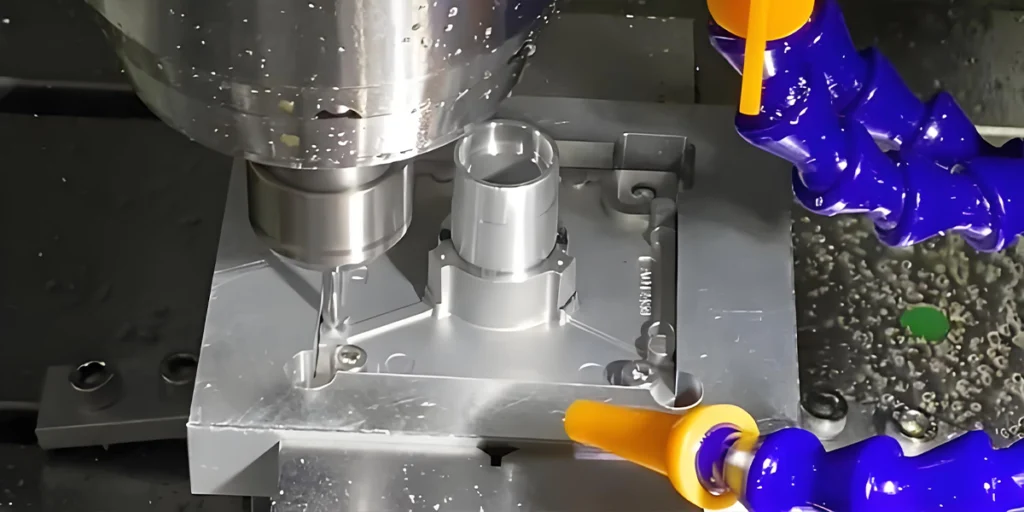
Factors affecting the precision of aluminum parts
Many customers believe that as long as the equipment is advanced enough, it will be able to produce high-precision parts. However, in actual production, precision is never determined by a single factor.
Even using the same equipment, parts produced in different factories may exhibit significant differences in precision and consistency. The true determinant of precision aluminum machining quality is often the combined effect of equipment, processes, materials, and quality control systems.
The Influence of Material Condition on Accuracy
Different aluminum alloys not only have different mechanical properties, but also exhibit significant differences in processing stability.
For example:
- 6061 has excellent machinability and good dimensional stability.
- 7075 has higher strength, but more pronounced processing stress.
- 7050 is commonly used in aerospace, where process control requirements are higher.
- 5052 and 5083 are more suitable for processing sheet metal structural components.
Besides the material grade, the heat treatment condition is equally important.
Materials that have not been adequately stress-released are prone to deformation during processing, especially in large thin-walled structural components and high-precision assemblies.
Therefore, professional suppliers usually assess the material condition in advance based on the part’s structure, rather than simply putting it into production according to the grade specified by the customer.
Equipment rigidity and processing capacity
High-precision machining relies on high-rigidity equipment. When a cutting tool cuts aluminum, the spindle, fixture, and machine tool structure are all affected by the cutting force.
If the equipment lacks rigidity, even if the design drawings are completely correct, the following may occur:
- Size drift
- Roundness error
- Hole position deviation
- Surface vibration marks
The importance of equipment rigidity is further amplified, especially in deep cavity machining, long overhang tool machining, and large aluminum part machining.
This is why complex aluminum parts are usually better suited to be produced in specialized machining centers rather than relying on ordinary machine tools.
Tools and cutting parameters
Although aluminum is a relatively easy metal to process, improper cutting parameters can still affect the final quality.
Frequently asked questions include:
- Excessive burrs
- Surface roughness does not meet standards
- Size fluctuation
- Local deformation
Experienced engineering teams typically adjust the design based on material grade, structural characteristics, and surface requirements:
- Spindle speed
- Feed rate
- Depth of cut
- Tool geometry
These details often directly determine the quality of the final part.
Process design capability
Many accuracy issues do not stem from the equipment, but from the processing method itself.
For example:
- Too many clamping attempts
- Inappropriate selection of reference surface
- Incorrect processing sequence
- Inadequate planning for roughing and finishing processes
These problems can all lead to cumulative errors.
Therefore, for high-precision projects, the engineering team’s process design capabilities are often more critical than the equipment itself.
This is why experienced processing suppliers often provide DFM analysis and manufacturing advice during the quotation stage to help customers identify potential risks in advance.
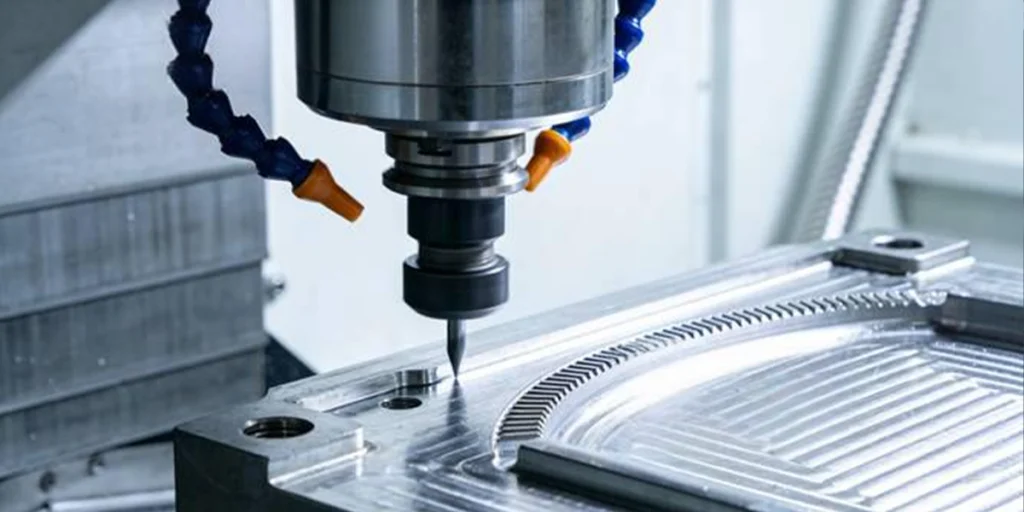
How to ensure the stability of large aluminum machined parts
With the development of automated equipment, new energy equipment, and the robotics industry, more and more customers are starting to purchase large aluminum structural components. Compared to smaller parts, the biggest challenge for large aluminum components is not machining, but maintaining dimensional stability throughout the entire manufacturing process.
For large frames, robot chassis, automated equipment frames, and aerospace structural components, even slight deformation can affect the final assembly quality.
Controlling internal stress of materials
One of the most common problems with large aluminum parts is stress relief deformation. When a large amount of material is removed, the internal stress of the raw material is redistributed, causing the part to warp or deform.
For this type of project, specialized factories typically employ the following methods:
- Pre-stretched materials
- Stress relief materials
- Phased processing strategy
- Post-semi-finishing settling process
These methods can effectively reduce dimensional changes after processing.
Optimize clamping scheme
Large parts often need to support their own weight. If the clamping position is not designed properly, deformation may occur during the machining process.
Therefore, in large-scale aluminum processing projects, engineers typically need to focus on the following:
- Support point layout
- Clamping force control
- Processing direction planning
- Gravity effect compensation
A well-designed clamping system can not only improve accuracy but also reduce scrap rates.
Adopt a phased processing technology
For complex and large parts, the entire machining process is usually not completed in one go.
Standard practices generally include:
- Rough machining
- Stress relief
- Semi-finishing
- Finishing
- Testing and Verification
By gradually approaching the final size, the impact of material deformation can be effectively reduced.
Five-axis machining improves overall stability
For complex, large aluminum parts, five-axis machining can usually reduce the number of repeated clamping operations.
This means:
- Fewer reference conversion errors
- Higher positioning accuracy
- Better surface quality
- More stable batch consistency
Therefore, more and more aerospace, robotics and automation projects are beginning to adopt five-axis machining solutions.
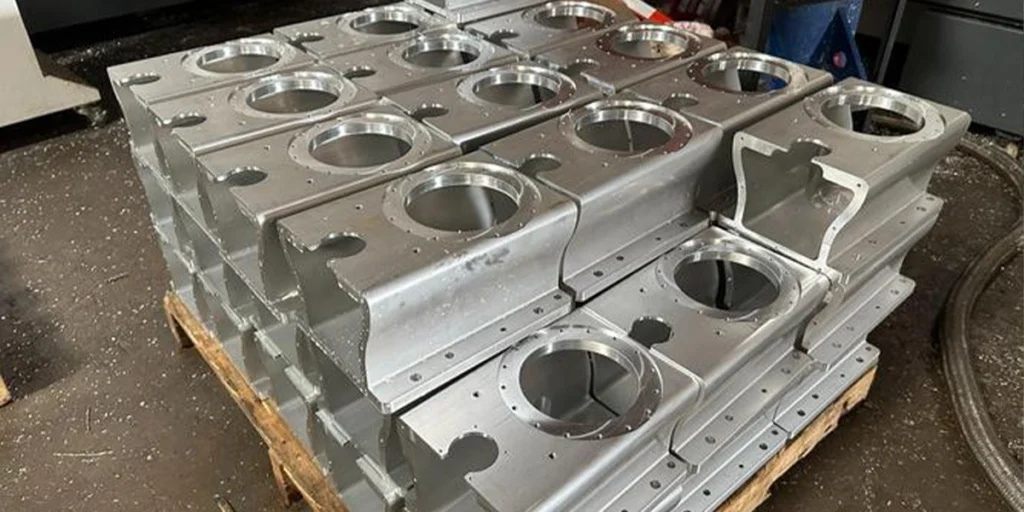
Our ±0.02mm machining capability
For many customers, the most important question when choosing a supplier is not the number of machines, but whether the factory can consistently deliver compliant parts over the long term.
At Zhuohua Hardware, we consider precision control as part of the entire manufacturing process, not just the final inspection stage.
Mature equipment system
We have dozens of CNC machining machines, covering:
- 3-axis CNC milling
- 3+2 axis machining
- Five-axis CNC machining
- CNC turning center
It can meet the processing requirements from simple aluminum structural parts to complex aerospace-grade parts.
For aluminum alloy parts, we support:
- 6061
- 7075
- 7050
- 5052
- 5083
- 2024
And other commonly used engineering aluminum alloy materials.
Stable precision control capability
Our standard machining accuracy can reach ±0.02mm, and for critical dimensional areas, we can implement stricter control according to project requirements.
At the same time, we have established a complete quality management process, including:
- Incoming material inspection
- First article inspection
- Process inspection
- Outbound inspection
Ensure consistent quality levels from sample production to mass production.
One-stop support from prototype to mass production
In addition to our precision machining capabilities, we can also provide customers with:
- DFM Manufacturability Analysis
- Material selection recommendations
- Process optimization support
- Surface treatment services
- Small-batch trial production
- Mass production
Whether it’s robot structural components , lightweight automotive parts , medical equipment components , or aerospace aluminum parts , we can provide suitable CNC machining solutions for aluminum alloys based on project requirements .
For procurement teams, truly valuable suppliers not only process drawings but also help projects reduce risks, shorten development cycles, and improve mass production stability. This is a key reason why more and more global clients choose to cooperate long-term with professional aluminum CNC machining partners.