

As product designs become increasingly complex, traditional three-axis machining can no longer meet the manufacturing requirements of many high-performance parts. Especially in the aerospace, robotics, medical device, and automation industries, design engineers not only demand lighter weight and higher precision, but also hope to achieve better performance through complex geometries.
This is why more and more companies are starting to adopt five-axis CNC machining for aluminum.
Compared to traditional machining methods, five-axis machining can not only manufacture more complex parts, but also reduce machining steps, improve surface quality, and effectively control overall manufacturing costs. For aluminum alloy parts that require complex curved surfaces, deep cavity structures, multi-angle features, and high-precision assembly surfaces, five-axis machining has become an important solution for modern precision manufacturing.
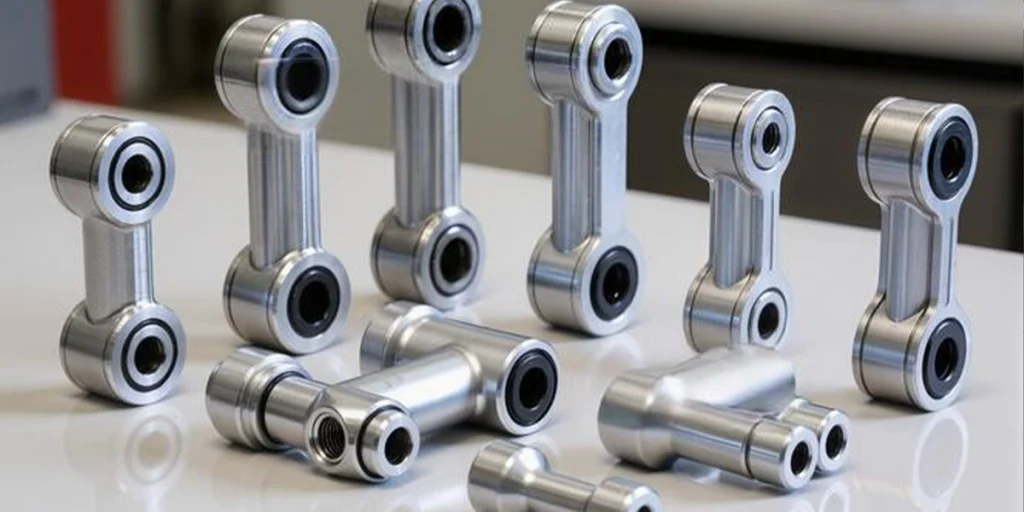
Advantages of 5-axis CNC machining of aluminum parts
The biggest advantage of five-axis CNC machining is that the tool can move simultaneously in five directions, enabling continuous machining of multiple surfaces of the workpiece. This means that many complex parts that previously required multiple setups can now have most of their machining completed in a single setup.
This advantage is particularly pronounced for aluminum alloy parts. Because aluminum itself has excellent machinability and high machining efficiency, when combined with a five-axis machine tool, it can fully utilize its capabilities for high-speed cutting and machining of complex paths.
Manufacturing more complex geometries
Modern product design is increasingly focused on lightweight design and functional integration.
For example:
- Deep cavity structure
- Curved surface shape
- Internal flow channels
- Multi-angle mounting surface
- Integrated structural components
These features are often difficult to achieve through traditional three-axis machining, while five-axis machining allows the tool to approach the workpiece at the optimal angle, greatly increasing machining freedom.
For robots, drones, and aerospace structural components, five-axis machining can often reduce the number of parts and integrate multiple components into a single part, thereby improving overall reliability.
Improve surface quality
When machining complex curved surfaces, five-axis machine tools can maintain a more reasonable tool contact angle.
This means:
- Smaller knife marks
- More uniform surface quality
- Lower post-processing requirements
For aerospace exterior parts, high-end equipment housings, and robot structural components, surface quality not only affects appearance but also assembly precision and product performance.
Shorten production cycle
Five-axis machining typically significantly shortens the overall manufacturing cycle by reducing multiple clamping and intermediate transfer steps. This is especially important for R&D projects that require rapid design validation.
At Zhuohua Hardware, we possess professional five-axis machining capabilities, enabling us to process complex aluminum alloy parts, precision structural components, and multi-faceted feature assemblies. Through rational process planning and CAM programming, we can help customers reduce machining steps and shorten the overall delivery cycle from prototype to mass production.
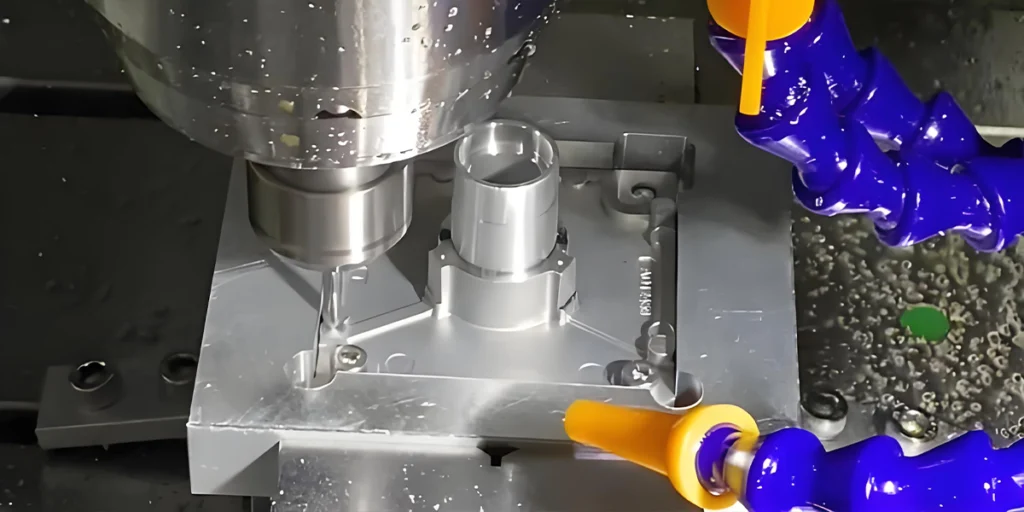
How to manufacture complex curved surfaces in one pass using CNC machining of aluminum
Complex curved surfaces have always been one of the most pressing issues for many engineering teams. For example, aerospace structural components, robot joint assemblies, and high-performance heat sinks often contain numerous continuous and free-form surfaces. These designs can optimize weight, airflow, heat dissipation, or motion performance, but they also increase manufacturing complexity.
When machining these types of parts using traditional three-axis machines, it is usually necessary to constantly change the workpiece position and use a large number of specialized fixtures to complete the cutting of different areas. This not only increases machining time but also increases cumulative errors.
The core value of five-axis machining lies in moving the tool, rather than constantly repositioning the workpiece.
The cutting tool always maintains the optimal cutting angle
During the machining of complex curved surfaces, a five-axis machine tool can automatically adjust the angle of the rotation axis so that the tool always contacts the workpiece surface in the best posture.
This can bring several direct advantages:
- Improve cutting efficiency
- Reduce tool wear
- Reduce oscillation phenomenon
- Improve the smoothness of curved surfaces
Especially when machining high-strength aerospace aluminum alloys such as 7075 and 7050, a proper tool orientation is crucial to ensuring surface quality.
Reduce the use of extra-long cutting tools
Deep cavity structures are a common design feature in aerospace and robotic parts.
In three-axis machining, extra-long tools are often required to reach deep areas, but long tools are prone to:
- Vibration
- Deformation
- Dimensional error
- Surface defects
Five-axis machining allows for the adjustment of the workpiece angle, enabling a shorter tool to enter the machining area. This not only improves machining stability but also achieves higher dimensional accuracy.
Achieve integrated lightweight design
In recent years, the aerospace and robotics industries have been pushing for integrated structural design. Structures that were previously assembled from multiple parts are now increasingly being designed as single, integral pieces that are machined as a single unit.
This allows:
- Reduce the number of fasteners
- Reduce assembly errors
- Improve structural strength
- Reduce overall weight
Five-axis machining is an important manufacturing method to realize this design concept.
For complex aluminum alloy parts, Zhuohua Hardware typically participates in Design for Manufacturing (DFM) analysis early in the project. This evaluation assesses the part’s structure from a machining perspective, helping clients optimize wall thickness, fillets, tool accessibility, and machining path design. This not only improves part manufacturability but also helps control project costs and shorten development cycles.
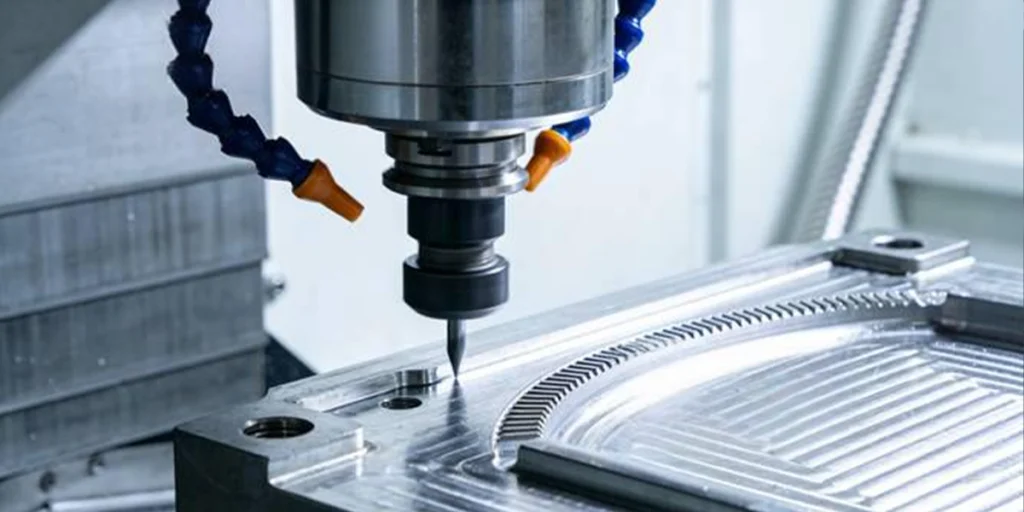
Reduce the impact of clamping on the accuracy of aluminum CNC machining
In the field of precision manufacturing, many dimensional errors do not originate from the machine tool itself, but from the repeated clamping process.
Each repositioning of the workpiece introduces a certain degree of reference deviation. Even with high-precision fixtures and measuring equipment, cumulative errors can still occur after multiple clamping operations. For ordinary structural components, this error may be acceptable, but for high-precision parts in industries such as aerospace, robotics, and medical equipment, deviations of a few micrometers to tens of micrometers can affect the final assembly result.
One of the key advantages of five-axis machining is that it minimizes or even eliminates repeated clamping.
Multi-face machining completed in one clamping
When manufacturing complex parts using traditional three-axis machining, it is usually necessary to:
- Processing the front side
- Turn over and process the back side
- Rotary machining of the side surface
- Secondary clamping for machining inclined surfaces
A complex part may require three or even five or more clamping operations.
Five-axis machining can complete cutting operations in multiple directions in a single clamping state, so that all key features are established on the same coordinate datum.
This processing method can significantly improve:
- Hole position accuracy
- Positional tolerance
- Flatness
- Coaxiality
- Assembly consistency
This advantage is particularly evident for aluminum alloy components that require high-precision fitting.
Improve batch production consistency
For OEM projects, single-piece accuracy is not the only goal. More importantly, is the consistency between the 1st piece and the 1000th piece?
When parts need to be clamped multiple times, the operator, fixture status, and equipment environment can all introduce additional variables. Five-axis machining, by reducing human intervention, can effectively improve batch stability.
This is especially important for the following products:
- Medical device components
- Robot moving parts
- Precision electronic structural components
- Aviation connectors
In mass production, stable consistency is often more valuable than simply pursuing extreme precision.
Reduce the difficulty of subsequent assembly
Many customers focus on parts manufacturing costs during the development phase, but only realize that the real cost comes from assembly when they reach the mass production stage.
If there are dimensional deviations between multiple parts, it may result in:
- Increased assembly time
- Increased return-to-work rate
- Product performance is unstable.
By using five-axis single-clamp machining, critical dimensional relationships can be better guaranteed, reducing assembly risks from the source.
In Zhuohua Hardware’s actual projects, we frequently manufacture complex aluminum alloy structural components for customers in the robotics, automation equipment, and precision instrument industries. Through five-axis machining combined with process inspection, we can effectively control positional tolerances and assembly standards, thereby helping customers reduce subsequent assembly costs and improve product reliability.
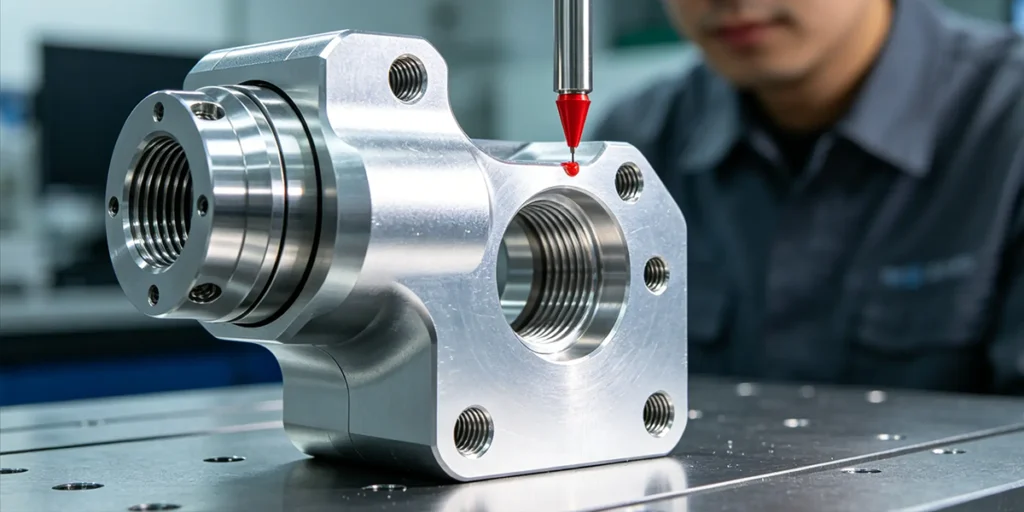
Application areas of aluminum CNC machined parts
The aerospace and robotics industries are among the most widespread applications of five-axis CNC machining of aluminum. Although the two industries have different product uses, they share similar requirements for parts:
- Lightweight
- High strength
- High precision
- Complex structures
- Long-term stability
These are precisely the problems that five-axis machining excels at solving.
Aerospace aluminum parts processing
The aerospace industry widely uses high-performance aluminum alloys, such as:
- 7075
- 7050
- 2024
These materials have an excellent strength-to-weight ratio and are important materials for aircraft structural components, drone components, and aviation equipment.
Commonly machined parts include:
- Mounting bracket
- Connecting structural components
- Fuselage frame assembly
- Electronic device casing
- Hydraulic system components
These parts typically have the following characteristics:
- Thin-walled structure
- Deep cavity design
- Numerous curved surfaces
- Strict tolerance requirements
Five-axis machining allows for the removal of more material while maintaining structural strength, thus achieving lightweight design.
For aerospace projects, every bit of weight reduction can lead to a reduction in long-term operating costs. Therefore, five-axis machining has become an important technical route for the manufacturing of aerospace aluminum parts.
Robotic aluminum structural component processing
With the rapid development of robots and automated equipment, more and more structural components are being made of aluminum alloys.
Typical products include:
- Robotic arm
- Robot chassis
- End effector
- Automated equipment framework
- Vision system support
The robotics industry places great emphasis on motion efficiency. Therefore, parts must not only be lightweight but also maintain sufficient rigidity.
Many robot parts employ hollow structures, rib-reinforced structures, and complex weight-reduction designs, features that typically require five-axis machining for efficient completion.
By optimizing the processing path and structural design, the following can be achieved:
- Lighter weight
- Higher rigidity
- Faster motion response
- Lower energy consumption
This is why high-end robot manufacturers are increasingly inclined to use five-axis machining for aluminum structural components.
Manufacturing support from prototype to mass production
Whether it’s an aerospace project or a robotics project, what customers care about most is not just processing capabilities, but whether the supplier can support the entire product lifecycle.
From an engineering perspective, a reliable aluminum CNC machining partner should possess the following qualities:
- DFM design optimization capabilities
- Prototype development capabilities
- Small-batch trial production capability
- Stable mass production capability
- Complete quality control system
Zhuohua Hardware has long served the robotics automation , medical precision components , and high-end industrial equipment industries . With dozens of CNC machines, 3-axis to 5-axis machining capabilities, and experience in processing more than 50 types of metals and plastics , we can support the entire manufacturing process from rapid prototyping to mass production.
For complex aluminum alloy parts , we not only provide five-axis CNC machining services , but also assist customers in optimizing structural design, machining strategies and cost solutions at the beginning of the project, helping the project enter the stable production stage more quickly.