

In the global precision manufacturing supply chain, China has become a major production base for CNC machining of brass. From electronic connectors to industrial valves, from automotive parts to medical equipment components, an increasing number of international buyers are shifting their brass parts orders to Chinese suppliers.
However, choosing a suitable brass CNC machining manufacturer is not easy for many purchasing managers, engineers, and product development teams. The market is flooded with suppliers, varying greatly in equipment capabilities, quality management levels, and project experience. Using price as the sole selection criterion may ultimately lead to risks such as inconsistent quality, delivery delays, or even project failure.
As a precision machining manufacturer that has long served European and American customers, we have found that an excellent brass machining partner is not just a parts supplier, but also a technical partner who can participate in project optimization, reduce manufacturing costs, and ensure long-term stable delivery.
This article will help you understand the advantages of China’s brass CNC machining industry and how to scientifically evaluate a brass machining supplier.
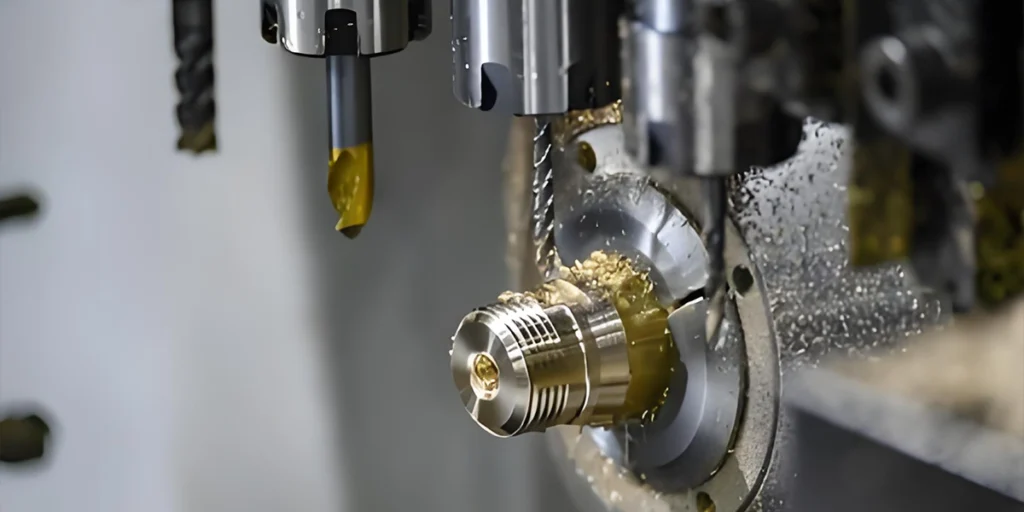
Advantages of China’s Brass CNC Machining Industry
Over the past two decades, China’s manufacturing industry has evolved from simply having a cost advantage to a complete supply chain system that combines large-scale production, advanced equipment, and engineering capabilities. This advantage is particularly evident in the field of CNC machining of brass.
Complete material supply system
The stability of brass processing largely depends on the quality of raw materials. China has a mature copper alloy supply chain system, which can reliably supply a variety of common brass grades, including:
- C220 Brass
- C230 Brass
- C260 Brass
- C360 Free-Cutting Brass
- CW614N Brass
- HPb59 series brass
For projects that require mass production, a stable supply of materials means more consistent processing performance and more reliable delivery cycles.
Compared to some regions that rely on imported materials, China’s supply chain is usually able to respond to customer needs more quickly while effectively controlling material costs.
Strong manufacturing capabilities
China has formed a highly concentrated precision machining industry cluster. For brass parts manufacturing, established suppliers typically possess the following characteristics:
- CNC turning capability
- CNC milling capability
- Multi-axis composite machining capability
- Automated mass production capability
- Surface treatment supporting capabilities
This means that customers do not need to find multiple suppliers to complete different processes, but can complete the entire process from raw material procurement to finished product delivery through a single supplier.
For example, for a complex brass connector project, the supplier can complete the following simultaneously:
- Turning
- Milling
- Drilling
- Tapping
- Polishing
- Electroplating
- Final testing
This reduces the difficulty of supply chain management.
The advantage of balancing cost and quality
Many purchasing personnel initially focus on price when engaging with the Chinese supply chain. In fact, established Chinese brass processing companies can offer more than just a cost advantage.
True competitiveness comes from:
- Automated equipment improves efficiency
- Large-scale procurement reduces material costs.
- Extensive experience reduces trial-and-error costs
- A complete process chain reduces outsourcing costs
For mid-to-high-end projects, customers often get better value for money, rather than simply a lower price.
Engineering support capabilities are continuously improving
Modern manufacturing projects are increasingly emphasizing Design for Manufacturing (DFM). Excellent Chinese suppliers have gradually shifted from “processing according to drawings” to “engineering-assisted manufacturing”.
In the early stages of a project, an experienced engineering team can assist clients by:
- Optimize structural design
- Reduce processing difficulty
- Reduce material waste
- Shorten production cycle
- Control project costs
For European and American customers, this kind of engineering support often brings value far exceeding the price difference per unit.
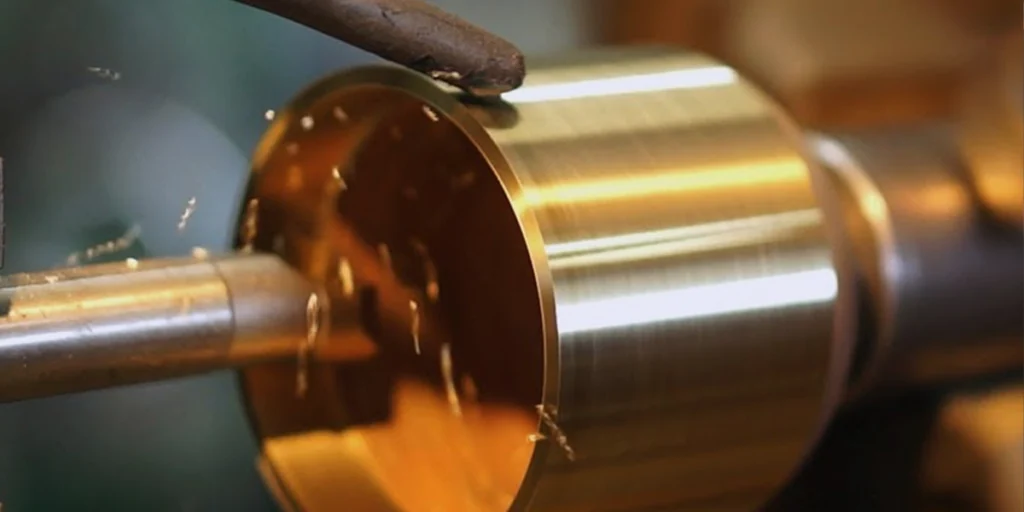
How to evaluate brass CNC machining suppliers
When selecting a brass CNC machining supplier, price should not be the sole criterion. A supplier offering a low price may incur higher hidden costs during subsequent production, such as quality issues, delivery delays, or the risk of rework.
From an engineering and procurement perspective, the following three aspects are usually the most worthy of close examination.
Equipment capabilities
Equipment capabilities determine what kind of parts a supplier can process and whether it can maintain stable quality over the long term.
When evaluating suppliers, it is recommended to focus on the following:
Types of processing equipment
Does the supplier possess:
- CNC lathe
- CNC milling machine
- Milling and turning composite equipment
- Multi-axis machining center
For complex brass parts, multi-axis equipment can often reduce the number of clamping operations, thereby improving accuracy and consistency.
Processing size range
Different suppliers can handle a wide range of part sizes.
Before purchasing, the following should be confirmed:
- Maximum machining diameter
- Maximum machining length
- Minimum machinable feature size
- Complex structure processing capability
These parameters directly determine whether a project is suitable for production by that supplier.
Mass production capability
Many factories can produce samples, but they may not be able to achieve stable mass production.
The procurement team should further understand:
- Number of devices
- Degree of automation
- Monthly production capacity level
- Capacity for capacity expansion
Taking Zhuohua Hardware as an example, we have:
- Dozens of CNC turning and milling machines
- 3-axis, 3+2-axis and 5-axis machining capabilities
- Prototype to mass production support
It can meet the needs of projects ranging from small-batch validation to long-term mass production.
Quality System
Brass parts are commonly used in connection, sealing, electrical conductivity, and fluid control systems. Therefore, quality stability is often more important than price.
Incoming material quality control
Excellent suppliers will rigorously verify the raw materials.
include:
- Material grade confirmation
- Chemical composition verification
- Materials Certificate Management
To avoid the risk of subsequent failure due to material issues.
Process quality control
Quality management during the production process is equally crucial.
Key points include:
- First article inspection
- Inspection system
- SPC process control
- Critical Dimension Monitoring
Reduce batch defect rate through process control.
Final quality verification
Finished products typically require the following before shipment:
- Size inspection
- Visual inspection
- Functional verification
- Inspection report output
For international procurement projects, these quality documents are often an important basis for customer review.
Quality system certification
When making a purchase, it is advisable to confirm whether the supplier has the relevant certifications.
For example:
- ISO 9001
- ISO 13485
- AS9100 (if applicable to aerospace projects)
These certifications do not directly represent processing capabilities, but they can reflect a company’s quality management level.

Chinese brass CNC machining manufacturer
For many procurement teams, choosing between Chinese suppliers and local suppliers is not simply a matter of price, but requires comprehensive consideration of cost, quality, delivery time, engineering support, and supply chain risks.
With the development of global manufacturing, more and more companies are adopting a “dual supply chain” strategy, which means retaining both local and overseas suppliers to achieve a balance between cost and supply stability.
So, what are the differences between Chinese brass CNC machining manufacturers and local suppliers?
Cost structure differences
Cost is usually one of the most important factors in purchasing decisions.
Local suppliers typically have:
- Shorter communication links
- Faster on-site support
- Lower logistics complexity
But at the same time, it often faces the following challenges:
- Higher labor costs
- Higher operating costs
- Higher equipment investment costs
These costs will ultimately be reflected in the parts price.
In contrast, Chinese suppliers are typically able to achieve more competitive manufacturing costs by leveraging large-scale production and mature supply chains, especially in medium- and high-volume projects.
For projects involving complex brass parts or requiring long-term mass production, the overall procurement cost difference is often considerable.
Differences in manufacturing capabilities
Many local processing plants in Europe and America focus on high-value, small-batch projects.
Chinese manufacturers, on the other hand, tend to cover both:
- Rapid prototyping
- Small batch production
- Medium-volume manufacturing
- Large-volume delivery
This means that customers do not need to frequently change suppliers at different stages of the product lifecycle.
For projects that require continuous iteration, this capability can significantly reduce supply chain management costs.
For example, a brass connector project might require dozens of samples during product development, hundreds of trial production units during market validation, and tens or even hundreds of thousands of units during mass production. A supplier with full production capabilities can support the entire process without repeatedly seeking new partners.
Differences in engineering resources
In the past, many overseas customers believed that Chinese suppliers were only responsible for executing processing tasks. In reality, with the upgrading of the manufacturing industry, more and more Chinese processing companies have established mature engineering teams.
During the project initiation phase, experienced engineers can assist clients by:
- Optimize part structure
- Reduce unnecessary features
- Improve manufacturability
- Reduce processing costs
- Improve production efficiency
For procurement teams, this kind of engineering support often brings long-term value far exceeding the savings per unit price.
Delivery capability differences
Delivery time stability has become a crucial indicator for supplier evaluation. Excellent Chinese brass processing companies typically possess the following characteristics:
- Multi-device parallel production capability
- Stable material supply system
- Complete quality management process
- Professional project management team
This allows it to meet shorter delivery cycle requirements while ensuring quality.
For global procurement projects, the real focus should not be on the location of the factory, but on whether the supplier has the ability to deliver consistently and reliably.
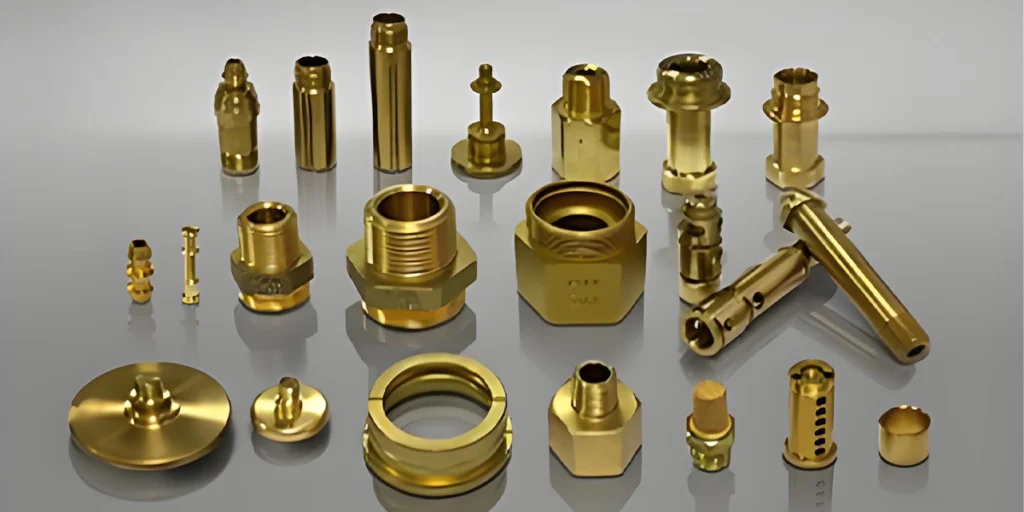
Why are more and more procurements shifting to Chinese supply chains?
Over the past few years, the global manufacturing procurement landscape has been undergoing significant changes. More and more OEMs, equipment manufacturers, and industrial procurement teams are shifting more projects to the Chinese supply chain. This change is not solely due to cost factors, but rather a result of improved overall competitiveness.
Manufacturing technology continues to upgrade
Modern Chinese processing enterprises have introduced a large number of:
- Multi-axis machining center
- Automated production unit
- Online detection system
- Digital production management
The application of these technologies has significantly improved processing quality and production efficiency.
For precision brass parts, modern equipment can achieve more stable results:
- Processing of minute features
- High-precision hole position control
- Complex contour processing
- Batch Consistency Production
This is also a key reason why more and more international customers are willing to entrust key component projects to Chinese suppliers for manufacturing.
More mature global procurement experience
In the past, one of the biggest concerns in international procurement was communication issues. Today, established Chinese export-oriented manufacturers have built comprehensive international business systems.
Typically available:
- English technical support
- International Project Management
- DFM Recommendations
- Quick quote response
- Global logistics support
The procurement process is becoming increasingly similar to the service standards of local suppliers in Europe and the United States.
A more complete supply chain ecosystem
Manufacturing brass parts often involves more than just machining. A complete project may also require:
- Raw material procurement
- CNC turning
- CNC milling
- Tapping
- Surface treatment
- Assembly
- Testing
- Package
One of the biggest advantages of China’s supply chain is its high degree of industrial concentration.
Customers can typically complete most of the production process with one supplier, thus reducing the complexity of managing multiple suppliers.
Quickly respond to market demands
The market is changing faster and faster. Businesses need to:
- Faster prototyping
- Faster trial production
- Faster mass production
Supplier responsiveness has become a crucial component of competitiveness.
Established Chinese brass processing manufacturers typically leverage abundant equipment resources and mature process libraries to significantly shorten project start-up cycles. For new product development projects, this speed advantage often translates to faster market entry.
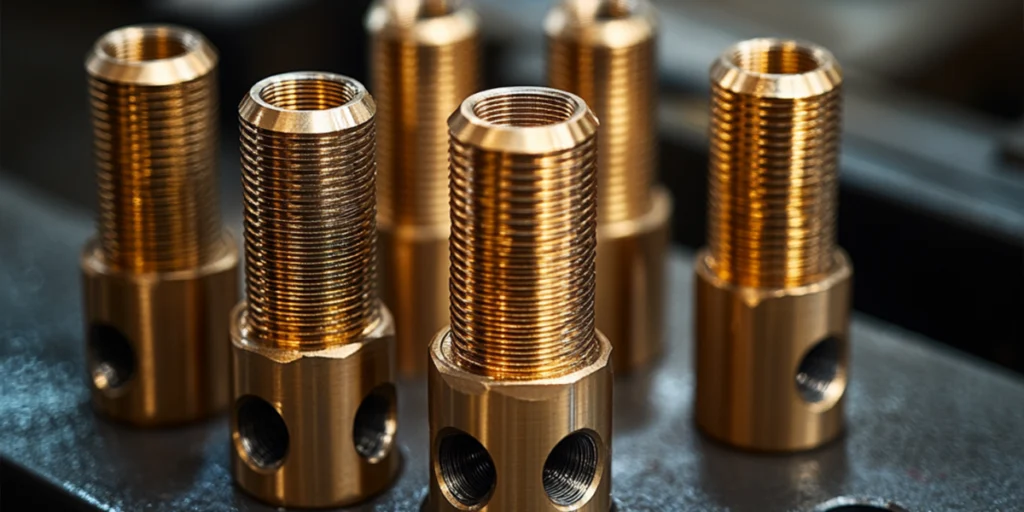
Zhuohua Hardware Brass Processing Advantages
When choosing a brass CNC machining partner, what clients truly need is a manufacturer that can provide long-term, stable support for project development. Beyond equipment and production capacity, engineering capabilities, quality management, and project execution capabilities are even more crucial.
As a CNC machining factory specializing in precision parts, Zhuohua Hardware has long provided brass CNC machining solutions to customers worldwide.
Extensive experience in brass processing
We are able to process a variety of common brass materials, including:
- C220 Brass
- C230 Brass
- C260 Brass
- C360 Brass
- Custom brass alloy
Our products are widely used in:
- Industrial equipment
- Automotive parts
- Medical equipment
- Electronic connectors
- Fluid control system
Whether it’s a simple machined part or a complex structural component, we can provide corresponding manufacturing solutions.
Integrated turning and milling capabilities
Many brass parts require not only turning but also subsequent milling. For example:
- Planar structure
- Drilling characteristics
- Keyway
- Irregular outline
Based on the company’s existing manufacturing system, we are able to provide:
- CNC turning
- CNC milling
- 3-axis machining
- 3+2 axis machining
- 5-axis machining
Reduce the complexity for customers in coordinating production across multiple suppliers.
High-precision manufacturing capabilities
For precision brass parts, dimensional stability is paramount. Our machining capabilities include:
- Accuracy up to ±0.02mm
- Minimum feature size: 0.5mm
- Strict process quality control
- Complete test report support
Helping customers meet the demanding needs of industrial applications.
From prototype to mass production support
Many projects begin with proof of concept and then gradually move to mass production. We are able to support:
- Rapid prototyping
- Small-batch trial production
- Medium-volume production
- Long-term bulk supply
To ensure that customers maintain supply chain continuity throughout the entire product lifecycle.
Engineering support and DFM optimization
In addition to manufacturing, our engineering team also provides DFM support in the early stages of a project.
include:
- Material Recommendations
- Structural optimization recommendations
- Tolerance optimization suggestions
- Cost optimization plan
- Process selection recommendations
We help our customers achieve more competitive manufacturing costs while ensuring performance.
For procurement teams seeking long-term partners, a good brass CNC machining manufacturer can not only produce qualified parts, but also help projects reduce risks, improve efficiency, and continuously optimize supply chain value.