

The automotive industry is undergoing a rapid transformation from traditional mechanical systems to intelligent, electrified, and highly reliable systems. While aluminum, stainless steel, and engineering plastics play important roles in automobile manufacturing, brass remains an irreplaceable material for many key components.
Thanks to its excellent machinability, corrosion resistance, electrical conductivity, and long-term stability, brass is widely used in braking systems, fuel systems, sensor systems, electrical connection systems, and fluid control systems.
For automotive parts buyers and product engineers, choosing the right brass material is only the first step. More importantly, they need to select a CNC machining supplier with stable manufacturing capabilities to ensure that the parts can meet the automotive industry’s stringent quality standards and batch consistency requirements.
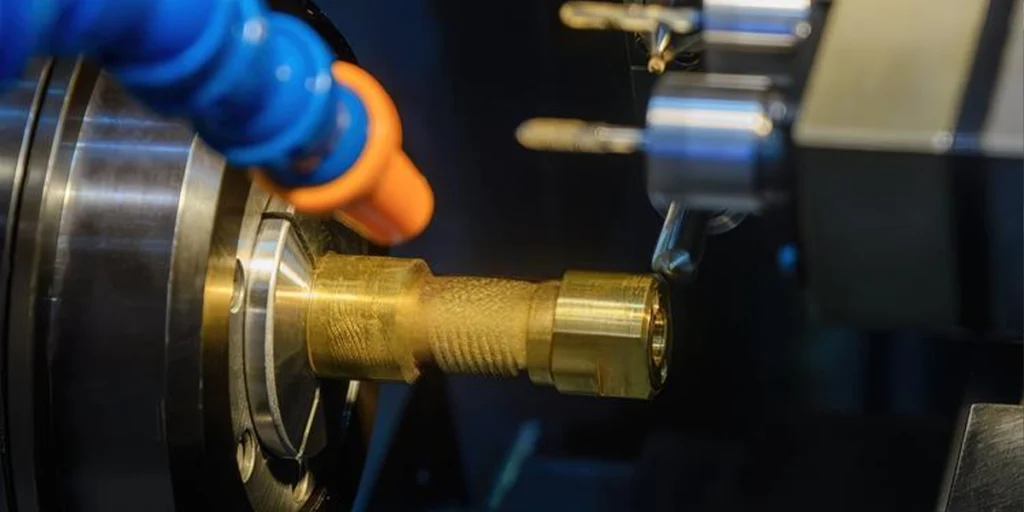
What are some automotive brass parts?
The applications of brass in the automotive industry are far more extensive than many people realize. From traditional gasoline-powered vehicles to new energy vehicles, from powertrain systems to electronic control systems, brass parts are found almost throughout the entire vehicle manufacturing chain.
Brass materials can achieve both:
- Strength and toughness
- Electrical conductivity
- Corrosion resistance
- Precision machining performance
- Long-term reliability
Therefore, it has become an ideal material for many critical automotive parts.
Brake fittings
The braking system is one of the most critical systems for vehicle safety. In hydraulic braking systems, a large number of joints, adapters, and connecting pipes are made of brass.
The main reasons include:
- Excellent corrosion resistance
- Excellent sealing performance
- High fatigue resistance
- Not prone to rusting with long-term use
Common parts include:
- Brake hose connectors
- Brake fluid line connectors
- Brake system adapters
- Hydraulic control valve assemblies
These parts typically require machining:
- High-precision threads
- Precision sealing surface
- Deep hole structure
- Complex internal cavity
For these types of parts, thread accuracy and sealing surface quality directly affect the final system safety. Therefore, automotive brake brass parts typically require strict dimensional tolerances and surface quality control.
For professional brass processing plants, it is not only necessary to ensure the precision of individual pieces, but also to ensure the consistency of batches of thousands or even tens of thousands of products.
Connector
As automotive electronics become increasingly sophisticated, the connector market is experiencing rapid growth.
Hyundai cars have a large number of interior features:
- Sensor systems
- ECU control systems
- Battery management systems
- Charging systems
- Communication systems
These systems all rely on highly reliable electrical connections.
Brass is one of the most commonly used materials in the connector industry due to its excellent electrical conductivity and machinability.
Automotive brass connectors typically have the following characteristics:
- Small size
- High precision requirements
- Large batch demand
- High conductivity requirements
Common applications include:
- Terminal connections
- Power connectors
- Signal connectors
- Charging system connection components
These parts often require CNC turning, CNC milling, and subsequent stamping processes to complete.
For connector manufacturers, the most pressing concern is usually not manufacturing the connectors, but rather:
- Can it maintain consistent dimensions over a long period of time?
- Can electrical conductivity be guaranteed?
- Can a stable supply in large quantities be achieved?
Therefore, stable processing technology and a strict quality control system are essential.
Sensor components
Modern automobiles have entered an era of high intelligence. From engine management systems to autonomous driving assistance systems, a large number of sensors have been integrated into vehicles.
These sensors require precision metal components as:
- Housing
- Mounting structure
- Signal connection components
- Fluid control components
Brass has become a common choice due to the following advantages:
- Excellent machinability
- Good dimensional stability
- Strong corrosion resistance
- Easy to fabricate microstructures
Common brass sensor components include:
- Temperature sensor housing
- Pressure sensor assembly
- Fuel system sensor components
- Hydraulic control sensor assembly
These types of products often have the following characteristics:
- Small size structure
- High-precision threads
- Complex internal holes
- Strict tolerance requirements
In many cases, tolerance requirements even reach ±0.02mm or higher standards.
Therefore, the manufacturing of brass parts for sensors typically requires the involvement of experienced precision machining suppliers.
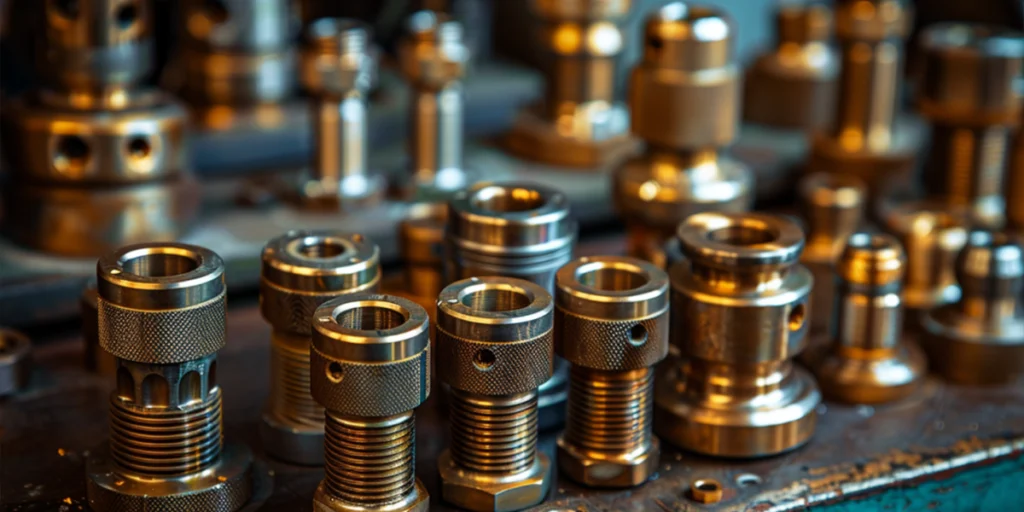
Why is demand for automotive brass components increasing?
Over the past decade, the automotive industry’s demand for brass parts has continued to grow. This growth is not only due to increased car production, but also to upgrades in automotive technology itself.
Especially with the rapid development of new energy vehicles and intelligent vehicles, more and more systems are beginning to rely on highly reliable precision metal components. Brass is perfectly suited to meet these needs.
First, the level of automotive electronics is constantly increasing. A modern car may contain hundreds of connectors and dozens of sensors.
These systems are for:
- Electrical conductivity
- Signal stability
- Environmental tolerance
They all have extremely high requirements.
Brass has natural advantages in these aspects, and is therefore widely used in electronic connection systems and signal transmission systems.
Secondly, there is the development of new energy vehicles. New energy vehicles have more complex characteristics:
- Battery Management System
- Charging system
- High-voltage connection system
- Thermal management system
These systems require a large number of precision metal parts.
Brass not only provides good electrical conductivity, but also has excellent machinability, which can meet the manufacturing requirements of complex structural parts.
The third important reason is that the automotive industry has increasingly higher requirements for reliability.
Automakers are trying to reduce:
- Risk of leakage
- Corrosion risk
- Electrical fault risk
Brass has long been proven to be reliable in fluid control and connection systems.
This is also a major reason why many braking systems, fuel systems, and hydraulic systems still use brass parts.
Furthermore, as the global automotive supply chain continues to concentrate on high-quality manufacturing, more and more OEMs are beginning to look for companies that can simultaneously provide:
- Precision machining
- Fast delivery
- Stable quality
- Mass production capability
Our long-term partner.
At Zhuohua Hardware, we have long provided brass CNC turning, milling, and complex parts machining services to customers in the automotive industry.
Relying on:
- Dozens of CNC milling and turning machines
- ±0.02mm accuracy control capability
- Support from small-batch prototyping to mass production
- Experience in processing various brass materials
We can help our clients complete the entire manufacturing process from product development and verification to mass production delivery.
For automotive brass parts projects, our engineering team typically provides DFM analysis recommendations during the quotation stage to help customers optimize structural design, reduce processing costs, and improve the stability of subsequent mass production.
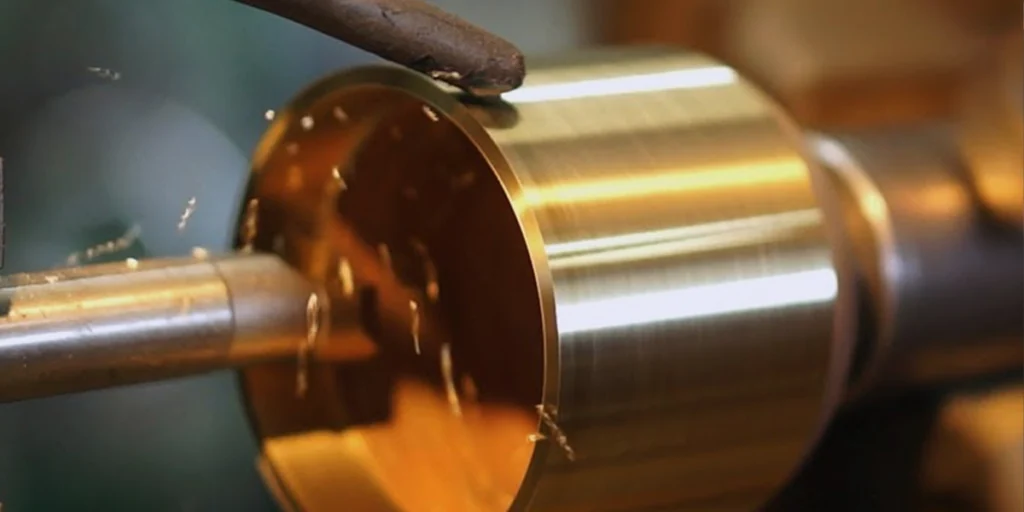
Key Requirements for CNC Brass Machining in Automobiles
The automotive industry is one of the most demanding sectors in global manufacturing in terms of quality. For automotive brass parts, customers are not only concerned with whether the parts conform to the dimensions in the drawings, but also with their stability, reliability, and consistency in mass production during long-term use.
Whether it’s brake system connectors, sensor housings, or connectors for new energy vehicles, even the slightest dimensional deviation or material defect can affect the overall vehicle performance. Therefore, the processing standards for automotive brass parts are typically much higher than those for ordinary industrial parts.
Dimensional stability
Dimensional stability is one of the most critical requirements for automotive brass parts.
Automotive parts typically need to be assembled with multiple components, so they must not only meet individual dimensional tolerances but also ensure geometric tolerances such as coaxiality, roundness, positional accuracy, and thread precision. For example, if the thread dimensions of a brake pipe connector are off, it may lead to seal failure; if the installation dimensions of a sensor housing are unstable, it may affect detection accuracy and product lifespan.
For mass production projects, the real challenge is not producing a single qualified part, but maintaining the same level of quality consistently throughout the production of thousands or even tens of thousands of parts. This requires the manufacturing plant to not only possess high-precision equipment, but also to establish a stable process control system.
In actual production, factors affecting dimensional stability include:
- Fluctuations in raw material quality
- Tool wear
- Clamping method
- Processing parameter settings
- Testing process
Therefore, professional automotive parts suppliers typically establish first-piece inspection, process inspection, and final testing mechanisms to ensure that products maintain stable quality over the long term.
Corrosion resistance
Automotive parts are exposed to complex environments for extended periods, including high temperatures, high humidity, rain and snow, road salt spray, and various chemical media, making corrosion resistance equally important.
Brass itself has excellent corrosion resistance and is less prone to rusting than ordinary steel, while also maintaining a longer service life in humid environments. This is a major reason why brass is widely used in automotive fluid control systems and connection systems.
However, different application scenarios have different requirements for corrosion resistance.
For example:
- Braking system components need to be in constant contact with brake fluid.
- Fuel system components need to resist fuel corrosion.
- Connectors for new energy vehicles need to withstand temperature cycling and humid environments.
- Chassis components need to withstand salt spray corrosion.
Therefore, in addition to selecting the appropriate brass grade, many projects also add surface treatment processes such as nickel plating, chromium plating, or passivation to further improve product durability.
For automotive projects exported to Europe and the United States, more and more customers are making demands for corrosion resistance testing during the project development stage, such as salt spray testing, damp heat testing, and life testing, in order to verify the long-term reliability of parts under actual working conditions.
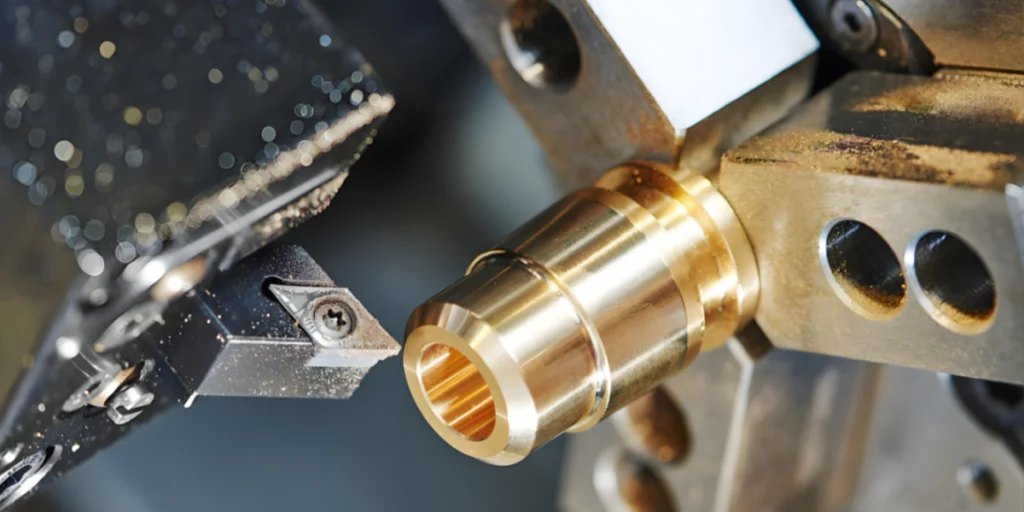
What capabilities do automotive brass parts manufacturers need?
As the automotive industry moves towards intelligent and electrified manufacturing, OEMs and Tier 1 suppliers are constantly raising their requirements for component suppliers. Today, automotive brass component suppliers need to be more than just processing plants; they need to become partners who can participate in product development and manufacturing optimization.
Engineering support capabilities
Many automotive projects do not fully consider manufacturing feasibility in the early design stages, so it is very important that suppliers have engineering analysis capabilities.
An experienced processing team can identify potential problems during the project initiation phase, such as:
- Unreasonable tolerance design
- Difficult-to-machine structures
- Excessively high manufacturing costs
- Assembly risks
Through DFM analysis, suppliers can help customers optimize designs, improve product manufacturability, and reduce overall project costs.
Precision machining capability
Automotive brass parts typically feature complex threads, precision holes, and small dimensions, which requires suppliers to have stable precision machining capabilities.
Modern car projects are increasingly adopting:
- CNC turning
- CNC milling
- Multi-axis composite machining
- Automated production
By reducing the number of clamping operations and human intervention, not only can processing efficiency be improved, but product consistency can also be guaranteed.
Quality control capability
For the automotive industry, the quality management system is often more important than the equipment itself.
Professional suppliers typically need to establish a complete quality control process, including:
Incoming material inspection
- First item confirmed
- Process inspection
- Final inspection
- Batch traceability
This is necessary to meet the consistency and traceability requirements of long-term supply projects.
Volume delivery capability
Many automotive projects, once they enter the mass production stage, can have monthly demand reaching tens of thousands or even hundreds of thousands of units. At this point, whether suppliers have sufficient production capacity and stable supply chain resources will directly affect project delivery.
Therefore, automakers typically prefer to work with suppliers who have extensive experience in mass production rather than focusing solely on a single quote.
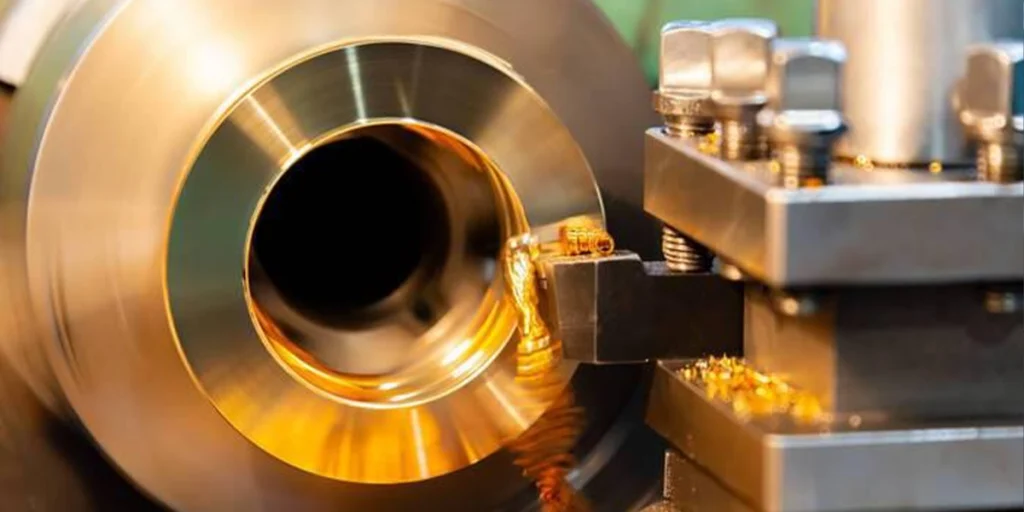
Our experience in automotive brass machining
In the automotive industry, what customers really need is not just a simple processing plant, but a manufacturing partner that can consistently provide stable quality, rapid response, and engineering support.
Precision brass parts machining services to customers in the automotive, industrial automation, electronics, and new energy industries . We support the entire manufacturing process, from small-batch verification in the product development stage to subsequent mass production.
Extensive experience in brass processing
We have processed a variety of automotive brass parts, including:
- Braking system connector
- Pipe fittings
- Sensor housing
- Electrical connectors
- Fluid control components
- Precision threaded parts
For different application scenarios, we can recommend suitable brass materials and processing solutions based on performance requirements.
Precision manufacturing capabilities
Leveraging our company’s mature brass CNC machining system, we are able to provide:
- CNC turning
- CNC milling
- Milling and turning machining
- Machining of complex multi-axis parts
The machining accuracy can reach ±0.02mm, meeting the needs of most automotive precision parts projects.
Meanwhile, we support a variety of surface treatment processes , including:
- Polishing
- Sandblasting
- Nickel plating
- Chrome plating
- Anodizing supporting processing
We help our clients obtain complete one-stop manufacturing services.
From prototyping to mass production
For automotive industry projects, we not only provide rapid prototype manufacturing, but also support subsequent mass production.
With manufacturing resources of dozens of CNC milling and CNC turning machines, we can flexibly arrange production plans according to project needs, helping customers shorten development cycles and improve supply chain stability.
For OEM customers who require long-term cooperation, our engineering team can also continuously provide DFM optimization suggestions to reduce manufacturing costs while ensuring product performance, helping customers gain a greater cost advantage in the highly competitive automotive market.