


416 stainless steel is a type of stainless steel material optimized for improved machinability and is widely used in high-efficiency CNC machining. Compared to austenitic stainless steels such as 304 and 316, 416 is easier to cut, results in less tool wear, and enables higher machining efficiency.
For projects that require the mass production of precision shafts, connectors, valve assemblies, or mechanical parts, 416 stainless steel is often an ideal material that balances processing efficiency and cost control.
At Zhuohua Hardware, we have long provided 416 stainless steel CNC machining services to customers in the industrial automation , mechanical equipment , Consumer electronics and automotive industries , including high-precision turning, milling and manufacturing of complex structural parts, supporting everything from rapid prototyping to mass production.
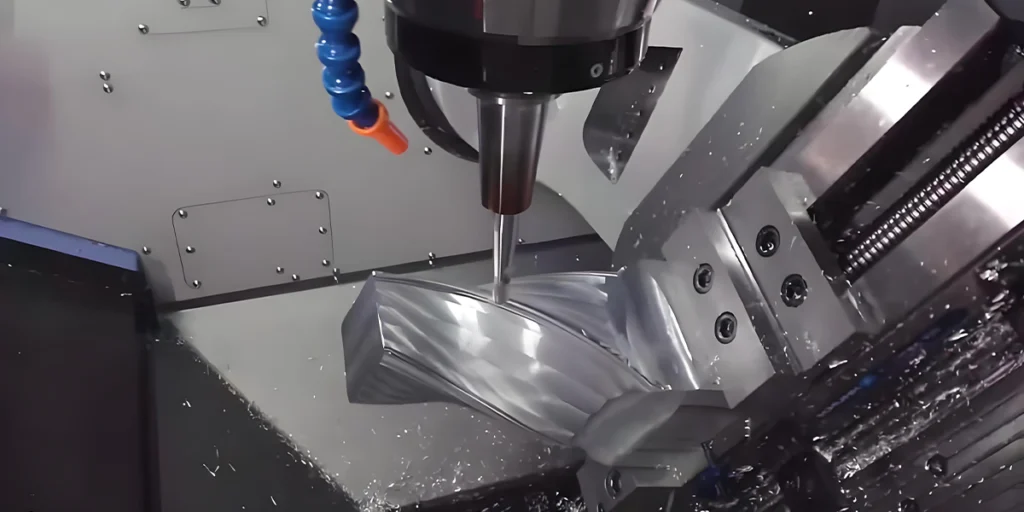
Features of 416 stainless steel
What is 416 stainless steel?
416 stainless steel belongs to the martensitic stainless steel series. It is a “free-machining stainless steel” formed by adding sulfur to 410 stainless steel.
Its most notable feature is not its corrosion resistance, but rather:
- Higher processing efficiency
- More stable cutting performance
- Lower tool wear
- More suitable for automated mass production
Therefore, 416 stainless steel is often used for industrial parts that require extensive CNC turning and high-speed machining.
Core properties of 416 stainless steel
Excellent machinability
416 has one of the best machinability properties of all stainless steel materials.
Compared to 304 and 316:
- Easier to break off chips
- Easier to control processing heat
- More suitable for high-speed cutting
This means:
- Shorter processing time
- Lower production costs
- Higher equipment utilization
This is very important for bulk orders.
Good mechanical strength
After heat treatment, 416 stainless steel can achieve high hardness and mechanical strength.
Therefore, it is applicable not only to ordinary structural components, but also to:
- Mechanical shaft
- Gear components
- Coupling
- Industrial connectors
In many automated devices, 416 steel is often used to replace ordinary carbon steel parts, while also providing a certain degree of corrosion resistance.
Magnetic characteristics
Unlike 304 and 316, 416 stainless steel is magnetic.
This characteristic is very important in certain industrial applications, such as:
- Sensor structural components
- Electromagnetic system components
- Components of automated equipment
However, for projects that require absolutely no magnetism, 416 is usually not chosen.
Why is 416 stainless steel suitable for CNC machining?
From the perspective of processing plants, 416 is a “very friendly” stainless steel material.
Compared to traditional austenitic stainless steel:
- Longer tool life
- Lower processing vibration
- More stable surface quality
- More suitable for complex turning structures
For high-efficiency production, this can significantly reduce overall manufacturing costs.
At Zhuohua Hardware, we help customers assess whether 416 is a suitable alternative material based on the customer’s part structure, precision requirements, and batch production needs, thereby optimizing the overall project cost and production cycle.
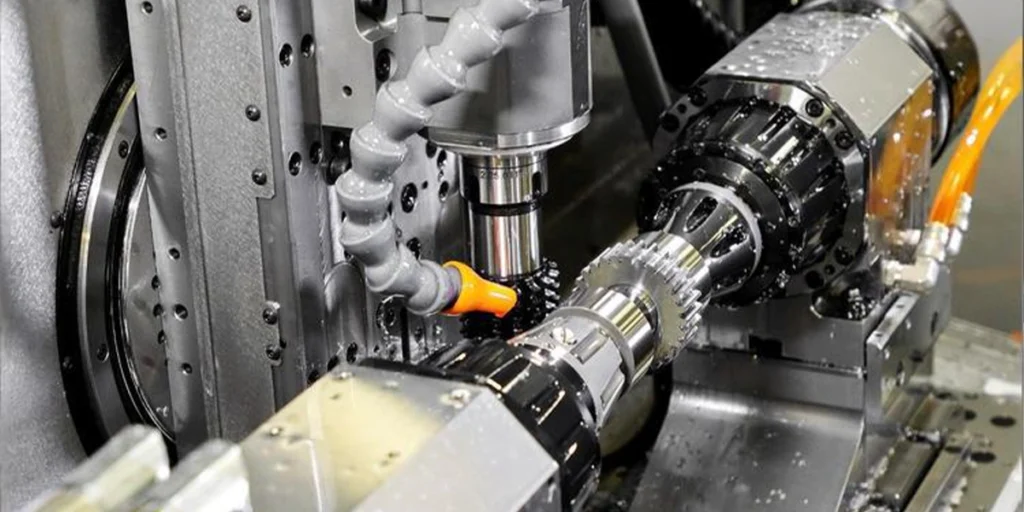
Cutting performance advantages
Why is 416 easier to machine?
The reason why 416 stainless steel has excellent machinability is mainly due to the addition of sulfur to its material.
Sulfur can improve:
- Chip fracture performance
- Tool chip removal efficiency
- Cutting stability
This is especially important for CNC turning.
During high-speed machining, 416 can reduce:
- Tool adhesion
- Processing heat generation
- Surface tear
- Burr problem
Therefore, it is well-suited for automated continuous production.
Higher processing efficiency
Compared to 304 and 316 stainless steel, 416 can typically achieve:
- Higher cutting speed
- Larger feed rate
- Shorter processing time per piece
For batches of parts, this means:
- Lower unit cost
- Faster delivery cycle
- Higher production stability
This is why many OEM industrial projects prioritize 416 material.
Lower tool wear
In stainless steel machining, tool cost is often a significant factor affecting pricing.
Due to significant work hardening, 304 and 316 stainless steel often lead to:
- Rapid tool wear
- The tip of the knife chipped.
- Unstable surface roughness
416, due to its better cutting performance, can significantly extend tool life.
For long-term mass production projects, this can help customers effectively reduce manufacturing costs.
More suitable for precision machined parts
Because it can maintain its properties even under high-speed processing:
- Stable size
- Good surface quality
- Consistent batch output
Therefore, 416 is particularly suitable for:
- Small precision shafts
- Threaded parts
- Connector
- Valve core
- Automatic lathe parts
At Zhuohua Hardware, we achieve machining accuracy of ±0.02mm through high-precision CNC turning equipment and strict quality control, and support stable mass production of complex 416 stainless steel parts.
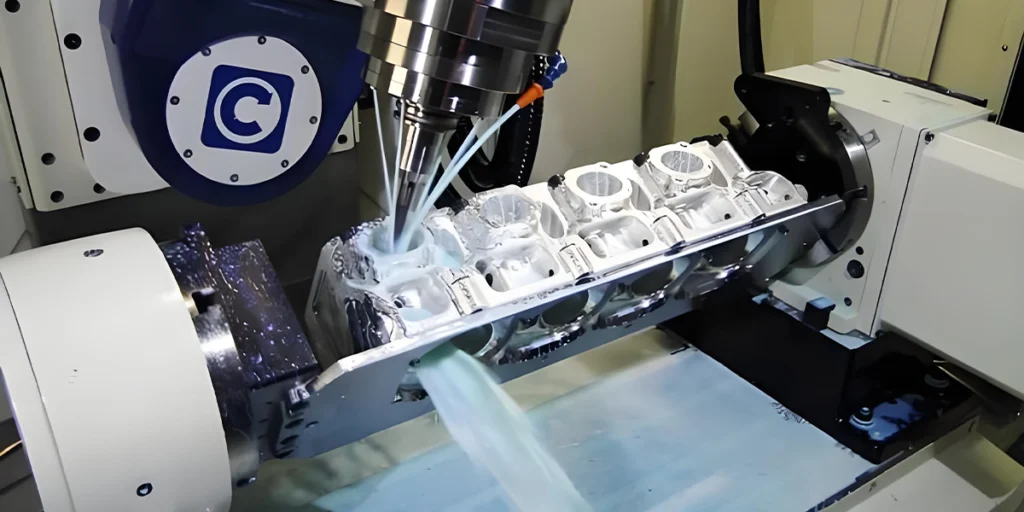
Suitable for which precision parts
Precision shaft parts
One of the most common applications of 416 stainless steel is in various precision shaft parts. Due to its stable cutting performance and good chip breaking properties, it is very suitable for high-speed turning while ensuring good dimensional consistency.
These types of parts typically include:
- Motor shaft
- Drive shaft
- Miniature mechanical shaft
- Shaft components for automated equipment
For high-volume production projects, 416 can significantly improve machining efficiency and reduce tool wear, making it very common in the industrial automation and machinery equipment industries.
Valves and fluid control components
416 is also frequently used in the manufacture of various valve cores, valve stems, fittings, and fluid control components. Compared to ordinary carbon steel, it offers better corrosion resistance while being easier to machine than 304 or 316.
In many industrial equipment applications, customers want parts to have a certain degree of corrosion resistance while also needing to control processing costs. In such cases, 416 stainless steel is usually a relatively balanced choice.
For these types of parts, the machining process typically involves:
- Precision turning
- Thread machining
- Deep hole machining
- Small size tolerance control
This requires a high level of equipment stability and processing experience.
High-frequency mass production parts
416 stainless steel is particularly suitable for:
- CNC automatic lathe parts
- OEM standard parts
- Electronic hardware components
- Industrial connectors
- Sensor components
Because it can maintain stable cutting performance under high-speed machining conditions, it is very suitable for long-term continuous production.
At Zhuohua Hardware, we have long provided precision stainless steel turning parts manufacturing services to clients in Europe and America , supporting everything from rapid prototyping to bulk order delivery. For highly repetitive parts, we can help clients reduce overall manufacturing costs and improve production consistency through process optimization.
Complex precision mechanical parts
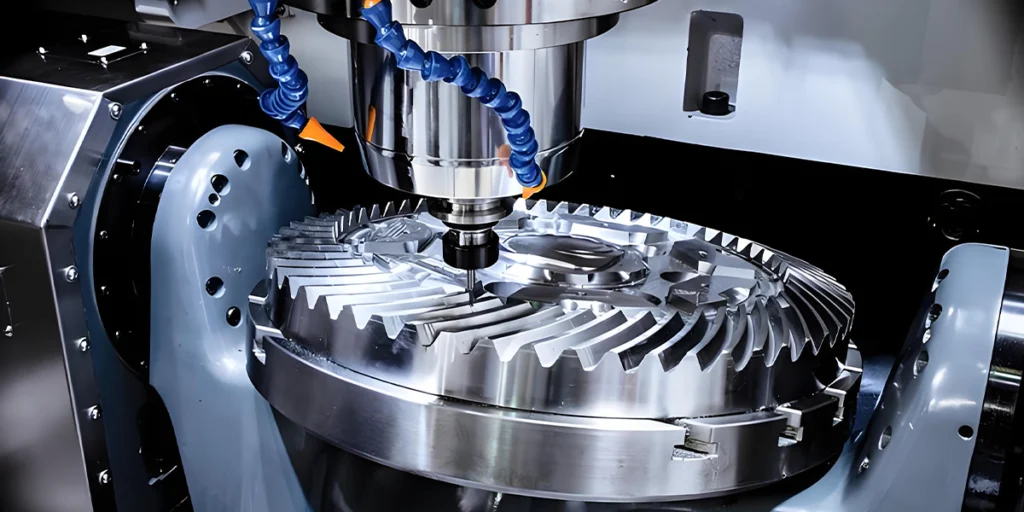
Although 416 is more commonly used for turning, it is also suitable for some complex CNC milling parts, especially mechanical structural parts with high machining efficiency requirements.
Combining 3-axis, 3+2-axis, and 5-axis CNC machining capabilities, it is possible to complete:
- Multi-faceted structure processing
- Precision positioning holes
- Threaded structure
- Machining of complex shapes
For projects that require a balance between processing efficiency and mechanical performance, 416 is usually more cost-effective than 304.
Limitations of 416 Stainless Steel
Limited corrosion resistance
Although 416 is a type of stainless steel, its corrosion resistance is significantly lower than that of 304 and 316.
Due to its high sulfur content, its corrosion resistance will be somewhat affected, therefore it is not suitable for:
- Marine environment
- High humidity environment
- Strong chemical corrosive environment
- Medical implant applications
For these types of projects, it is generally recommended to use 316 or other highly corrosion-resistant stainless steel materials.
Poor weldability
416 stainless steel is not suitable for complex welded structures.
While sulfur in the material improves machinability, it also reduces welding stability, making the welded area more prone to cracking or performance degradation.
Therefore, engineers typically do not prioritize 416 if the part requires extensive welding processes later on.
It is not as tough as 304 and 316.
Compared to austenitic stainless steel, 416 exhibits weaker toughness and ductility. This indicates that:
- Limited performance under extreme shock conditions
- The processing of ultra-thin-walled structures carries higher risks.
- Certain high-fatigue working conditions are not suitable
Therefore, in the material selection stage, a comprehensive evaluation should be conducted based on the actual usage environment, rather than simply pursuing processing efficiency.
Not all projects are suitable for 416
Many customers believe that “the easier it is to process, the better” when initially selecting materials, but in reality, material selection requires comprehensive consideration:
- Usage Environment
- Strength requirements
- Corrosion resistance requirements
- Surface requirements
- Cost target
- Batch size
The biggest advantage of 416 is its high-efficiency processing, rather than its overall superior performance.
As a reliable stainless steel CNC machining partner , we assist customers in selecting more suitable stainless steel materials based on their drawings, application scenarios, and budget targets, thus avoiding performance or cost issues later on.