


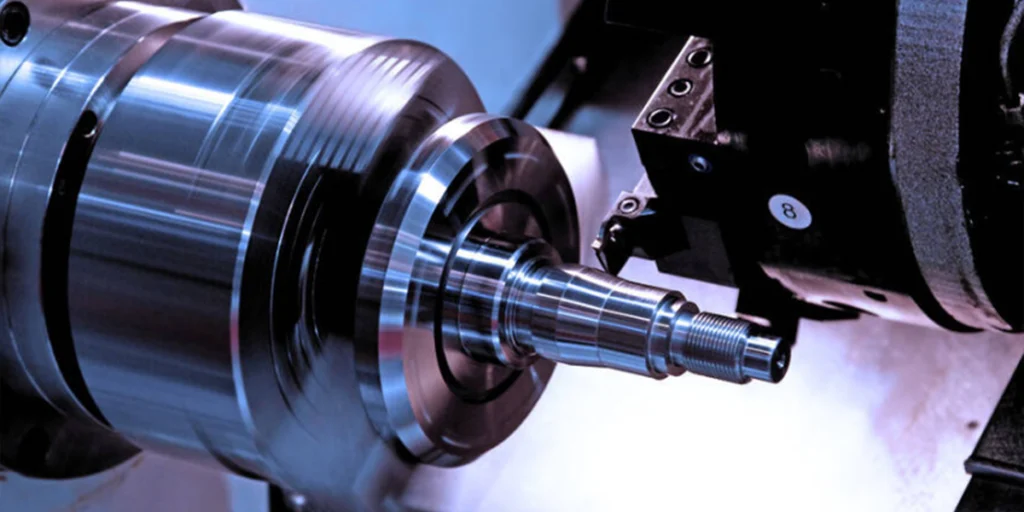
What is backlash?
In CNC milling, backlash refers to the “idle travel” or delay that occurs in the transmission system when the machine tool’s movement direction reverses.
Simply put, the command has changed direction, but the actual movement has not yet responded immediately.
1. Why does backlash occur?
Backlash essentially originates from gaps and elastic deformation in mechanical structures, and common causes include:
- Clearance between the lead screw and the nut
- Gear meshing clearance
- Bearing wear
- Mechanical loosening due to prolonged use
Even high-end equipment cannot achieve “zero gaps” completely; it can only be controlled within a very small range.
2. Visual representation of backlash
In actual processing, it won’t directly “alarm,” but it will be reflected in the results:
- Dimensional deviations (especially at the direction switching position)
- The circle is not perfectly round (it tends to be elliptical or polygonal).
- Contour error (unclear edges and corners)
These problems are particularly evident in high-precision parts.
3. Which processing scenarios are most susceptible to impact?
Backlash affects all machining processes, but it is more pronounced in the following situations:
- Small-sized precision structure
- Complex paths involving multiple direction changes
- Precision contour machining (such as arcs and curved surfaces)
- High tolerance requirements (±0.02 mm level)
4. An easily overlooked fact
Many dimensional problems are not due to tool or program errors, but rather because the machine tool does not actually execute the instructions at the moment of “changing direction”.
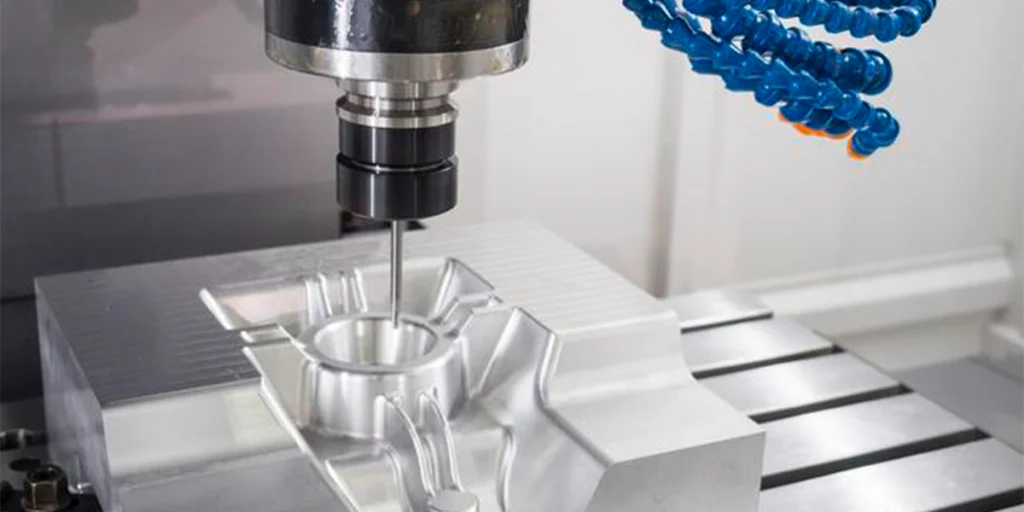
How to check the backlash of a CNC milling machine
Backlash is not “directly displayed” on the system interface. Determining it relies on measurement, comparison, and experience.
Common practices are not complicated, but the key lies in whether they are carried out in a standardized manner and whether the meaning of the measurement results is understood.
1. Dial gauge test method (most commonly used)
This is the most direct and effective method in the workshop.
Basic idea:
By observing minute reciprocating motions, we can determine whether the machine tool is “idling” when reversing.
Operating steps:
- Fix the dial indicator to the machine tool (with the indicator head in contact with the workpiece or worktable).
- Select an axis (X / Y / Z)
- Move the machine tool a small distance in one direction (e.g., +0.02 mm).
- Then move in the opposite direction by the same distance (e.g., -0.02 mm).
- Observe the changes in the dial gauge reading.
Judgment logic:
- If the command changes but the pointer does not respond immediately → there is a backlash.
- Delay amount = Backlash size
The advantages of this method are:
- Fast
- Does not rely on complex equipment
- Suitable for routine testing
However, the drawback is that it requires a certain level of experience from the operators.
2. Cutting test piece method (closer to actual machining)
Compared to simple measurement, this method is closer to the actual processing situation.
practice:
- Process a simple geometric shape (such as a square or circular outline).
- Measure its size and shape errors
Typical manifestations:
- Circle to Ellipse
- The corner is not closed
- Dimensional deviation occurs at the point of orientation change.
The advantage of this approach is that it reflects the “processing result” rather than a single mechanical parameter.
But the problem is:
- Unable to precisely quantify the specific gap value
- It is necessary to combine experience to determine the cause (it may be a combination of factors such as tooling and programming).
3. System Parameters and Compensation Detection
Modern CNC systems typically include backlash compensation functionality. This can be checked in the following ways:
- View current compensation parameter settings
- Observe the changes after adjusting the compensation value.
- Compare the processing results before and after compensation.
Please note:
- Compensation does not “solve the problem,” but rather “covers up the problem.”
- If the mechanical clearance is too large, simple compensation cannot guarantee long-term stability.
4. Key points for inspection of different axes
In actual testing, different axes may exhibit different behaviors:
- X / Y axis: Affects the accuracy of planar profile
- Z-axis: Affects depth dimension and hole machining accuracy
Generally, the following should be given priority:
- Shafts that frequently participate in contour machining
- The direction with the highest precision requirements
5. A point of difference in actual production
In mature manufacturing environments, backlash inspection is not done “when a problem occurs,” but rather:
- Part of regular maintenance
- A component of the equipment precision management system
In substandard production environments, the common practice is: dimensional abnormalities occur → troubleshooting only begins → costs have already been incurred.
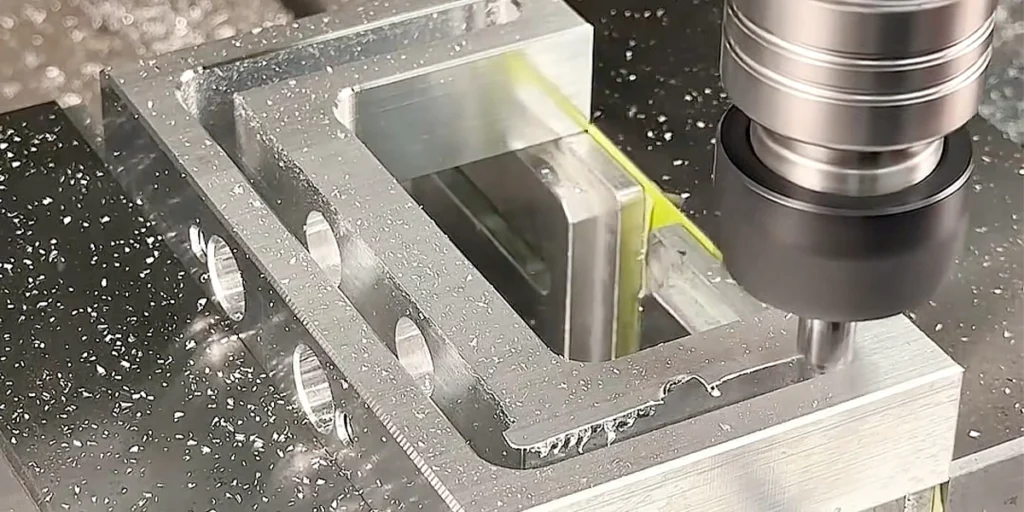
The impact of backlash on accuracy
Backlash itself is just a “mechanical phenomenon,” but the real problem is that it is amplified during the manufacturing process.
Especially in toolpaths that require frequent changes in direction, this error will not only occur once, but will accumulate repeatedly.
1. Direct impact on dimensional accuracy
The most direct impact is dimensional deviation. When the tool movement direction reverses:
- The control system has issued instructions.
- However, there is a delay in actual movement.
- The result was that the cutting tool did not reach the “theoretical position”.
This will lead to:
- Aperture too large or too small
- Inconsistent slot width
- Critical dimensions exceed tolerances
Such an error is unacceptable when high precision requirements (such as ±0.02 mm) are required.
2. Effects on geometry
Compared to dimensional errors, shape errors are more subtle but have a more serious impact.
Typical problems include:
- Circle transforms into ellipse
- The four corners of the square are not closed.
- The outline and boundaries exhibit a “step-like” appearance.
The reason is simple: every change in direction introduces a tiny delay.
When the path is a continuous curve or a complex contour, this error will accumulate.
3. Impact on surface quality
Backlash can also affect surface quality, especially during the finishing stage.
It manifests as:
- Fine ripples appear on the surface
- Discontinuous knife marks
- Decreased smoothness
On visual components or sealing surfaces, this problem can directly affect functionality or appearance.
4. Differences in impact across different processing types
Not all processing will be affected in the same way. The degree of impact depends on the processing method:
Low-impact scenarios:
- Unidirectional cutting (e.g., simple plane machining)
- Rough machining stage (low tolerance requirements)
In these cases, the impact of backlash is relatively limited.
High-impact scenarios:
- Arc machining / Curved surface machining
- High-precision hole machining
- Multi-axis linkage path
- Finishing stage
What these scenarios have in common is that the toolpath frequently changes direction.
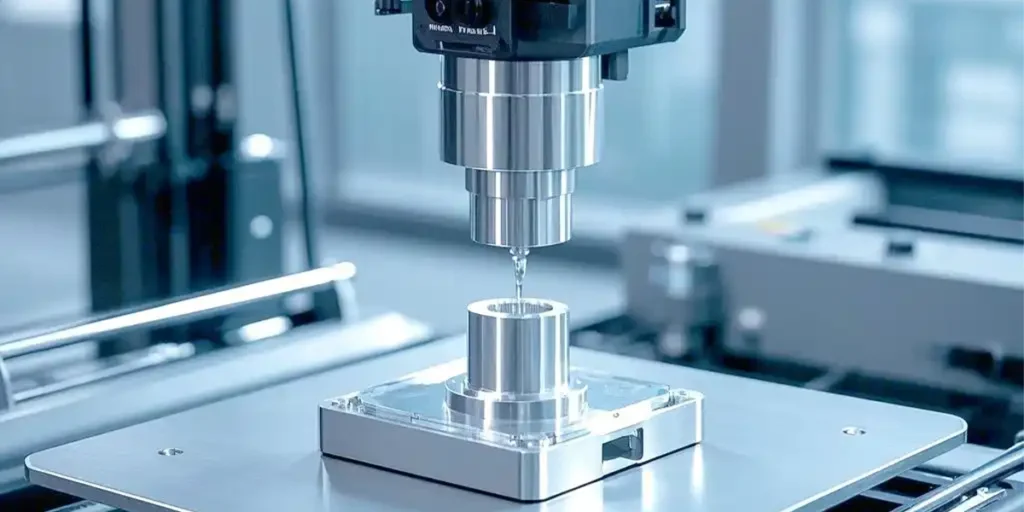
How to reduce errors
Backlash cannot be completely eliminated, but it can be controlled through equipment, processes, and programming. The key is not whether there is backlash, but whether it is limited to a range that does not affect the final dimensions.
1. Mechanical control (basic but crucial)
The most direct approach is to start with the machine tool itself.
Common measures include:
- Use preloaded ball screws (to reduce backlash)
- Use a high-rigidity guide rail system
- Regular maintenance and calibration (to prevent wear from widening the gap)
In high-precision equipment, backlash is typically controlled to a very small range, provided that the equipment is in good working order and has not been maintained after prolonged periods of high load.
2. Backlash compensation (software level)
Most CNC systems support backlash compensation.
The principle is:
- When direction reversal is detected
- The system automatically “travels a longer distance”.
- Used to compensate for mechanical clearance
advantage:
- Quick results
- Individual settings can be configured for different axes.
However, it is important to clarify one point: compensation only corrects the result and cannot improve the machine itself.
If the gap is too large, the compensation will become unstable and may even introduce new errors.
3. Process route optimization (most effective in practice)
In actual production, avoiding problems through process optimization is often more effective than simply repairing them.
Common strategies include:
- Try to avoid frequent reversals
- Optimize the toolpath to make the motion as continuous as possible.
- Reduce the number of times the knife is moved back and forth.
This is especially important in contour processing.
Adopting a unidirectional cutting strategy
During the finishing stage:
- Try to keep cutting in the same direction.
- Avoid alternating processing in both directions
This can significantly reduce the impact of backlash.
Phased processing
- Rough machining: Allows for relatively large errors
- Finishing: Using a stable path
By using the separation process, the error can be controlled within an acceptable range.
4. Clamping and reference control
Many errors do not originate from a single source, but are the result of accumulation.
If the clamping itself is unstable, even a small backlash will be amplified.
Optimization methods include:
- Use a stable positioning reference
- Reduce repeated clamping
- Improve fixture rigidity
5. Tool and cutting parameter matching
The problems caused by backlash can be amplified under certain cutting conditions:
- Excessive cutting force → generates additional displacement.
- Excessively long cutting tool → Increased deflection
Optimization suggestions:
- Choose the appropriate tool length and diameter
- Control feed and depth of cut
- Avoid over-cutting
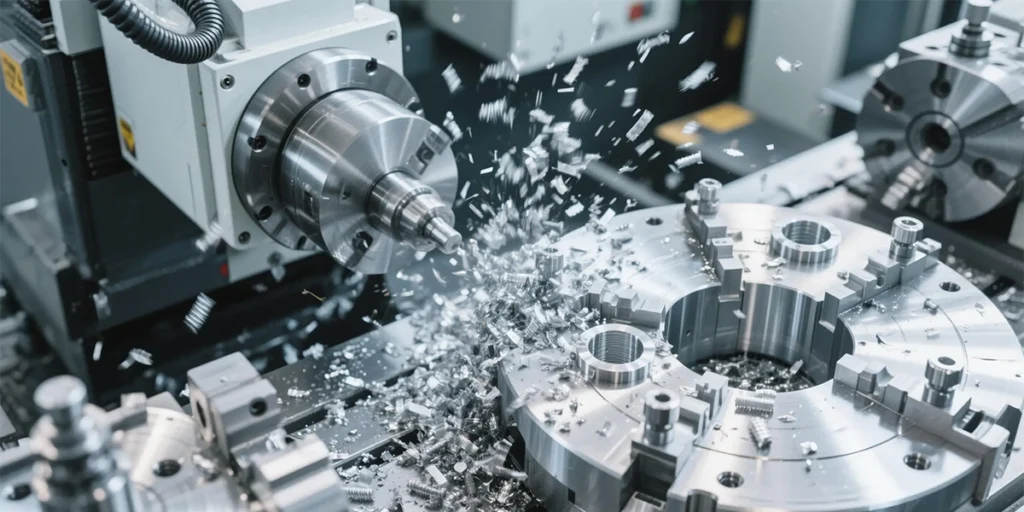
How do we ensure processing stability?
For customers, the issue is not whether there is backlash, but whether the dimensions remain stable and repeatable during mass production.
Stability is not achieved by a single means, but is determined by the combined effects of equipment status, process control, and quality system.
1. Equipment precision management (not a one-time process, but continuous control)
Stable processing relies on equipment remaining under control over the long term. Our approach is not to “address problems only after they occur,” but rather to establish routine mechanisms:
- Regularly inspect the accuracy of critical axes (including backlash).
- Equipment operating status recording and preventive maintenance
- Perform specialized calibration on high-precision equipment
The function of this type of control is:
- Avoid gradual drift in accuracy
- Detect problems before they affect production
2. Process standardization (reducing human error)
In single-piece prototyping, experience can compensate for problems, but in mass production, standardization is essential.
We control it at the process level:
- Fixed processing flow (to avoid ad-hoc adjustments)
- Standardized tooling and parameter library
- Unified clamping standards and strategies
turn out:
- Higher consistency between different batches
- Reduce fluctuations caused by operational differences
3. Programming and path optimization capabilities
Many accuracy issues are not equipment problems, but rather path design problems. In real-world projects, we will address:
- High-precision profile
- Multi-directional cutting structure
- Thin-walled or easily deformable parts
Perform specialized optimizations, such as:
- Reduce reverse cutting paths
- Controlling changes in cutting load
- Optimize the tool advance and retraction methods
These adjustments will not be reflected in the drawings, but will directly affect the final result.
4. Process quality control (not just focusing on final inspection)
If inspections are only conducted at the end, problems often already exist. A more effective approach is process control.
- First article confirmation (to ensure correct process)
- Sampling inspection of critical dimensions during the process
- Tool wear monitoring and replacement strategy
This can avoid:
- Mass scrapping
- Rework in the later stages
- Delivery delay
5. Multi-level testing system
To meet different accuracy requirements, we employ different testing methods:
- Standard sizes → Calipers/Micrometers
- High-precision parts → Coordinate measuring machine (CMM)
- Surface requirements → Roughness inspection
For critical projects, the following can also be provided:
- Test report
- Size traceability data
If your project requires dimensional stability and consistency, you can provide drawings or samples, and we will provide a processing feasibility assessment and precision recommendations.
When dealing with complex parts or high-precision requirements, choosing a supplier with stable processing capabilities is often more crucial than simply comparing prices.