


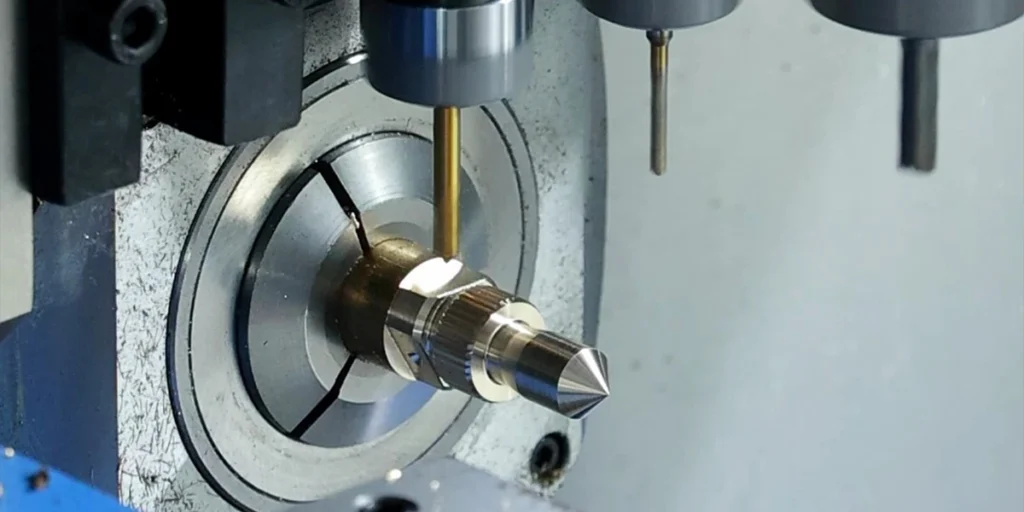
How many types of CNC milling machines are there?
From a manufacturing perspective, CNC milling machines are not classified by “quantity,” but rather by their structural form and machining capabilities. The three most common, and also the most critical, types in engineering and procurement decisions are: vertical milling machines, horizontal milling machines, and gantry milling machines. They directly affect machining accuracy, efficiency, and cost structure.
Upright vs. Horizontal
Vertical CNC Milling Machine
Features:
- The spindle is perpendicular to the worktable.
- Compact structure and highly versatile
- Programming and clamping are relatively simple.
Applicable scenarios:
- Plane machining, cavity machining
- Molds, structural components, and small to medium-sized parts
- Multi-variety, small-batch production
Limitations:
- Chip removal capability is average (chips tend to accumulate during deep cavity machining).
- Low processing efficiency for complex side structures
Horizontal CNC Milling Machine
Features:
- Horizontal arrangement of the spindle
- Typically used with a rotary table (allows for multi-faceted machining).
- Higher rigidity, suitable for heavy cutting
Applicable scenarios:
- Box-type parts (such as gearboxes, housings)
- Multi-faceted machined parts
- Medium to large-scale production
Advantages:
- Strong chip removal capability (gravity-assisted)
- Reduces repeated clamping and improves consistency
Limitations:
- Higher equipment costs
- Programming and fixture design are more complex
Summary of core differences (from an engineering decision-making perspective)
| Dimension | Vertical milling machine | Horizontal milling machine |
| Structural complexity | Low | high |
| Processing flexibility | high | middle |
| Batch efficiency | middle | high |
| Suitable parts | Simple/Medium Complex | Multifaceted/Box Structure |
| cost | lower | higher |
Gantry CNC Milling
Gantry milling machines are large-scale machining equipment, essentially designed to address the needs of machining large-size, high-rigidity materials.
Features:
- Double column + beam structure (similar to a “door”)
- The worktable can support large workpieces.
- Extremely high rigidity, suitable for heavy cutting
Applicable scenarios:
- Large aluminum parts and steel structural components
- Aerospace structural components
- Industrial equipment bases and molds
Advantages:
- Wide processing range (up to the meter level or even larger)
- High precision and stability (especially for large components)
Limitations:
- High cost (equipment + processing fees)
- Not suitable for small parts (low efficiency)
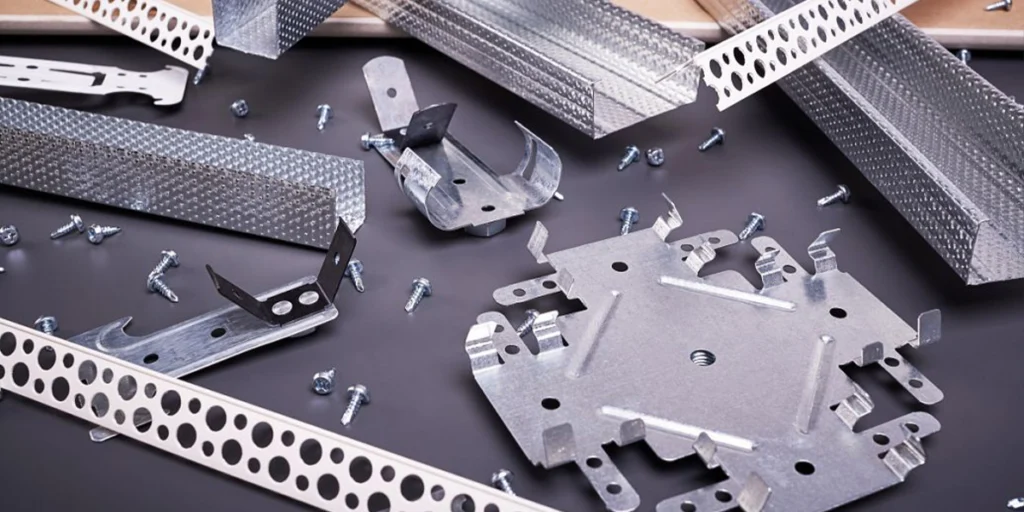
How many axes does a CNC milling machine have?
The number of axes determines the degrees of freedom of a machine tool, which essentially means how many directions the cutting tool or workpiece can participate in machining. The more axes there are, the more complex the geometry that can be achieved, but at the same time, the programming difficulty, equipment cost, and machining strategies also increase.
In actual production, the mainstream configurations are 3-axis, 4-axis, and 5-axis. The choice is not “the more the better,” but rather to match the part structure and batch size.
3-Axis CNC Milling
Three-axis is the most basic and widely used configuration: movement in three linear directions: X, Y, and Z.
Typical abilities:
- Machining of planes, contours, and cavities
- Simple curved surfaces (achieved through layered toolpaths)
- Standard hole machining and grooving
Its advantages lie in its stability, low cost, and fast delivery. For the vast majority of mechanical structural components, 3 axes are sufficient.
However, the limitations are also very clear:
- The workpiece can only be approached from “one direction”.
- Complex side profiles and inverted structures require multiple clamping operations.
- With a large number of clamping operations, the accumulation of errors becomes unavoidable.
Applicability Judgment (Engineering Perspective):
- The parts are mainly laid out in one direction.
- Medium tolerance requirements (e.g., ±0.02~0.05mm)
- Budget sensitive
4-Axis CNC Milling
Adding a rotational axis (usually the A-axis) to a 3-axis system allows the workpiece to rotate in a specific direction. This doesn’t result in “more complexity,” but rather in more efficient multi-faceted machining capabilities.
Common applications:
- Side machining of cylindrical parts
- Gear and cam structures
- Parts that require equal division for machining
Compared to 3-axis, its core value is:
- Reduce manual reclamping
- Improve the consistency of multi-faceted processing
- Improve mass production efficiency
However, please note:
- It is still not a “true multi-angle free machining” (unlike 5-axis machining).
- Limited ability to handle extremely complex surfaces
Applicable judgment:
- The parts have rotational symmetry characteristics.
- Multiple sides require processing
- The goal is to strike a balance between efficiency and cost.
5-Axis CNC Milling
The 5-axis system adds two rotary axes to the three linear axes, enabling multi-angle movement of the tool or workpiece.
To put it simply, the core capability is the ability to approach parts from “any angle”.
This brings about several key changes:
1) Reduce or even eliminate multiple clamping operations
- Completion of complex parts in a single setup
- Significantly reduces cumulative error
2) Machining complex curved surfaces
- Freeform surfaces (common in aerospace, medical, and robotics)
- Deep cavity, inclined plane, complex contour
3) Improve surface quality
- Tool angle can be optimized
- Reduce tool marks and post-processing costs
But the reality is:
- Higher costs (equipment + programming + process)
- Higher engineering capabilities are required (not just machine-related issues)
Applicable judgment:
- Highly complex parts (multi-faceted + curved surfaces)
- High precision requirements (especially single-clamp control)
- High value-added industries (aerospace, medical, robotics)
Many customers ask directly, “Does this part necessarily need to be 5-axis?” The answer is not necessarily. In actual production, experienced engineering teams often:
- Replace 5-axis with 3-axis/4-axis combined processes (to reduce costs)
- Alternatively, use 5-axis machining only in critical areas (hybrid machining strategy).
This is also one of the core differences in supplier capabilities.
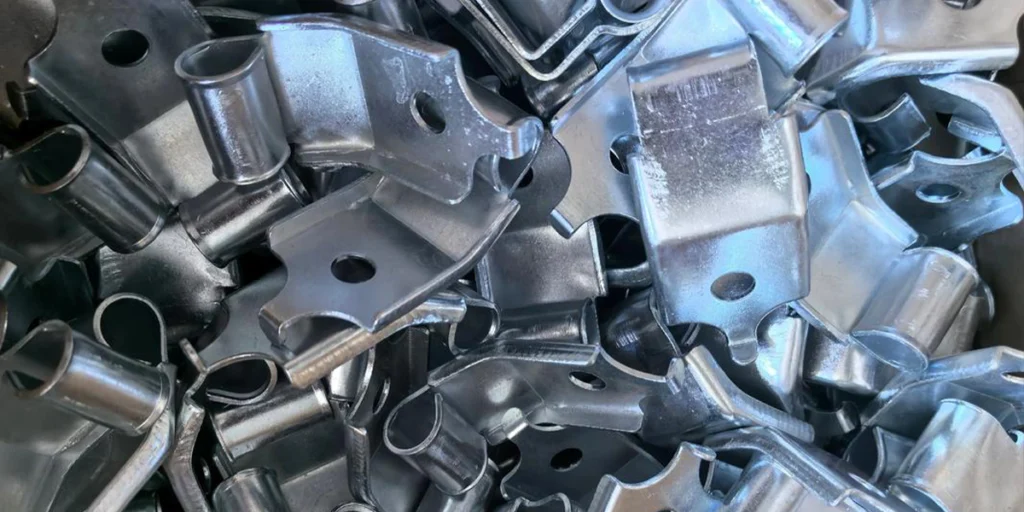
What is a five-axis CNC milling machine?
If 3-axis machining addresses the question of “can it be machined?” and 4-axis machining addresses the question of “can it be more efficient?”, then 5-axis machining addresses a different level of problem—balancing precision and efficiency in complex structures.
A five-axis CNC milling machine is not just about “two more axes”; it changes the machining logic: from “completing a part through multiple clamping operations” to completing all key features in a single clamping operation whenever possible. This has a direct impact on precision control, surface quality, and overall delivery stability.
5-axis working mode
A five-axis machine tool introduces two rotary axes (commonly A-axis and C-axis) on top of the three linear axes X, Y, and Z. This means that the tool or workpiece can be adjusted in space, rather than being restricted to a single direction.
In terms of actual processing methods, there are two main typical models:
1) Positioning five axes (3+2 axes)
- First rotate to a fixed angle, then perform 3-axis machining.
- Essentially, it’s “multi-angle 3-axis machining”.
Features:
- Programming is relatively simple.
- High stability
- Lower cost than a five-axis linkage
Suitable for parts that are machined on multiple surfaces but have simple curved surfaces.
2) Simultaneous 5-Axis
- Five axes move simultaneously during the machining process.
- The toolpath is a continuously changing spatial curve.
Features:
- Enables machining of complex free-form surfaces
- The cutting tool always maintains the optimal cutting angle.
- Surface quality significantly improved
The cost is also clear:
- High programming complexity
- Requires extremely high standards for both machine tools and engineers.
- Higher processing costs
The value of five-axis machining is not just “the ability to process more complex parts”, but also the reduction of sources of error on complex parts.
Applicable to complex parts
Not all parts require five-axis machining, but there are several types of structures that are basically “five-axis preferred by default”:
1) Complex curved surface parts
- Aerospace structural components
- Medical implants
- Industrial design exterior components
These parts are characterized by:
- Continuous surface variation
- High surface quality requirements
- Traditional layered processing is inefficient.
2) Multi-faceted high-precision parts
- Robot joint components
- Precision mechanical components
Require:
- There are strict positional relationships between the multiple faces.
- Accumulated errors can easily occur after multiple clamping operations.
3) Deep cavities or hard-to-access areas
- Mold cavity
- Inclined holes / Complex internal structure
The five-axis can be controlled by adjusting the tool angle:
- Avoid interference
- Use shorter cutting tools (to increase rigidity)
- Improve processing stability
4) High-value, small-batch parts
In these scenarios, the logic will change:
- Processing costs are not the only factor.
- Stability, yield, and delivery time are more important.
The value of five axes here is:
- Reduce rework
- Improve the first-pass yield
- Shorten the overall delivery cycle
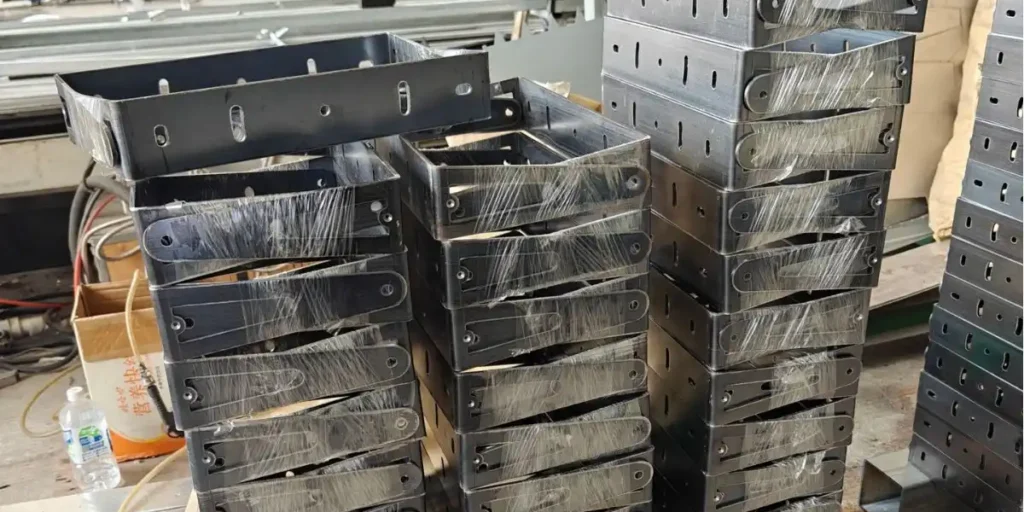
How to choose the right milling machine type
Choosing a machine tool essentially involves weighing three factors: geometric complexity, accuracy requirements, and cost/delivery time. There is no conclusion that “the most advanced is always better,” only “the optimal solution under current constraints.”
In engineering practice, a common mistake is to simplify the problem to “Should we install a 5-axis system?” A more effective approach is to first break down the parts and then determine the process path and equipment combination.
Based on the complexity of the parts
Look at the structure first, not the equipment.
1) Single-sided or shallow cavity structure
- The features are mainly distributed in one direction.
- Typical examples include brackets, plates, and simple shells.
→ A 3-axis vertical setup is usually sufficient, offering advantages such as low cost, short lead time, and high stability. With proper clamping design, the accuracy can cover most requirements.
2) Multifaceted features, but the curved surface is not complex.
- Multiple sides require processing
- There are holes and grooves distributed in different directions.
→ Prioritize 4-axis or 3+2 (positioning 5-axis), which can significantly reduce flipping and re-clamping, improve consistency, and avoid the cost increase caused by directly using a linkage 5-axis.
3) Complex curved surfaces / tilted features / deep cavity structures
- Continuous variation of freeform surfaces
- There is a risk of interference or the cutting tool is difficult to access.
→ A 5-axis linkage is more suitable; the benefits here are not just “the ability to process,” but also:
- Reduce clamping errors
- Improve surface quality
• Use shorter cutting tools to improve rigidity and stability
4) Large-size structural components
- Size reaches meters or larger
- Stiffness and deformation control become key
→ A gantry milling machine must be used; otherwise, even if machining is possible, it is difficult to guarantee overall accuracy and consistency.
Here’s a useful check that can quickly filter out solutions:
If a part requires frequent flipping to complete critical features, consider increasing the number of axes or changing the machine tool type.
Based on batch size and cost
Complexity is only the first step; what truly influences the choice is the production strategy.
1) Small batch/sampling stage
The goal is usually:
- Rapidly validate designs
- Control upfront costs
Common strategies:
- Primarily 3-axis or 3+2-axis
- Solve most problems through proper clamping.
Even if the part can be made with 5 axes, it may not be the optimal solution.
2) Medium batch production
The focus has shifted from “can it be done?” to “how to make it more stable and efficient?” The strategy will change:
- Introduce 4-axis or horizontal machining centers
- Optimize fixtures to reduce manual intervention
The key issue here is not the equipment itself, but the stability of the process.
3) High-precision/high-value parts
In these types of projects, the cost structure will be redefined:
- Scrap cost > Processing cost
- Rework time > Single processing time
Therefore, I prefer:
- Complete key features using a single 5-axis setup
- Prioritize consistency and yield.
4) Mass production
The key point is unit cost:
- Horizontal machining center + automated fixture
- Multi-station continuous processing
Sometimes, some flexibility is even sacrificed in exchange for higher output efficiency.
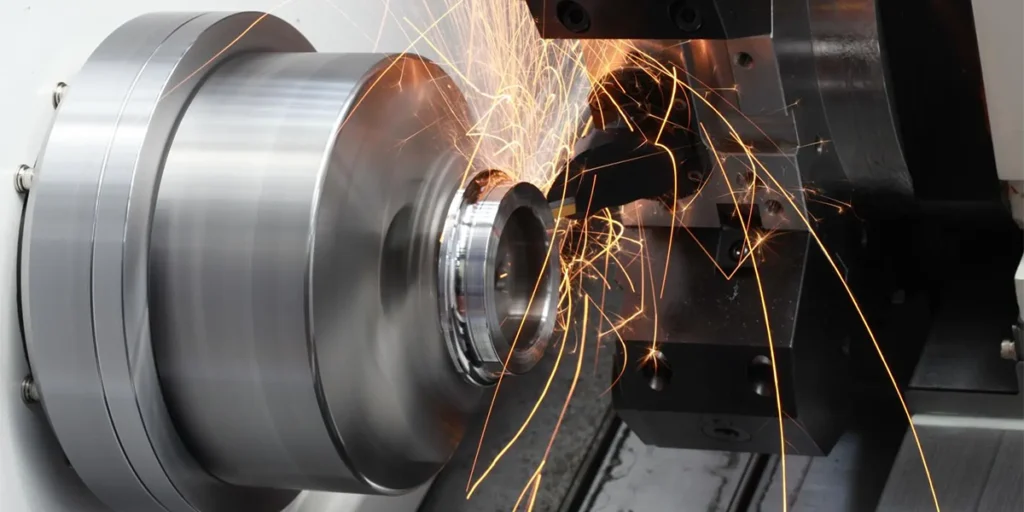
Our CNC milling capabilities
Choosing the right machine tool type is only the first step. What truly determines the outcome is the ability to consistently implement the correct process. This is usually reflected in the scale of the equipment, the coverage of axis types, and the coordination of engineering and quality control, rather than simply whether it has 5 axes.
In actual projects, we emphasize one thing: using the right combination of equipment, rather than the most expensive equipment.
300+ devices
We use a multi-type device collaboration approach, rather than relying on a single model.
- 3-axis / 3+2-axis: For general structural components and cost-sensitive projects
- 4-axis: Used for multi-face machining and improving efficiency in batch production.
- Horizontal machining center: Used for box-shaped objects and those requiring high consistency across multiple surfaces.
- Large equipment (including gantry cranes): used for large-sized structural components
The significance of having more than 300 pieces of equipment lies not in the “quantity” itself, but in:
- Production capacity flexibility: Can handle both sample production and bulk orders simultaneously.
- Stable delivery time: Avoids bottlenecks caused by queuing (common in small factories)
- Process matching: The same part can be flexibly allocated among different equipment.
This directly impacts two outcomes: first, delivery cycles become more controllable; and second, there is no “forced choice of suboptimal processes” due to equipment limitations.
5-axis machining capability
We have configured a complete 5-axis machining capability system, not just “equipment”.
The coverage area includes:
- Positioning five axes (3+2) → Balancing cost and efficiency
- Five-axis linkage → Complex curved surfaces and high-precision parts
- Multiple structural types (swing head/rotary table) to adapt to different geometric requirements
More importantly, the application strategy:
- Use 5 axes only for key features (to reduce costs)
- Complex parts can be assembled in one setup (reducing errors)
- Combine with 3-axis/4-axis machining (optimizes overall efficiency)
Precision and quality control
Equipment is only the foundation; stable output depends on process control.
- Standard machining accuracy: ±0.02 mm
- Multi-stage inspection (first piece + in-process + outgoing)
- Inspection reports and quality documents can be provided.
For multi-faceted high-precision parts, the key control points are:
- Number of clamping operations
- Benchmark consistency
- Cumulative error
These are usually more critical than the parameters of a single device.
Upload your CAD files and receive a quote within 24 hours. Our engineers will recommend the best machining options based on your design, tolerances, and production volume.