


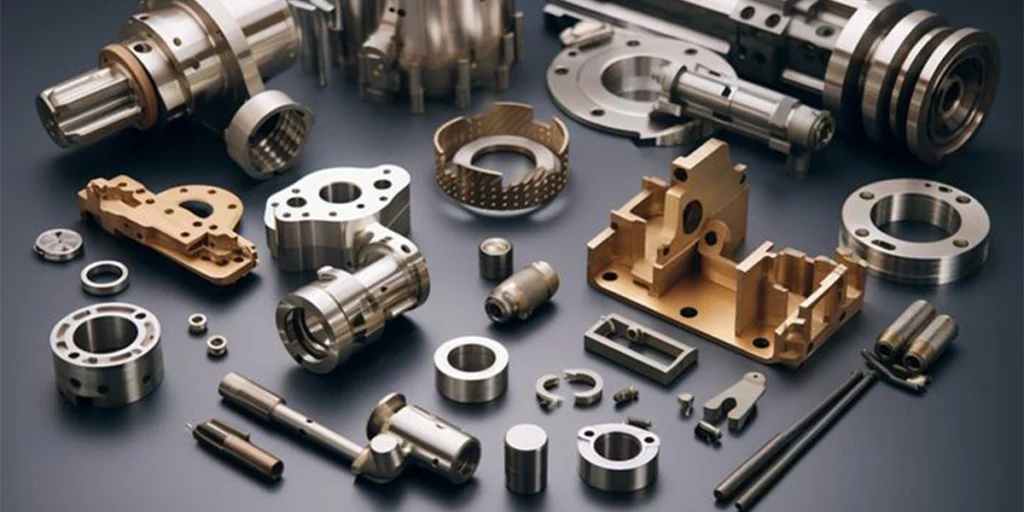
What are custom-machined parts?
Custom CNC turned parts refer to non-standard parts produced using CNC turning technology based on drawings, 3D models, samples, or functional requirements provided by customers.
Unlike standard parts, custom parts are not purchased from stock but manufactured to meet the specific needs of a customer’s product. These parts are typically used for:
- New product development projects
- Equipment upgrade and renovation
- Special-sized connectors
- High-precision mechanical components
- Brand-specific OEM parts
- Small-batch trial production or long-term bulk orders
Standard parts address general needs, while customized parts solve specific problems. This is why more and more manufacturers, equipment suppliers, and brand customers are choosing custom manufacturing rather than forcing themselves to use off-the-shelf market specifications.
Which parts are suitable for custom CNC turning?
Parts with rotary structure features, or those requiring control over external diameters, internal holes, threads, or concentricity, are well-suited for custom turning manufacturing. For example:
- Precision shaft parts
- Sleeves and bushings
- Threaded connector
- Aluminum alloy casing
- Sensor connector
- Valve assembly
- Medical connectors
- Automated equipment parts
If the part also includes structures such as side holes, planes, and keyways, these can also be completed in one go using a milling and turning machine.
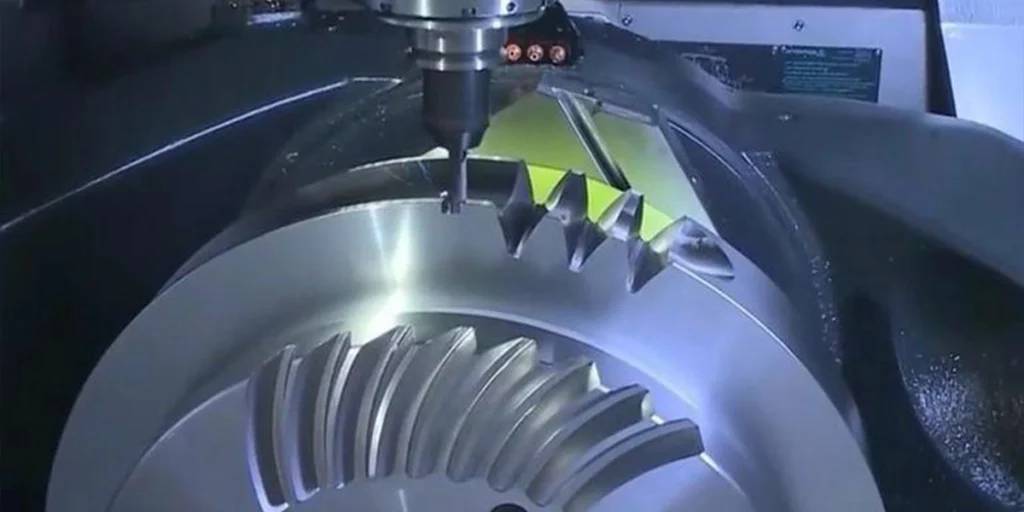
Why are custom parts needed?
This is a very common problem in procurement. The reasons usually fall into the following categories:
1. Size mismatch
Off-the-shelf standard parts may be close to the requirements, but:
- Length difference ± 2mm
- Aperture difference ± 0.1mm
- Different thread specifications
- Insufficient tolerances
These small differences often make it impossible to assemble the entire machine.
2. Higher performance requirements
For example, the customer needs:
- Higher strength materials
- Lighter weight structure
- More corrosion-resistant surface
- Higher degree of concentricity
- Better appearance quality
Standard parts are usually not compatible.
3. Brand and supply chain control
Many customers want the following parts:
- Has its own brand specifications
- Long-term stable supply
- Avoid sharing standard parts with competitors
- Enhance product differentiation
In this case, custom parts become a necessary option.
Common materials for custom-machined parts
Depending on the application, common materials include:
Metallic materials
- Aluminum alloy (lightweight, exterior parts)
- Stainless steel (corrosion resistant)
- Brass (connectors, electrical components)
- Carbon steel (structural components)
- Alloy steel (wear-resistant parts)
- Titanium alloys (high-end applications)
Engineering plastics
What is the greatest value of custom parts?
It’s not about “making a part,” but about helping customers achieve:
- Improved assembly performance
- More stable product quality
- Greater market competitiveness
- A more controllable long-term supply chain
Many successful products differentiate themselves primarily through custom structural components, rather than generic ones.
Zhuohua Hardware’s customization capabilities
Customized CNC turning parts manufacturing services to overseas clients , supporting:
- Custom production based on drawings
- Sample reverse engineering
- OEM / ODM cooperation
- From prototype to mass production
- 50+ material options
- ±0.02mm accuracy control
It can also be combined with CNC milling , surface treatment , and assembly services to help customers reduce supply chain complexity.
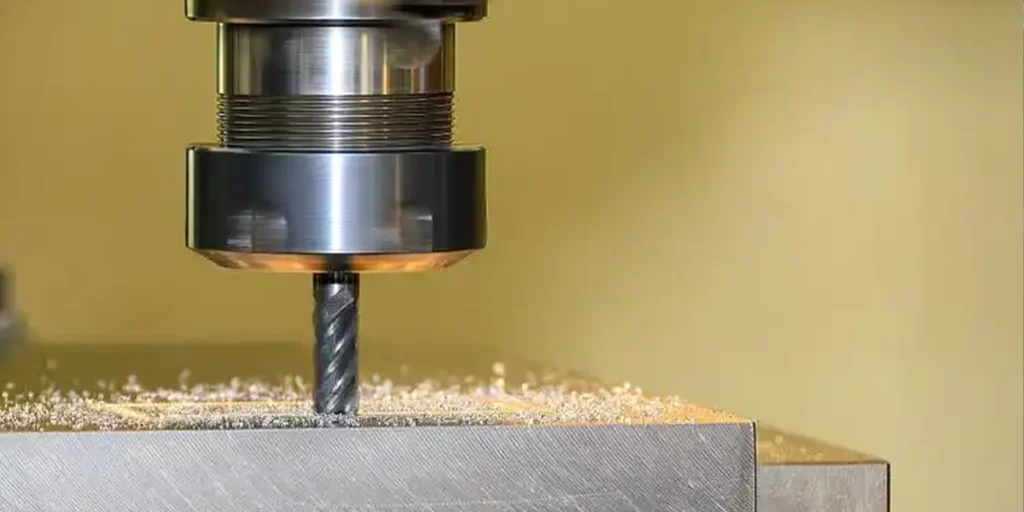
Drawing quotation process
When customers order custom parts for the first time, the most important question they ask is:
- What documents are required?
- How long will it take to get a quote?
- What if the drawings are incomplete?
- How do I determine if a price is reasonable?
A professional supplier should make the quotation process clear and efficient, rather than wasting time with back-and-forth communication.
The standard quotation process typically consists of 5 steps.
1. Customer submits materials
Any of the following information may be provided:
Recommended:
- 2D drawings (PDF / DWG)
- 3D models (STEP / STP / IGES)
Also acceptable:
- Physical samples
- Hand-drawn dimension diagram
- Image + Key Dimensions
- Functional Requirements Description
If the drawings are incomplete, we can also assist in supplementing the manufacturing information.
2. Engineering Assessment of Manufacturability (DFM)
After receiving the materials, the engineering team will typically evaluate them:
- Is it suitable for turning?
- Is a mill-turn machining center required?
- Are the tolerances reasonable?
- Are the materials suitable?
- Is there room for cost optimization?
This step is crucial. Many low-level suppliers offer quotes directly, while established factories will first assess whether they can maintain stable production.
3. Cost Accounting
Quotes are typically based on the following factors:
- Material costs
- Processing time
- Tool wear
- Tolerance requirements
- Surface treatment
- Inspection requirements
- Packaging method
- Quantity-based tiered pricing
Therefore, for the same part:
- Price of 10 items
- Price of 100 pieces
- Price of 1000 pieces
The differences are usually significant.
4. Submit a formal quotation.
A professional quote should clearly list:
- Unit price
- MOQ (if applicable)
- Delivery time
- Material specifications
- Surface treatment
- Tolerance Specification
- Packaging method
- Trade terms
This allows customers to accurately compare suppliers, rather than just looking at a single number.
5. Confirm the order and begin production.
Enter after confirmation:
- Engineering programming
- Raw material procurement
- Processing and production
- Inspect shipment
For sample orders, a first-piece confirmation can be made first.
Zhuohua Hardware’s Response Time to Pricing
We support a fast-track quotation process, enabling quick assessments for standard projects, and offer:
- Manufacturing recommendations
- Cost optimization recommendations
- Material substitution recommendations
- Tiered pricing scheme for bulk orders
- Delivery schedule planning recommendations
This is very important for purchasing clients because a truly valuable quote is not just about price, but about an actionable solution.
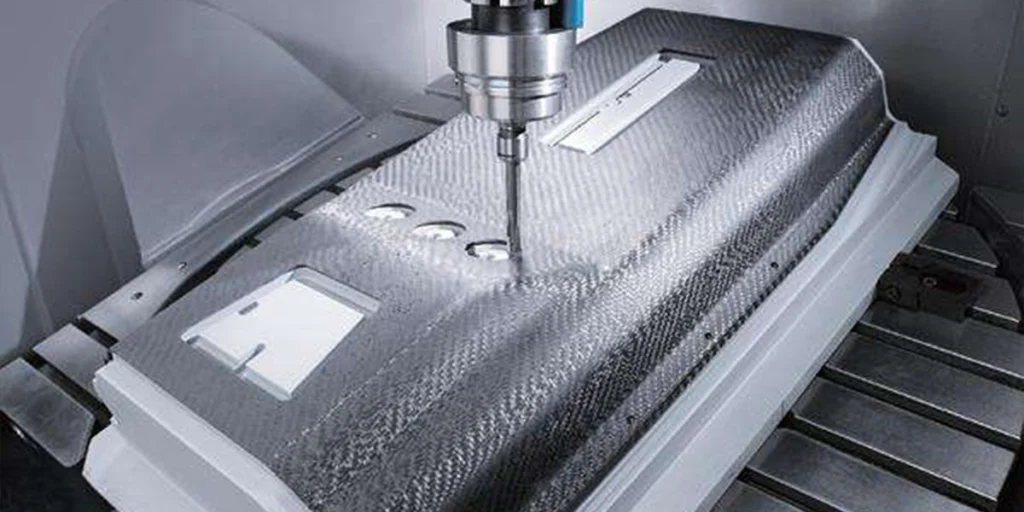
Sample to mass production cycle
When developing custom-machined parts, many customers are not most concerned about price, but rather:
- How long will it take to get the samples?
- How long after sample confirmation can mass production begin?
- If orders increase, will production capacity be able to keep up?
- How to avoid losing control of delivery time?
These issues directly impact project time-to-market, inventory planning, and customer delivery capabilities. A mature supplier not only needs to manufacture parts, but also needs to manage project timelines.
Custom turning projects are typically divided into three phases.
1. Prototype Stage
The goal is to verify the feasibility of the design, including:
- Is the size correct?
- Is the assembly smooth?
- Do the materials meet the requirements?
- Does the surface treatment meet expectations?
- Is the product functionality stable?
This stage typically involves a smaller number of participants, for example:
- 1 item
- 5 items
- 20 items
- 50 items
For parts with clear structures and standard materials, sample delivery can typically begin production within a few business days. At Zhuohua Hardware, we support a rapid prototyping process, with some projects delivered in as little as 5 business days.
2. Small-batch trial production stage (Pilot Run)
After sample verification is successful, customers typically do not place large orders immediately, but instead enter the trial production stage, for example:
- 100 items
- 300 pieces
- 500 pieces
The objectives include:
- Verify batch consistency
- Test assembly efficiency
- Market trial
- Internal quality verification
- Packaging and shipping verification
This stage is crucial; many problems with projects don’t arise from the samples, but from the trial production.
3. Mass Production Stage
Once market validation is successful, the project enters a stable procurement phase, and the quantity may increase to:
- 1,000 pieces per month
- 5,000 pieces per month
- Annual demand exceeds 50,000 units.
At this point, the customer is more concerned with:
- Delivery time stability
- Prices continue to be optimized
- Batch consistency
- Stable raw material supply
- Backup capacity
What are the key factors affecting delivery time?
1. Component complexity
Standard shaft kits are typically delivered faster than complex, irregularly shaped parts. (If included:)
- Multi-threaded structure
- High concentricity requirement
- Secondary milling
- Precision surface requirements
The cycle will increase accordingly.
2. Material Procurement Cycle
Common materials such as:
- Aluminum 6061
- SUS304
- Brass
- POM
The procurement of the above materials is usually relatively quick. However, for special materials such as titanium alloys, high-temperature alloys, or imported grades, the lead time may be longer.
3. Surface treatment and subsequent processes
For example:
- Anodizing
- Electroplating
- Heat treatment
- Polishing
- Laser marking
Delivery time needs to be included in the overall plan.
4. Order Quantity
The production scheduling logic for a single sample is completely different from that for a batch of 10,000 pieces, requiring advance planning of equipment and capacity.
Zhuohua Hardware’s delivery support capabilities
We support our clients throughout the entire process from development to mass production:
- Rapid sample production
- Small-batch trial production support
- Long-term mass production schedule
- Collaborative production of turning and milling
- Supply chain support management
With approximately 100 turning machines and large-scale manufacturing resources, we are able to provide more stable production capacity support when orders increase.
How to reduce customization costs
Many customers associate “custom parts” with high prices. In reality, customization does not necessarily mean high costs.
What truly determines the cost is not “whether it’s customized,” but rather:
- Is the design reasonable?
- Is the process correct?
- Are the materials compatible?
- Is the quantity clearly planned?
- Is the supplier professional?
Many parts are expensive not because they are difficult to manufacture, but because the initial design was flawed.
1. Optimize structural design
Over-design is the most common source of cost, for example:
- Unnecessary excessively tight tolerances
- Excessive length of deep hole
- Too many small rounded corners
- Special threads are not required.
- Multiple clamping structure
These factors will significantly increase processing time. It is recommended to set high requirements only for critical functional dimensions, while maintaining reasonable tolerances for the rest.
2. Choose appropriate materials
For example:
- 6061 aluminum can replace some high-priced aluminum materials
- SUS303 generally has better machining efficiency than 304.
- POM can replace metal parts in certain scenarios.
Choosing the right materials can satisfy performance requirements while reducing unit price.
3. Plan procurement quantities reasonably.
Quantity directly affects unit price because:
- Programming costs are amortizable.
- Adjustment costs are amortizable
- Improved raw material utilization
- Automated production is more efficient.
We recommend that clients provide annual demand forecasts, rather than just asking for current quantities.
4. Reduce secondary processing steps
If the parts require:
- Turning first, then outsourcing milling
- Multiple clamping
- Multiple suppliers relay processing
Both costs and risks will increase. Using mill-turn machining or one-stop manufacturing typically offers a greater cost advantage.
5. A professional CNC supplier.
Low-priced suppliers often simply manufacture according to the drawings without offering any suggestions. The end customer then bears the cost of rework.
Experienced suppliers will offer suggestions in advance:
- Easier to process structure
- Superior materials
- Faster process route
- More stable batch processing solution
This is what truly reduces total costs.
How Zhuohua Hardware Helps Customers Reduce Costs
We typically provide optimization suggestions during the quotation stage, such as:
- Structural simplification recommendations
- Tolerance grading recommendations
- Material substitution recommendations
- Tiered pricing scheme for bulk orders
- Recommendations for integrating turning/milling processes
The goal is not to quote the lowest price, but to provide clients with the lowest total cost solution that is feasible in the long term.
If you are developing a custom parts project, Zhuohua Hardware can provide a manufacturing assessment based on the drawings and offer more reasonable delivery times and cost reduction solutions.