


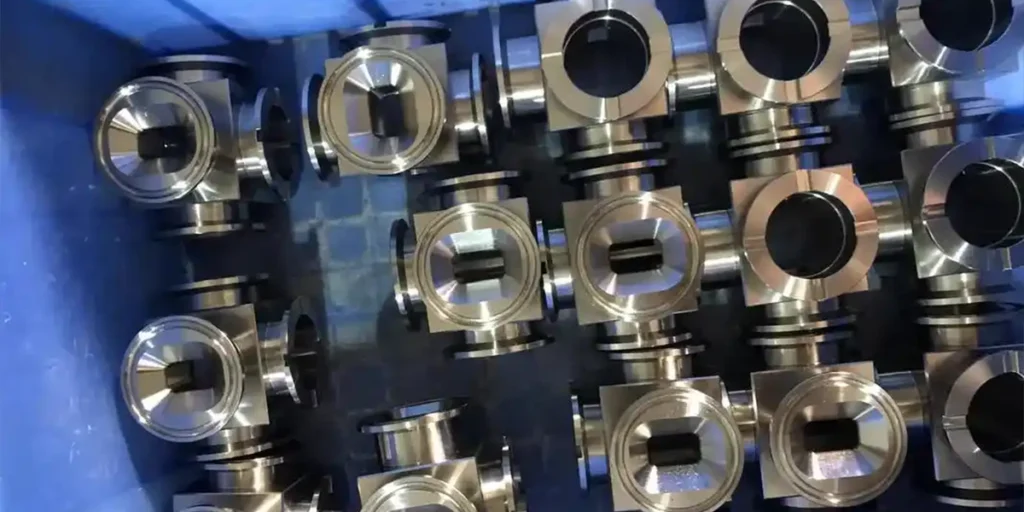
Stainless steel CNC machining is a process that uses CNC equipment to perform high-precision cutting of stainless steel materials. It is widely used in industries such as medical, aerospace, automotive, robotics, food equipment, and industrial automation.
Compared to common metals, stainless steel boasts higher strength, better corrosion resistance, and a longer service life, but it is also more difficult to machine. This means that stainless steel parts rely not only on advanced equipment, but also on mature machining experience, tooling strategies, and stable quality control capabilities.
For many OEMs and product development teams, choosing a supplier with experience in stainless steel processing is often more important than simply comparing prices.
Zhuohua Hardware has long provided stainless steel CNC machining services to global customers, supporting 3-axis, 3+2-axis and 5-axis CNC machining, as well as high-precision CNC turning services, covering the complete manufacturing needs from rapid prototyping to mass production.
What is CNC machining of stainless steel?
How CNC machining affects stainless steel
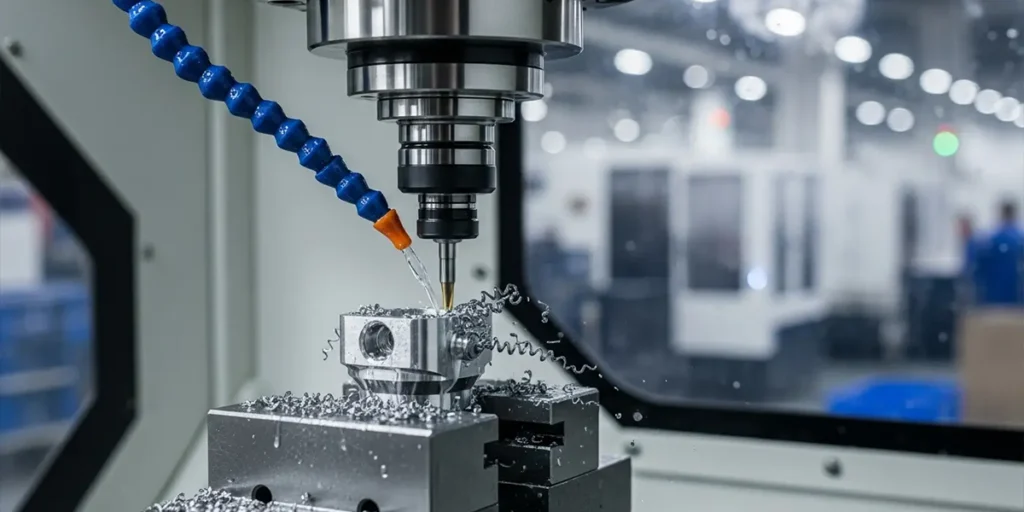
Stainless steel CNC machining is essentially the automated cutting and manufacturing of stainless steel materials by using computer programs to control machine tools.
The entire process typically includes:
- CNC milling
- CNC turning
- Drilling
- Tapping
- Finishing
- Surface treatment
Compared to traditional machining methods, CNC machining can consistently and reliably manufacture complex parts while maintaining higher consistency and dimensional accuracy. This is why most high-precision stainless steel parts in modern industry are manufactured using CNC machining.
Common methods of CNC machining of stainless steel
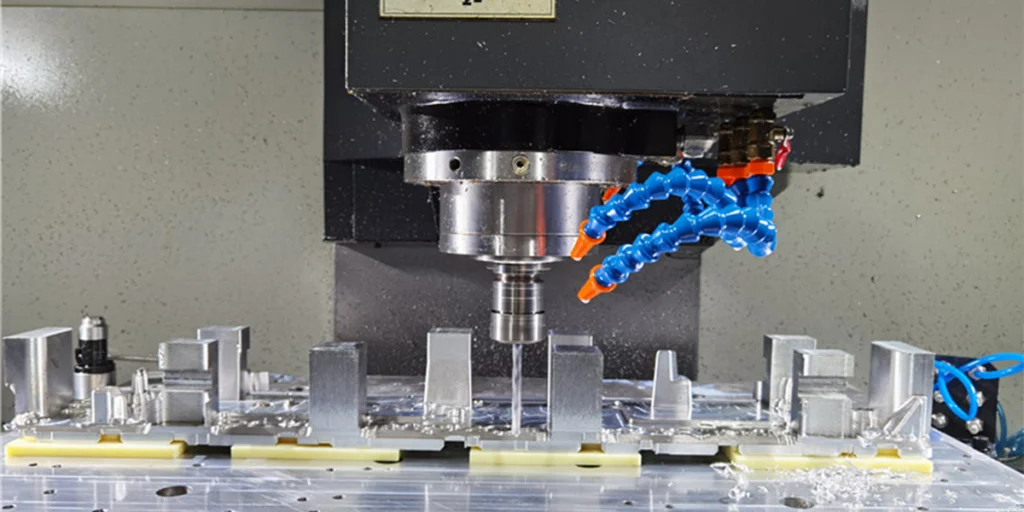
CNC milling
CNC milling is suitable for:
- Complex geometric structures
- Multi-faceted processing
- Cavity structure
- Precision-shaped parts
For example:
- Structural components of automated equipment
- Medical device casing
- Aviation mounting bracket
- Industrial connection components
Zhuohua Hardware supports 3-axis and 5-axis CNC milling , enabling the machining of complex stainless steel parts and supporting the process from prototyping to mass production.
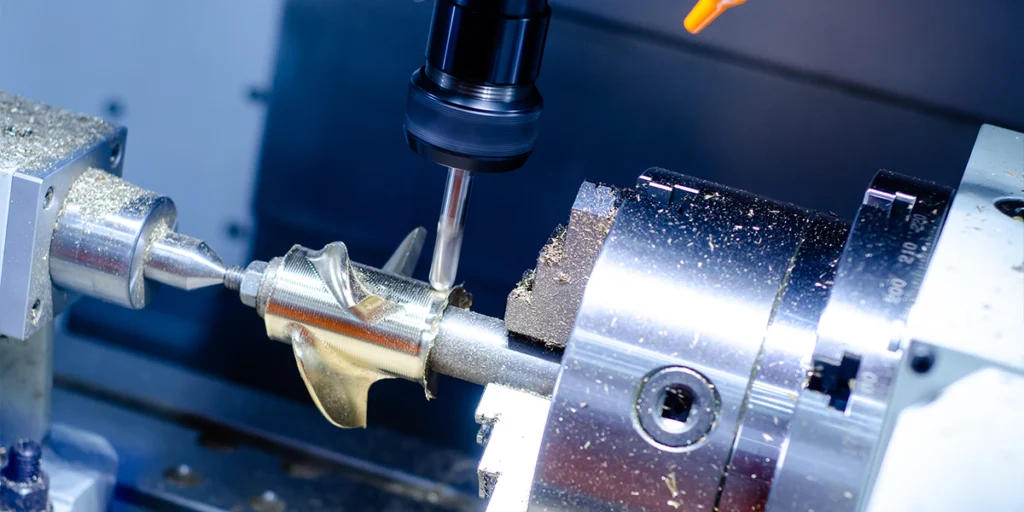
CNC turning
CNC turning is mainly used for:
- Shaft-type parts
- Connector parts
- Threaded parts
- Cylindrical structural components
Compared to milling, turning is better suited for parts requiring high coaxiality and roundness. We currently support CNC turning of stainless steel with a maximum diameter of 431mm and a length of 990mm , which can meet the needs of large parts in industrial equipment, automobiles, and mechanical systems.
Composite processing
Many high-precision parts are not simply turned or milled.
- One end needs to be threaded.
- Irregularly shaped holes are required on the side.
- Simultaneous existence of curved surfaces and cylindrical structures
In such cases, milling and turning or multi-process machining is usually required. For customers, a one-stop machining supplier can reduce outsourcing, improve part consistency, and shorten delivery time.
Why is stainless steel suitable for CNC machining?
High strength and stability
Stainless steel possesses excellent mechanical properties and can withstand long-term stress:
- High load
- High-temperature environment
- Continuous operation
- Complex operating conditions
Compared to ordinary steel, stainless steel parts typically have a longer service life and better structural stability. This is why many industrial equipment, automation systems, and high-end machinery tend to use stainless steel parts.
Excellent corrosion resistance
Corrosion resistance is one of the most significant advantages of stainless steel, especially in the following environments:
- Humid environment
- Chemical environment
- Marine environment
- Food processing environment
304 and 316 stainless steel are widely used in:
- Medical equipment
- Food machinery
- Pump and valve system
- Automated equipment
- Fluid control system
316 stainless steel, due to its molybdenum content, exhibits stronger corrosion resistance.
Suitable for manufacturing high-precision parts
Although stainless steel is more difficult to machine than aluminum, it is ideal for manufacturing high-precision parts. With stable CNC equipment, appropriate toolpaths, and mature cutting parameter control, the following can be achieved:
- High dimensional consistency
- More stable assembly precision
- Better surface quality
- Lower batch error
Zhuohua Hardware currently offers machining accuracy up to ±0.02mm, supporting the precision manufacturing of complex stainless steel parts.
Supports the processing of complex structures
With the development of 5-axis CNC machining technology, stainless steel can now be manufactured with more complex geometries.
- Curved surface structure
- Deep cavity structure
- Multi-angle holes
- Integrated complex parts
This is particularly important for the aerospace, robotics, and medical industries. Compared to traditional machining methods, multi-axis CNC machining can reduce the number of setups and improve machining efficiency and dimensional stability.
Suitable for long-term mass production
For OEM projects, stainless steel is not only suitable for prototyping but also for long-term mass production.
- High material stability
- Long component lifespan
- Mature processing technology
- Well-developed global supply chain
For long-term projects, stable processing quality and supply chain capabilities are often more important than the cost of a single processing cycle.
Common applications of stainless steel parts
Medical equipment parts
Stainless steel is widely used in the medical industry , especially 304 and 316 stainless steel.
- Surgical Instruments
- Structural components for medical equipment
- Precision Connectors
- Housings for Implantable Devices
- Fluid Control Components
The medical industry typically has higher requirements for parts:
- Corrosion resistant
- High cleanliness
- High dimensional accuracy
- Surface uniformity
Therefore, medical stainless steel machining relies not only on equipment but also on stable process control capabilities. Zhuohua Hardware supports high-precision stainless steel machining and surface treatment, meeting the medical industry’s consistent requirements for precision parts.
Aerospace parts
The aerospace industry has extremely high requirements for material strength, heat resistance, and reliability.
- Brackets
- Fixtures
- Connection Structures
- Hydraulic System Components
- Engine Auxiliary Components
These types of parts typically have:
- Complex structures
- Strict tolerances
- Small batch and multiple varieties
For processing plants, not only is 5-axis machining capability required, but also a mature quality control system.
Industrial automation equipment
Industrial automation is currently one of the fastest-growing application areas for stainless steel CNC parts.
- Robotic arm parts
- Automated grippers
- Transmission structures
- Sensor mounts
- Precision support components
Compared to ordinary steel, stainless steel offers the following advantages:
- Better wear resistance
- More stable long-term operating performance
- Stronger environmental adaptability
The lifespan advantage of stainless steel parts is even more pronounced, especially in humid, high-temperature, or dusty environments.
Food and fluid equipment
Food processing equipment requires extremely stringent standards for the corrosion resistance and hygiene properties of materials. Therefore, 304 and 316 stainless steel are widely used in:
- Food machinery
- Filling equipment
- Pump and valve systems
- Piping connections
- Fluid control components
These types of parts typically require:
- Smooth surface
- Stable size
- Pollution-free processing environment
For export projects, many clients also pay attention to material certification and surface treatment consistency.
Automotive and New Energy Industry
With the development of new energy vehicles and automated manufacturing, the demand for stainless steel precision parts is growing rapidly.
- Battery structural components
- Motor assemblies
- Transmission components
- Sensor housings
- Heat dissipation structural components
These types of projects typically have:
- Large batches
- High precision requirements
- High requirement for stable delivery time
Zhuohua Hardware supports everything from rapid prototyping to mass production and can provide DFM optimization suggestions based on project needs to help customers reduce overall manufacturing costs.
Main challenges in stainless steel processing
High difficulty in material cutting
Stainless steel is more difficult to cut than aluminum and ordinary steel.
- Higher strength
- Significant work hardening
- Low thermal conductivity
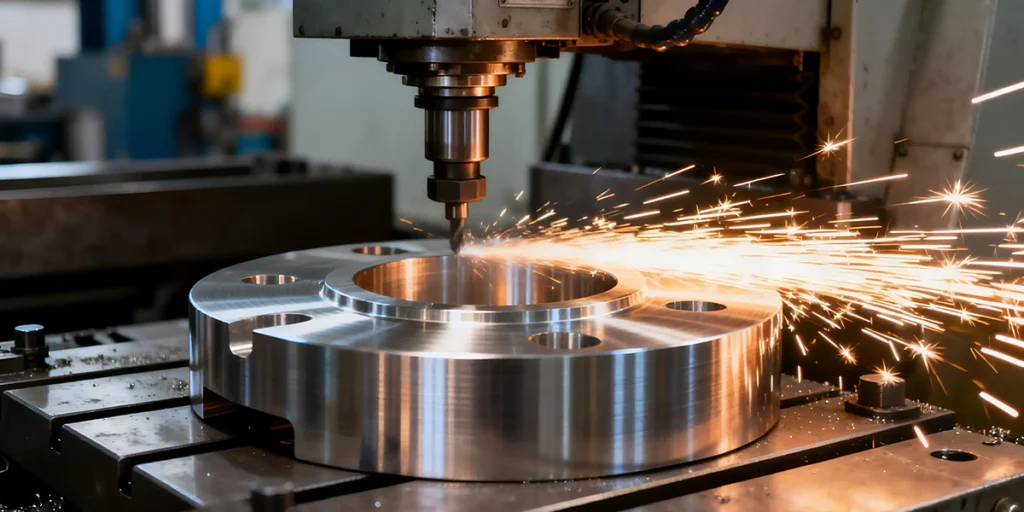
During machining, heat is more likely to concentrate in the tool area, which leads to faster tool wear.
If the cutting parameters are not reasonable, the following problems may also occur:
- Burrs
- Surface burns
- Size instability
- Tool breakage
Therefore, stainless steel processing relies heavily on mature processing experience.
The tool wears out faster
Stainless steel significantly increases tool load, especially in the following situations:
- Deep cavity machining
- Small tool processing
- Long-term continuous cutting
- Machining of high-hardness stainless steel
The tool life will decrease significantly.
Specialized processing plants typically adjust the specifications based on different material grades:
- Tool materials
- Coating solutions
- Cutting speed
- Cooling method
This is why experienced suppliers are better able to control processing costs and maintain stability.
Controlling thermal deformation is difficult
Stainless steel is prone to heat accumulation during processing. For high-precision parts, thermal deformation can directly affect:
- Dimensional tolerances
- Flatness
- Coaxiality
- Assembly accuracy
This problem is particularly pronounced in thin-walled structures and complex geometric parts.
Therefore, high-precision stainless steel machining typically requires:
- Optimal processing path
- Multiple finishing processes
- Stable clamping method
- Precise cooling control
Higher surface quality requirements
Many stainless steel parts not only require dimensional accuracy but also high surface quality.
- Medical equipment
- Food machinery
- Exterior structural components
- High-end industrial equipment
If the processing parameters are not properly controlled, the following problems may occur:
- Knife pattern
- Scratches
- Burrs
- Surface unevenness
Therefore, after processing, the following is usually required:
- Polishing
- Wire drawing
- Sandblasting
- Electropolishing
Zhuohua Hardware supports a variety of surface treatment options and can provide customized treatments to meet different application needs.
Why are professional CNC machining plants more important?
Stainless steel processing relies more on experience
Many clients find at the beginning of a project that “being able to process stainless steel” and “being able to reliably process high-quality stainless steel parts” are completely different concepts.
Stainless steel processing involves:
- Tooling strategy
- Process Path
- Thermal deformation control
- Clamping stability
- Surface treatment experience
All of these require long-term project experience. Especially in projects involving complex parts and high precision, experience is often more important than equipment alone.
Specialized equipment affects the final quality
High-quality stainless steel processing typically requires:
- High-rigidity equipment
- Stable spindle
- High-precision testing equipment
- Multi-axis machining capability
Especially for complex parts, multi-axis machining can effectively reduce repeated clamping and improve dimensional consistency.
Zhuohua Hardware Support:
- 3-axis CNC machining
- 3+2 axis machining
- 5-axis linkage machining
- High-precision CNC turning
It can meet the manufacturing needs of complex stainless steel parts.
A stable supply chain is needed to move from prototype to mass production.
Many projects involve more than just “making a prototype.” The real difficulty lies in:
- Small-batch trial production
- Long-term stable mass production
- Delivery time control
- Consistent quality
This is why more and more OEM customers prefer to cooperate with established suppliers in the long term.
DFM capabilities can reduce overall costs.
A good stainless steel processing supplier does more than just “process according to drawings.” More importantly, they can provide:
- DFM optimization
- Structural manufacturability recommendations
- Cost optimization plan
- Suggestions for process improvement
In many cases, simply adjusting a corner fillet, hole position, or structural design can significantly reduce processing time and manufacturing costs. For long-term projects, this engineering support capability is often more valuable than a single quote.
Why are more and more customers choosing Zhuohua Hardware?
As a professional CNC machining manufacturer , Zhuohua Hardware has long served:
- Medical
- Automation
- Robot
- Aerospace
- Industrial equipment
We can provide:
- Machining accuracy ±0.02mm
- 50+ supporting materials
- 5-axis complex machining capability
- CNC turning and CNC milling
- Surface treatment and quality inspection support
Whether it’s rapid prototyping or mass production, we can help our customers improve manufacturing efficiency and reduce overall supply chain costs.