


What is large-scale CNC turning?
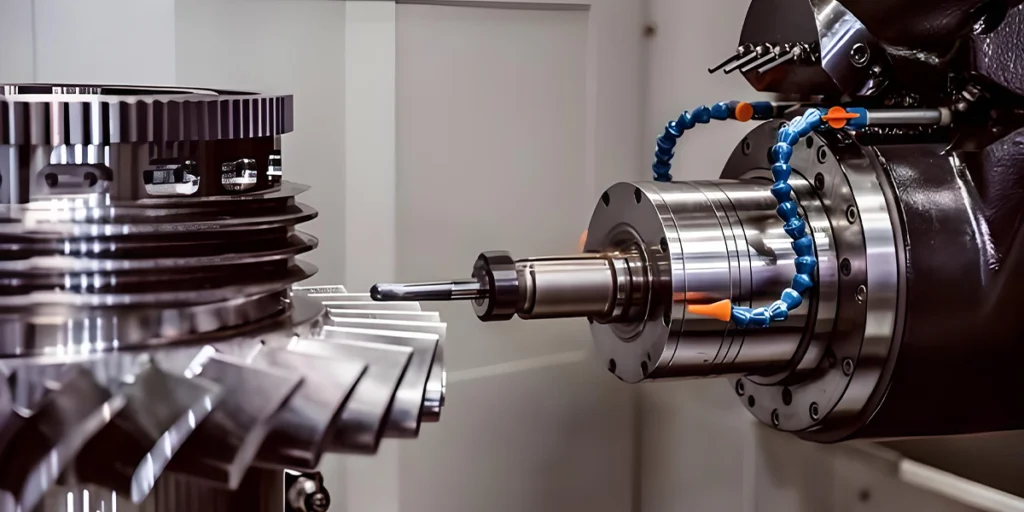
Large CNC turning refers to a manufacturing service that uses heavy-duty CNC lathes to perform precision turning on parts that are large in size, heavy in weight, have a thick structure, or have a large length-to-diameter ratio. Compared with standard turning, large turning places greater emphasis on equipment rigidity, clamping stability, cutting load control, and machining safety.
These types of machining typically involve larger workpiece diameters, longer machining lengths, and higher cutting force requirements, thus demanding significantly higher equipment capabilities and engineering experience.
What are the typical part characteristics involved in large-scale CNC turning?
If your part has the following characteristics, you will typically need to evaluate its large-scale turning capability:
- Larger outer diameter (large-sized discs, flanges, rollers, etc.)
- Longer length (long shafts, drive shafts, rollers, etc.)
- High weight per piece
- High material hardness (alloy steel, stainless steel, etc.)
- High requirements for concentricity and circular runout
- Small batch size but high value per unit
These types of parts are commonly found in industries such as industrial equipment, energy systems, automation equipment, ships, construction machinery, and oil and gas.
The main difference between large turning and ordinary turning
| project | Ordinary turning | Large turning |
| Workpiece size | Small and medium-sized | Large diameter/long dimension |
| Processing load | conventional | High cutting load |
| Clamping requirements | Standard chuck | Heavy-duty clamps / top supports |
| Precision control | standard | More reliant on experience and craftsmanship |
| Equipment Requirements | conventional CNC lathe | Heavy-duty high-rigidity lathe |
Large-scale turning is not simply about “making the machine bigger,” but rather about upgrading the entire manufacturing capability.
Why do customers need large-scale CNC turning services?
Many buyers encounter these problems when developing large mechanical parts:
- Insufficient processing range of ordinary equipment
- Excessive workpiece weight leads to unstable clamping.
- Bending deformation after machining of long shafts
- Surface roughness does not meet standards
- Multiple outsourcing efforts resulted in excessively long delivery times.
At this point, finding a supplier with large-scale turning capabilities is more efficient than repeatedly splitting orders.
Zhuohua Hardware’s support for large-scale turning
We can provide professional CNC turning services, supporting:
- Maximum turning diameter: 431mm
- Maximum machining length: 990mm
- Maximum swing: 350mm
- Precision control: ±0.02mm
- Prototype to mass production support
For medium and large shafts, flanges, connectors, and core equipment components, we can evaluate the optimal manufacturing solution based on the drawings and coordinate with subsequent milling, drilling, surface treatment, and other requirements.
Applications of large shaft/flange parts
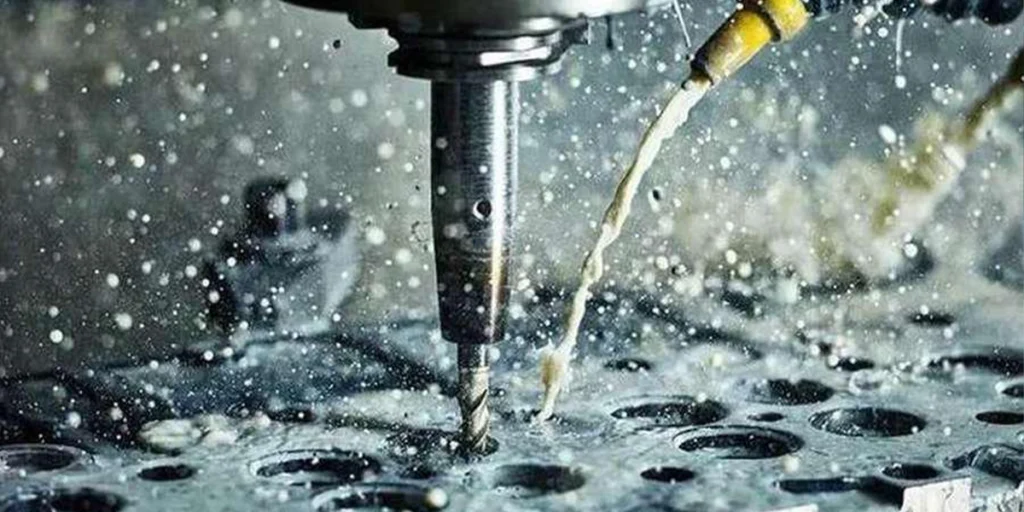
The two most common product categories in large-scale CNC turning are shaft parts and flange parts. These two types of parts may seem simple in structure, but in real industrial environments, they often play a critical role in transmission, connection, sealing, or support, and have very high requirements for dimensional stability.
1. Applications of large shaft parts
Shaft-type parts are widely used in various mechanical equipment and usually require high concentricity, high straightness and stable surface quality.
Common products include:
- Motor spindle
- Conveyor rollers
- Gearbox output shaft
- Piston rod of hydraulic equipment
- Industrial roller shaft core
- Long shaft assembly for automated equipment
Why are shaft-type parts suitable for CNC turning?
Shaft-type parts typically rotate around a centerline, and CNC turning itself involves machining around a rotational axis, thus offering advantages in the following aspects:
- Precise control of outer diameter dimensions
- Coaxiality stable
- High-efficiency processing of stepped structures
- Easy to process threads and grooves
- High batch consistency
For long shaft parts, the proper use of process auxiliary devices such as tailstocks, center rests, and follow rests is particularly crucial.
2. Applications of large flange components
Flange components are commonly used for connection, sealing, fixing, or load bearing, and are key interface components in many equipment systems.
Common products include:
- Pipe connection flange
- Pump and valve flanges
- Equipment mounting flange
- Motor end cover
- Slewing support connecting plate
- Thick-walled disc structural components
Why do flange parts require specialized machining capabilities?
Common requirements for flange parts include:
- The outer circle and the inner hole are concentric
- Good end face flatness
- Accurate bolt hole fit
- Sealing surface roughness meets standards
If processing capacity is insufficient, the following may occur:
- Poor sealing
- Assembly runout
- Screw hole fit deviation
- Reduced lifespan
The outer circle, inner hole, and end face of a flange are usually machined by turning, while the hole positions and special structures can be machined by milling.
3. Industry Application Scenarios
Large shaft and flange parts are widely used in:
Industrial equipment
- Conveying system
- Packaging machinery
- Printing machinery
Energy industry
- Pump and valve system
- Power generation equipment
- Oil and gas equipment
Construction machinery
- Support shaft
- Connecting disk
- Driver components
Automation industry
- Precision long shaft
- Servo connectors
- Customized mechanical structural components
4. How does Zhuohua Hardware support this type of project?
We can provide the following services to our customers:
- Turning of large shafts
- Precision manufacturing of flange parts
- Secondary machining of milling and drilling
- Surface treatment accessories
- From small-batch trial production to stable delivery
For buyers, what’s truly important is not just finding a processing plant, but finding a supplier who can consistently control the quality of large parts.
If you have drawings of large shafts or flanges, or projects in production, you can provide the drawings to Zhuohua Hardware, and we can assist in assessing processing feasibility, delivery time, and cost optimization solutions.
Equipment stroke and clamping capacity
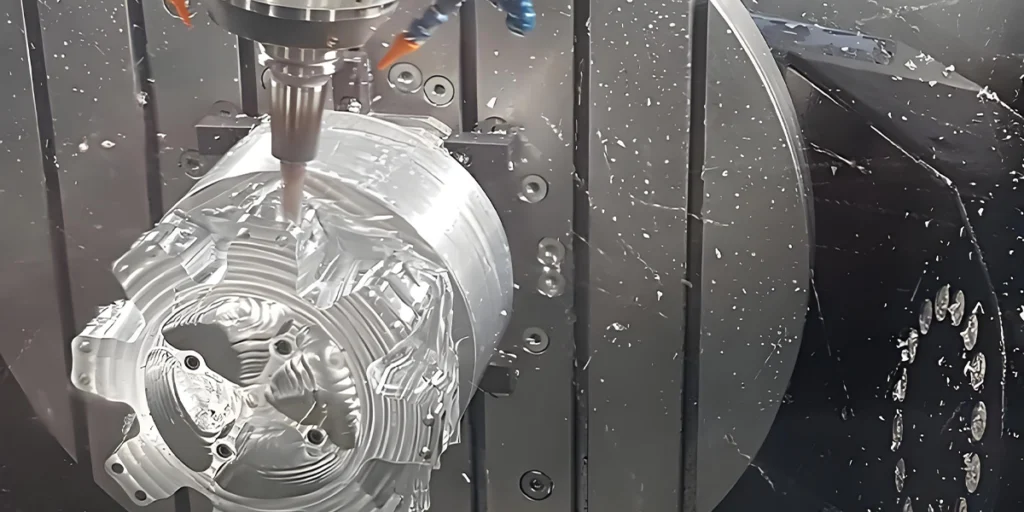
Whether a large-scale CNC turning project can be successfully implemented often depends not on the drawings themselves, but on whether the equipment truly has the corresponding machining range, load-bearing capacity, and stable clamping capability.
Many customers only focus on the unit price when inquiring about prices, but they overlook a crucial issue: Is the supplier’s equipment truly suitable for the size and structure of your parts? If the equipment is inadequate, even if processing is forced, it is easy to experience fluctuations in precision, deformation, delivery delays, or even rework and scrapping.
1. What is equipment travel capacity?
In CNC turning, the machine travel typically refers to the range of dimensions that the machine tool can process, including:
- Maximum turning diameter
- Maximum machining length
- Maximum swing diameter
- Spindle through-hole dimensions
- Dota travel range
These parameters determine whether the parts can be processed safely and reliably.
2. Why does having the correct dimensions not guarantee that the product can be manufactured?
Many factories will say “the machine can fit in”, but that doesn’t mean it can process the machine stably.
In actual production, the following also needs to be considered:
- Does the cutting tool have enough machining space?
- Does the installation of the fixture affect the toolpath?
- Is it safe when the workpiece rotates?
- Is the cutting vibration controllable?
- Does the high-speed rotation of long components cause excessive vibration?
Therefore, professional suppliers will assess based on “manufacturability” rather than just theoretical dimensions.
3. Why is clamping capability important?
The heavier, longer, and more irregular the large part, the more critical the clamping process becomes.
If the clamping capacity is insufficient, common problems include:
- Workpiece eccentric rotation
- Size instability
- Surface with obvious knife marks
- Coaxiality out of tolerance
- Loosening during cutting
This is especially common in large shaft and flange parts.
4. Common clamping methods
Depending on the component structure, the following combination methods are typically used:
Three-jaw/Four-jaw chuck
Suitable for quick clamping of round parts, commonly used in conventional turning.
Customized soft claw gripper
For high-precision parts, improve repeatability and positioning accuracy.
Top support
Used for long shaft parts to reduce mid-section runout.
Center rest/Follow rest
Used for slender shafts to improve rigidity and stability.
Special tooling fixtures
Used for irregularly shaped or high-value parts to improve safety and efficiency.
5. Zhuohua Hardware’s turning equipment capabilities
We offer professional CNC turning capabilities; equipment parameters include:
- Maximum turning diameter: 431mm
- Maximum machining length: 990mm
- Maximum swing: 350mm
- Spindle through hole: 40mm
This allows us to provide stable support:
- Medium and large shaft components
- Flange-type parts
- Sleeve-type parts
- High coaxiality structural components
- Medium-volume continuous orders
Difficulties in machining large parts
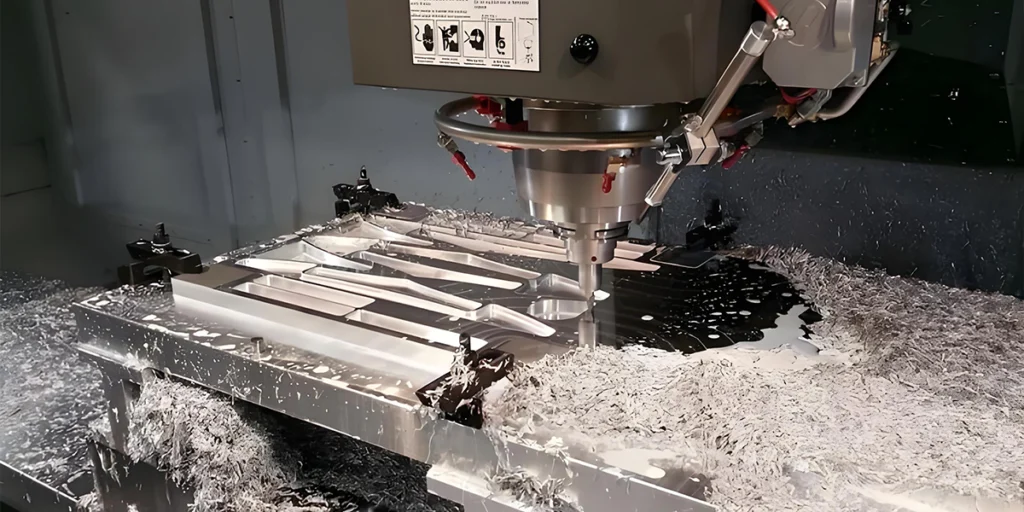
Large parts may appear to be just “enlarged versions of small parts”, but the actual manufacturing difficulty often increases exponentially.
Larger size means:
- Higher material costs
- Higher clamping risk
- Longer processing time
- Precision control is more difficult.
- The cost of scrapping is greater
Therefore, large parts projects rely more on experienced suppliers than simply low-priced suppliers.
1. Insufficient rigidity and vibration problems
When machining large parts, the tool load is higher, and if the equipment lacks rigidity, vibration (chatter) is easily generated. The result is usually:
- Poor surface roughness
- Size fluctuation
- Decreased tool life
- Reduced processing efficiency
This problem is particularly common with large-diameter flanges and long shaft parts.
2. Long shaft-type parts are prone to deformation.
Long shaft workpieces are susceptible to the following during rotation and cutting:
- Drooping due to weight
- Cutting force offset
- Effects of thermal expansion
This leads to:
- Straightness out of tolerance
- Mid-section dimensional deviation
- Coaxiality abnormality
The solution usually requires:
- Top-tier support
- Central frame auxiliary
- Segmented processing strategy
- Finishing compensation
3. Thermal deformation affects dimensional stability.
Large parts require long cutting times, resulting in significant heat accumulation. Insufficient process control may lead to the following:
- Inconsistent front and rear dimensions
- Changes in inner diameter
- Decreased flatness of end face
Professional factories typically go through:
- Cutting parameter optimization
- Coolant control
- Separate processing of coarse and fine materials
- Stabilize temperature midway
To reduce the thermal impact.
4. Clamping errors are magnified.
A 0.02mm deviation in small parts may not be a big problem, but for large parts, it will be magnified into an assembly problem.
- Flange end face misalignment leads to seal failure.
- Long shaft runout leads to a decrease in bearing life.
- Coaxial error causes transmission abnormalities
Therefore, large parts rely more on high-quality first article verification and process inspection.
5. High material removal rate, difficult to control costs.
Large workpiece blanks have high costs and long processing times. If the process route is wrong, it will directly increase the total cost.
- Excessive allowance in the blank
- Improper selection of cutting tools
- Multiple clamping and repeated processing
- Inappropriate beat design
This is why experienced engineering teams can directly influence procurement costs.
6. How Zhuohua Hardware solves the problem of large components?
In medium to large-scale turning projects, we focus on controlling:
- Reasonable clamping scheme
- Staged roughing and finishing
- Dimensional process inspection
- Multi-process collaboration (turning + milling)
- Stable delivery time management
Helping customers achieve a balance between accuracy, cost, and delivery.
If you are looking for a supplier to process large shafts, flanges, or core equipment components, Zhuohua Hardware can assist in assessing project feasibility and provide more reliable manufacturing and delivery solutions.