


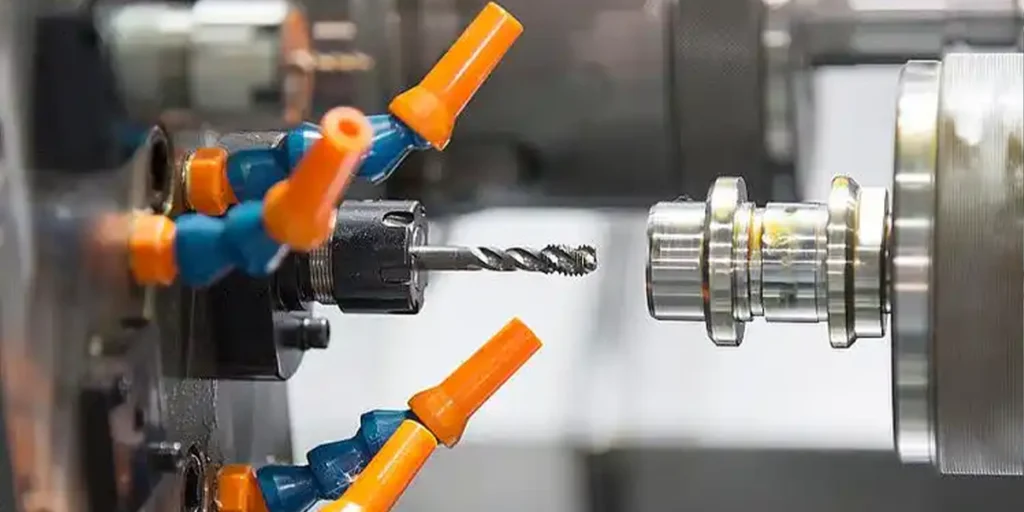
Definition of high-precision CNC turning
High-precision CNC turning generally refers to machining turned parts with minimal dimensional errors, high repeatability, and stable surface quality through high-performance CNC lathes, stable process control, and strict inspection procedures.
In actual procurement, “high precision” is not a fixed number, but depends on the application of the part, assembly requirements, and industry standards. For ordinary mechanical parts, ±0.05mm may be sufficient; however, for medical, automation, aerospace, or precision instrument parts, more stringent dimensional control is often required, such as ±0.02mm, ±0.01mm, or even higher requirements.
Simply put, the core of high-precision turning is not just about making the dimensions accurate, but about consistently and consistently making each batch and each piece accurate.
This is why many customers emphasize precision CNC turning service, rather than ordinary turning machining, when looking for suppliers.
Which industries need high-precision turning the most?
- Surgical instrument shafts
- Precision connectors
- Testing equipment parts
Stable tolerances and a high-cleanliness surface are typically required.
Automation and Robotics Industry
- Servo bushing
- Precision positioning pins
- Transmission connecting parts
It requires high precision and stable long-term operation.
- High-strength connectors
- Lightweight precision parts
Material consistency and dimensional reliability are required.
- Aluminum casing
- Precision metal components
Both dimensions and appearance must meet the requirements.
High-precision turning ≠ simply buying high-end equipment
Many customers believe that as long as the equipment is advanced, it can definitely produce high-precision parts. This is not the case.
High-precision manufacturing typically depends on a complete system:
- Stabilizing equipment
- Appropriate tool selection
- Process parameter control
- Temperature and environmental management
- Detection capabilities
- Operational experience
- Batch process control
Equipment is just the foundation; the system determines the outcome.
Zhuohua Hardware’s high-precision CNC turning services
In our actual projects, high-precision parts are often not the “most complex” parts, but the parts that cannot afford to make mistakes.
What customers really need is:
- First piece qualified
- The second batch is still qualified.
- Remaining stable despite increased orders
This is why we place great importance on process standardization and process quality control when serving overseas clients.
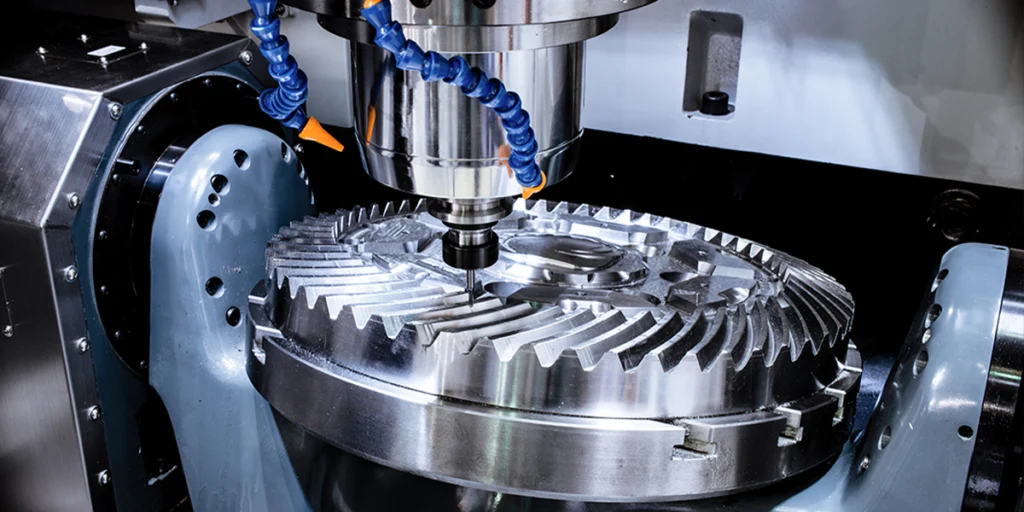
Tolerance Standards Introduction
In high-precision CNC turning projects, one of the most frequently asked questions by customers is: What tolerance can you achieve?
The correct answer is not simply to give a number, but to first confirm the functional requirements of the part. This is because different sizes, materials, and structures have a significant impact on tolerance capabilities.
What is tolerance?
Tolerance is the reasonable range of deviations that a dimension is allowed to have near its design target value.
For example, the drawing indicates: Ø20.00 ±0.02mm
The final dimensions are allowed to be:
- Minimum: 19.98mm
- Maximum: 20.02mm
If it goes outside the range, it may affect assembly or function.
Common turning tolerance grades reference
The following are common tolerance ranges in manufacturing (actual tolerances need to be determined based on the part structure): Ordinary machining tolerances are approximately ±0.05mm to ±0.10mm.
Applicable to:
- Non-critical structural components
- General mechanical parts
- Cost-priority projects
Precision machining tolerance is approximately ±0.02mm to ±0.05mm.
Applicable to:
- Mating parts
- Bushing-type parts
- Automated equipment parts
High-precision machining tolerance is approximately ±0.01mm to ±0.02mm or tighter.
Applicable to:
- Medical components
- High-speed rotating components
- Precision instrument parts
Not just linear dimensional tolerances
In high-precision projects, geometric tolerances are often more important, for example:
- Concentricity
- Roundness
- Circular jumping
- Verticality
- Parallelism
- Position
For example, if the outer diameter of a shaft is correct, but the circular runout is too large, it may still lead to assembly failure. Therefore, professional suppliers usually pay attention to both dimensional tolerances and GD&T requirements when evaluating drawings.
Materials also affect tolerance capabilities
Different materials exhibit different processing characteristics:
- Aluminum alloy
- Easy to process
- Good dimensional stability
- Suitable for high-efficiency production
Stainless steel
- High strength
- Higher processing heat
- Higher requirements for cutting tools and parameters
Brass
- Free-cutting
- Excellent batch stability
Engineering plastics
- May expand and contract due to temperature and humidity.
Therefore, even with the same ±0.02mm difference, the control difficulty for aluminum parts and plastic parts is not the same.
Is tighter tolerance on the drawings always better?
No. Excessively tightening tolerances can lead to:
- Increased processing time
- Increased tool wear
- Increased testing costs
- Prices have increased significantly
The reasonable approach is to strictly control critical dimensions while relaxing requirements for non-critical dimensions. This can significantly reduce procurement costs while ensuring functionality.
Zhuohua Hardware’s Implementation Standard
In CNC turning projects, we implement different levels of control schemes based on part requirements, which can support:
- Standard mechanical tolerance requirements
- Precision fitting parts requirements
- High precision ±0.02mm project
- Specific control of key dimensions in drawings
We can also provide dimensional inspection and quality documentation support according to customer requirements.
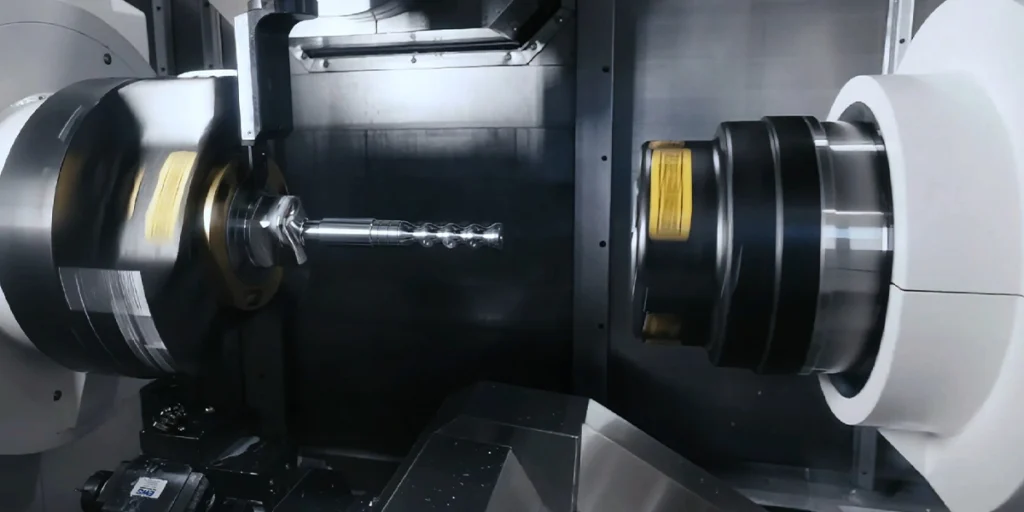
Key factors affecting accuracy
Many customers ask directly when inquiring about prices: Can this part be made to ±0.02mm?
The real answer is usually: it depends on the part’s structure, materials, dimensions, location, and whether the entire manufacturing process is controllable.
High-precision CNC turning is not the result of a single factor, but rather the result of the combined effect of multiple factors. Even with high-end equipment, if process control is inadequate, it is still impossible to consistently produce high-precision parts.
1. Machine tool body accuracy and stability
Equipment is fundamental. The following capabilities of a CNC lathe directly affect the final accuracy:
- Spindle runout accuracy
- Guide rail stability
- Repeatability of lead screw positioning
- Dota 2 repositioning capability
- Thermal stability during long-term operation
For ordinary parts, differences in equipment condition may not be noticeable; however, for items with tolerances of ±0.02mm or tighter, these differences can be amplified rapidly. This is why established suppliers regularly perform equipment maintenance, calibration, and accuracy verification.
2. Tool selection and wear control
The condition of the cutting tool directly determines dimensional stability and surface quality.
Common effects include:
- Wear on the cutting tip causes gradual dimensional drift.
- The material of the cutting tool is not suitable for the current materials.
- Insufficient tool rigidity causes tool vibration.
- Inappropriate tool geometry
For example, when producing 1000 pieces in batches, without tool life management, the dimensions of the first 100 pieces may deviate significantly from those of the last 300 pieces. Professional factories typically establish tool replacement cycles instead of waiting until the tools are scrapped.
3. Differences in material properties
The processing difficulty can be completely different depending on the material on the same blueprint.
aluminum alloy
- Free-machining
- High efficiency
- High coefficient of thermal expansion
Stainless steel
- Significant work hardening
- Concentrated heat
- Sensitive to parameters
brass
- Good dimensional stability
- Suitable for high-efficiency batch processing.
Engineering plastics
- Susceptible to ambient temperature
- May produce elastic deformation
Therefore, high-precision projects must develop processes based on material properties, rather than simply replicating procedures.
4. Clamping method and workpiece rigidity
Many dimensional errors are not caused by cutting, but by clamping.
- Over-tight clamping can cause deformation of thin-walled parts.
- Insufficient clamping length causes vibration.
- The long shaft component was not supported by a tailstock.
- Inconsistent secondary clamping datum
For slender shafts, thin-walled sleeves, and small precision parts, the clamping design often determines success or failure.
5. Processing parameter settings
Improper settings for spindle speed, feed rate, and depth of cut can lead to:
- Size drift
- Vibrating knife pattern
- Poor surface roughness
- Shortened tool life
Experienced engineers dynamically adjust parameters based on materials, tools, and structure, rather than using fixed templates.
6. Environmental and Temperature Influences
Temperature changes cannot be ignored in high-precision machining.
- Workpiece expansion due to heat during cutting
- Equipment heats up during prolonged operation
- Temperature differences during measurement cause variations in readings.
This is why truly high-precision projects place great emphasis on processing pace, coolant management, and testing environment.
7. Are the detection capabilities compatible?
Without reliable testing, high-precision manufacturing is impossible. If a factory can only rely on experience and cannot perform effective measurements, even if it produces qualified products, they cannot be consistently replicated.
How Zhuohua Hardware Controls These Factors
In actual projects, we develop customized solutions based on the requirements of the parts, including:
- Suitable equipment matching
- Tool life management
- Fixture optimization
- Sampling inspection of critical dimensions during the process
- Material batch management
- Final shipment inspection
High-precision parts are not made by chance, but by systematic control.
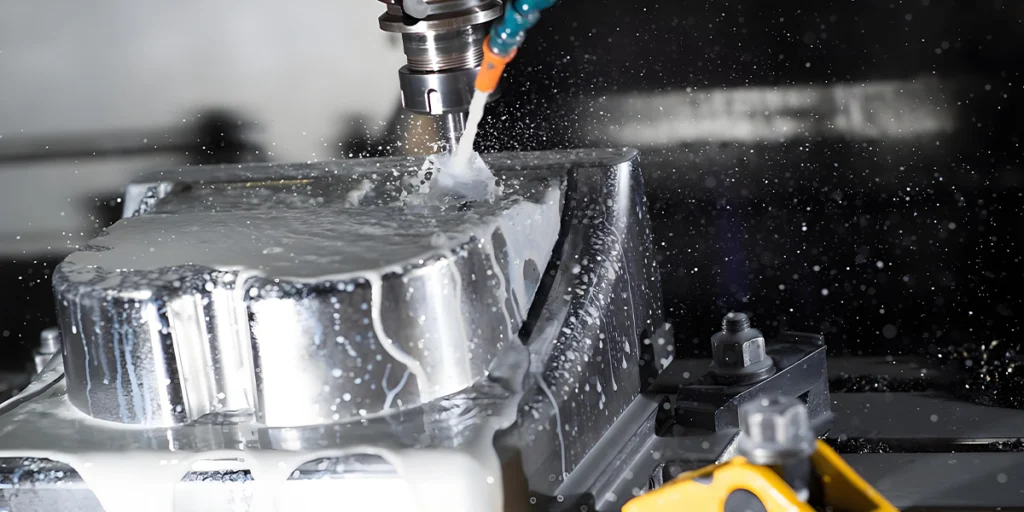
How to ensure batch consistency?
Many suppliers can produce acceptable samples, but problems begin to emerge after mass production begins:
- The first batch passed, but the deviation increased in the second batch.
- The first 200 pieces are stable, the next 800 pieces drift.
- Size varies significantly across different shifts
- Inconsistent assembly of replacement orders from different months
This illustrates that the issue isn’t “whether they can process it,” but rather whether they can achieve stable mass production. For purchasing customers, batch consistency is often more important than individual piece precision.
1. Standardized process documents
The first step to batch consistency is to ensure that every production run is performed according to the same standard.
Mature factories are typically established as follows:
- Fixed processing sequence
- Fixed tool model
- Fixed cutting parameter range
- Fixed clamping datum
- Fixed detection nodes
This ensures consistency even when different operators produce at different times.
2. First Article Confirmation Mechanism
A first-piece confirmation should be performed before each batch of production. The confirmation typically includes:
- Critical dimensions
- Appearance quality
- Thread condition
- Fitting dimensions
- Special requirements for drawings
After the first piece passes inspection, mass production can be initiated, which can significantly reduce the risk of the entire batch.
3. Conduct process inspections, not just final inspections.
By the time final sampling is done, problems have often already occurred. A more effective method is process inspection:
- Measure critical dimensions every 20 pieces
- Reconfirm after tool replacement
- Re-inspection during shift change
This allows for timely correction before the deviation widens.
4. Tool life management
One of the most common causes of dimensional drift in mass production is tool wear.
- Front section is too large
- The dimensions gradually decrease at the rear.
- Surface roughness deteriorates
Establishing a tool life replacement system is more economical than reworking after problems occur.
5. Stable batch supply of raw materials
Material differences can also affect batch consistency:
- Different hardness
- Different straightness
- Different surface conditions
- Different internal stresses
Therefore, established suppliers will manage incoming materials instead of putting any materials directly into the system.
6. Data Recording and Traceability
Long-term clients typically require traceability:
- When will it be produced?
- Which batch of materials to use?
- Who operates it?
- How are the test records?
This is especially important in medical, automotive, and industrial automation projects.
How Zhuohua Hardware Implements Batch Consistency Control
We support our clients in a smooth transition from samples to mass production. Our standard workflow includes:
- First item confirmed
- Process inspection
- Outbound inspection
- Key dimension records
- Stable tool management
- Fixed process parameter control
This allows customers to maintain the same assembly performance as the initial sample when placing additional orders.

Our ±0.02mm CNC Turning Service
For parts projects requiring high-precision fit, stable assembly, and batch consistency, we can provide CNC turning services with an accuracy level of ±0.02mm, suitable for the manufacturing of various metal and engineering plastic parts.
At Zhuohua Hardware, we have mature CNC turning capabilities and an engineering support team to assist customers in completing:
- Precision shaft, sleeve, and connector machining
- Manufacturing of aluminum alloy, stainless steel, brass, and plastic parts.
- From prototype to mass production
- Dimensional inspection and quality control
- Quick quotes and delivery support
If your part drawings contain critical tolerance requirements, or if your current supplier cannot consistently meet accuracy standards, we recommend conducting an engineering assessment in advance during the quotation stage.
We welcome you to send us drawings or samples. Our engineering team can quickly assess processing feasibility, precision options, and cost optimization suggestions, and provide a competitive quote.