


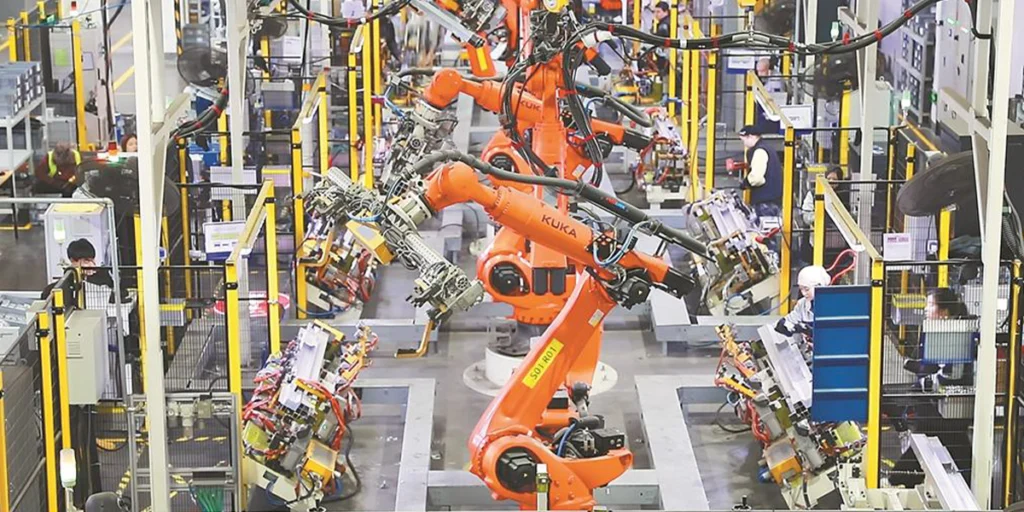
The motion capability of an articulated robotic arm essentially depends on the design and implementation of its power system.
Structurally, the power system of a robotic arm is not complex, but it requires high stability and precision. Its core components can be summarized as: motor drive + reduction system + torque transmission structure.
This system directly determines the robotic arm’s load capacity, operational accuracy, and long-term stability.
Motor system: servo motors and stepper motors
The motor is the power source for each joint of the robotic arm, responsible for converting electrical energy into mechanical motion.
Servo Motor
The current mainstream configuration of industrial robotic arms.
Features:
- Supports closed-loop control (position, speed, torque)
- Fast response time
- High control precision
Applicable to:
- Multi-axis linkage control
- High-precision trajectory operation
- Medium-to-high load robotic arm
In articulated robotic arms, most key joints (shoulder, elbow, wrist) are driven by servo motors.
Stepper motor
Primarily used for low-cost or light-load applications:
- Simple control method
- Lower cost
However, there are limitations in the following aspects:
- Poor high-speed performance
- Easy to lose steps
- Difficulty in achieving high-precision closed-loop control
Therefore, it is used less in industrial robots and appears more often in teaching equipment or light automation systems.
Reduction system: RV reducer and harmonic reducer
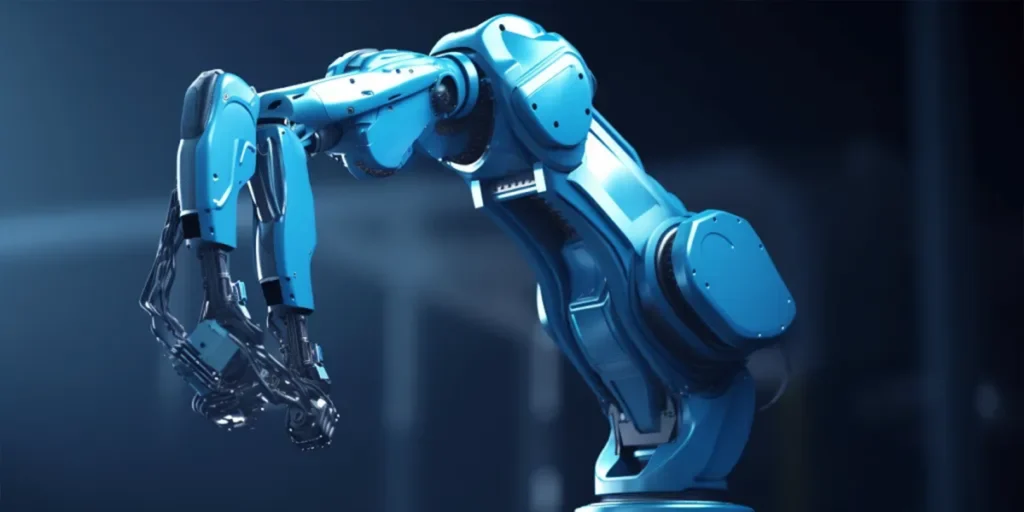
The electric motor provides high-speed, low-torque output and cannot directly drive the joints of the robotic arm. Therefore, a reduction gear system is installed at each critical joint location to reduce the rotational speed, amplify the torque, and improve control precision.
The performance of the speed reducer directly determines the stability and precision of the robotic arm.
RV reducer (Rotary Vector)
Primarily used for heavy-duty joints in robotic arms, for example:
- Base
- Shoulder joint
- Elbow joint
Features:
- High rigidity and strong impact resistance
- High load-bearing capacity
- Long service life
Applicable to:
- High-load operating conditions
- High torque output scenarios
However, its structure is relatively complex and requires high precision in manufacturing and assembly.
Harmonic Drive
Primarily used for light-load or high-precision joints in robotic arms, for example:
- Wrist joint
- End attitude adjustment
Features:
- Small size and compact structure
- High transmission accuracy
- Almost no return travel time
Applicable to:
- Precise operation
- High-precision path control
However, it is not as good as the RV reducer in terms of load-bearing capacity and impact resistance.

Torque transmission path: from motor to robotic arm movement
In a robotic arm, power must not only be generated and amplified, but also stably transmitted to various structural parts to ultimately drive the movement of the entire machine.
A typical torque transmission path can be simplified as follows: Motor → Reducer → Output Shaft → Joint Structure → Linkage → End Actuator
Every step affects the final accuracy and stability.
Key transmission components
In actual structures, torque transmission relies on the coordinated work of multiple core mechanical components:
- Output shaft (Shaft): Transmits rotational power
- Bearings: Support rotation and reduce friction
- Gears or transmission structures: enable power conversion
- Housing: Secures and ensures structural stability
- Connecting flanges and fasteners: Enable rigid connection of various components.
These components together determine:
- Is the torque transmission stable?
- Is the structure sufficiently rigid?
- Does the motion exhibit deviation or vibration?
Thermal deformation and material effects
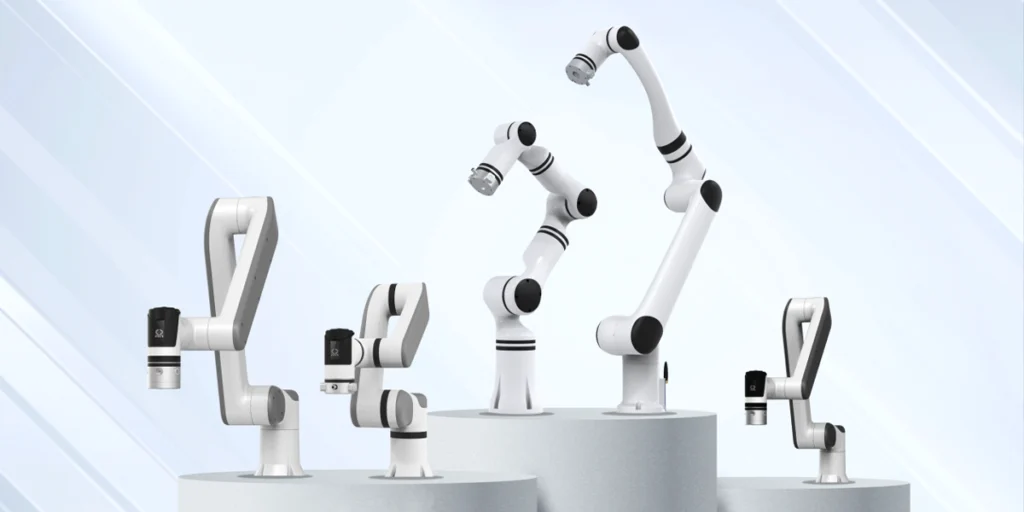
In robotic arm power systems, besides structure and transmission accuracy, there is another often overlooked problem: thermal deformation.
In actual operation:
- The motor will generate heat when it is running continuously.
- Internal friction in the reducer will cause it to heat up.
- High-load joints may experience localized temperature rise.
This heat will gradually be conducted to the joint structure and connecting parts, causing the material to expand slightly.
The actual impact of thermal deformation
For ordinary mechanical structures, this change may have little impact, but in robotic arms, it will directly affect precision:
- Changes in fit clearance
- Coaxiality offset
- Decreased transmission stability
The final result is:
- Fluctuation in repeatability
- Accuracy decreases over long periods of operation
- Unstable trajectory at high speeds
The key role of material selection
To mitigate the effects of thermal deformation and structural instability, key components of robotic arms typically require careful material selection.
- Coefficient of thermal expansion (stability)
- Strength and rigidity (resistance to deformation)
- Wear resistance (stable during long-term operation)
Common options include:
- Aluminum alloy (lightweight, good heat dissipation)
- Alloy steel/tool steel (high strength, high rigidity)
- Titanium alloy (high-end applications, excellent strength-to-weight ratio)
- Engineering plastics (for specific weight reduction or insulation requirements)
Machining precision and materials are simultaneously determined.
The materials themselves are only the foundation; if the processing is not well controlled, stability cannot be guaranteed either.
For example:
- Heat treatment deformation control
- Dimensional stability after finishing
- Consistency in multi-process manufacturing
These factors directly impact the final performance.
In power systems, the higher the load, the higher the requirements for materials and processing capabilities, especially for the base and shoulder joint, high-torque transmission structure, and core components that operate for long periods of time. If the material selection or processing precision is insufficient, the problem usually will not appear immediately, but will gradually amplify during use.
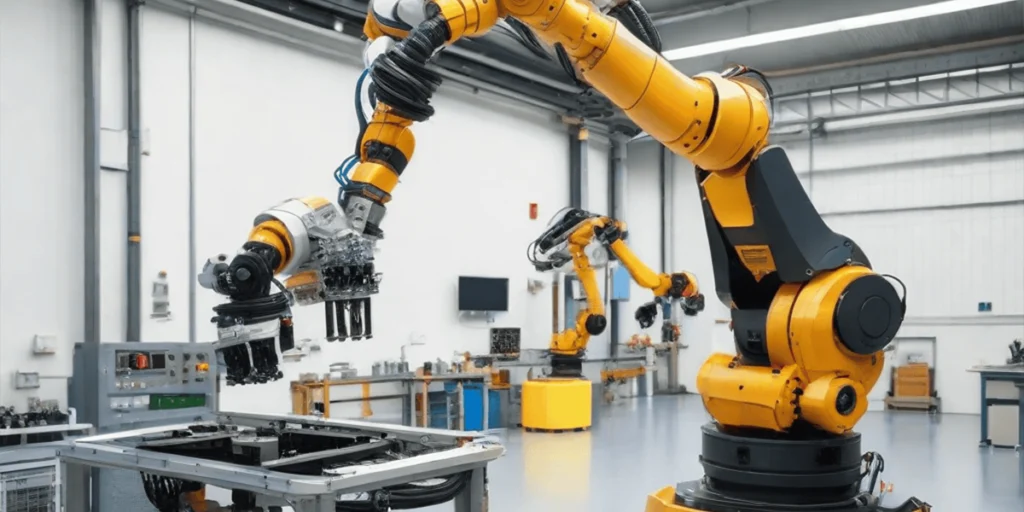
High-precision robotic arm parts processing
If you have machining needs for robotic arm power systems or joint structure-related components, we can provide you with stable CNC precision machining services . We have extensive experience in manufacturing key robot components, especially in high-load joints, transmission structures, and high-precision mating parts, where we have mature machining solutions.
For different material and structural requirements, we can control key dimensions and geometric tolerances to ensure the stability and consistency of components in actual operation.
If you are developing a robot project, you can send us your drawings or requirements directly. We can provide processing suggestions and quotations to help you advance your project faster.