


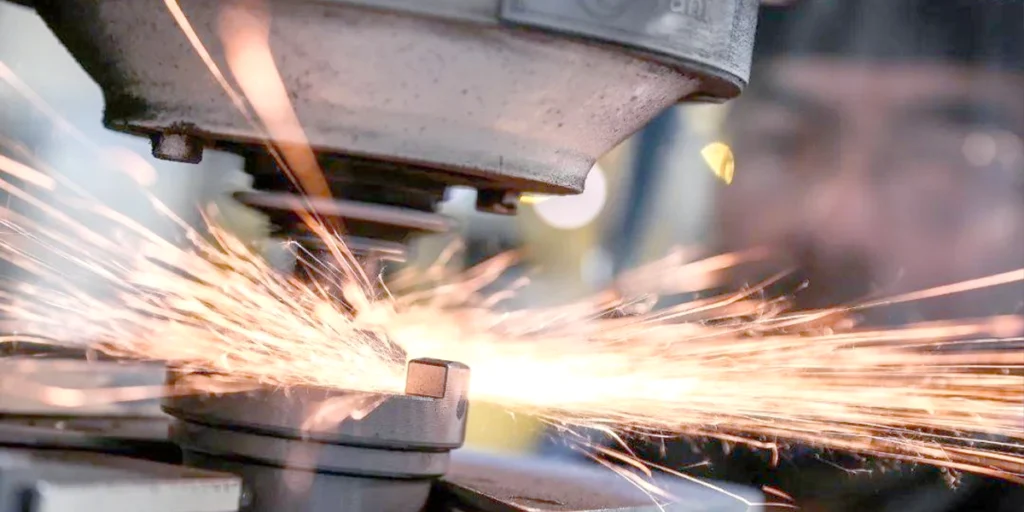
What can a CNC milling machine process?
From the perspective of capability boundaries, the core advantage of CNC milling lies in its ability to stably process solid parts with high precision and complex geometries (especially metals and engineering plastics).
Compared to stamping or casting, CNC milling does not rely on molds, making it more advantageous in prototyping, small-batch production, and multi-product scenarios.
metal parts
Metal is the most typical and mature application area of CNC milling.
Common machinable materials include:
- Aluminum alloys (such as 6061, 7075)
- Stainless steel (such as 304, 316)
- Carbon steel / Alloy steel
- Brass / Copper
- Titanium alloy
- Nickel-based alloys
1. Typical types of metal parts
- Structural components (supports, housings, connectors)
- Precision mechanical parts (gear housings, bearing housings)
- High-strength components (aerospace, automotive parts)
- Heat dissipation components (heat sinks, thermal management structures)
These parts typically have the following characteristics:
- Multi-faceted processing
- Strict tolerances (±0.02 mm level)
- Requirements for strength or corrosion resistance
2. Why are metals suitable for CNC milling?
- Stable cutting performance
- Enables high-precision control
- A variety of surface treatment options are available (anodizing, sandblasting, etc.)
However, it should be noted that the processing difficulty varies greatly among different metals.
- Aluminum → Easy to process, high efficiency
- Stainless steel → Easy work hardening
- Titanium alloys → cause rapid tool wear and high cost
Plastic parts
Besides metals, CNC milling is also widely used in the field of engineering plastics, especially in the functional verification and small-batch production stages.
Common materials include:
- POM (Saegerone)
- Nylon (PA)
- ABS
- PC (polycarbonate)
- PTFE (Teflon)
- PMMA (Acrylic)
1. Typical plastic parts
- Insulating components
- Lightweight structural components
- Medical or food contact parts
- Exterior components (transparent parts, display models)
2. Characteristics of Plastic Processing
Compared to metals, plastics processing presents different challenges:
- Higher risk of thermal deformation
- Burrs are easily generated during the cutting process.
- Low rigidity, prone to vibration
Therefore, it is necessary to:
- Lower cutting temperature control
- More optimized toolpaths
- More stable clamping method
3. Why choose CNC machining for plastics?
Compared to injection molding:
- No mold required (suitable for small batches)
- Faster delivery time
- Design can be flexibly modified
This is why many products choose CNC verification before mass production.
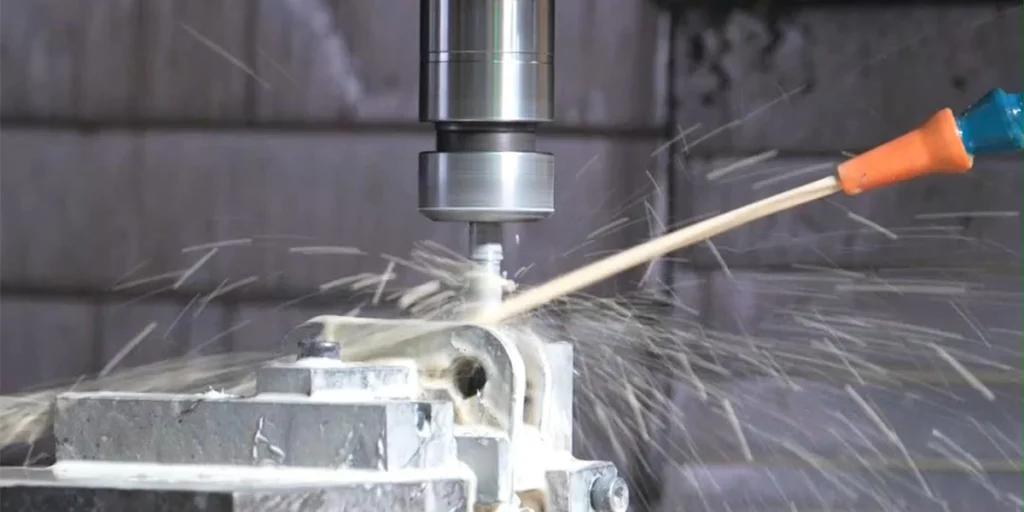
What can CNC milling process?
Materials are only the first step in the selection process; what truly determines feasibility are the geometric structure and functional requirements. Even among aluminum parts, some can be formed in one piece, while others require multiple clamping operations or even process modifications.
From an application perspective, common parts can be divided into two categories: complex structural parts and functional parts.
Complex structural components
The characteristics of these parts are not that the materials are difficult to obtain, but rather that they are geometrically complex and have limited processing paths.
Common features include:
- Multifaceted, multi-angled features (non-coplanar structure)
- Deep cavities, narrow grooves, internal corners
- Curved surfaces (freeform surfaces or transition surfaces)
- Thin-walled structure (easily deformable)
1. Typical Example
- Robot joint housing
- Aerospace support structure and lightweight design
- Mold cavity and insert
- Complex exterior design (with curved transitions)
2. Processing Challenges
The problem with these parts isn’t “whether they can be made,” but “how to make them stably”:
- Tool interference (unable to enter or reach the required angle)
- Clamping difficulties (unable to find a stable reference)
- Deformation during processing (especially thin-walled)
- Surface consistency is difficult to control
3. Solution Approach
Usually, it needs to be combined with:
- 5-axis machining (reduces flipping and interference)
- Phased processing (rough → semi-finished → finished)
- Custom-made fixtures (to ensure stability)
For these types of parts, equipment is just the foundation; process design is the key differentiator.
Functional parts
Compared to structurally complex parts, functional parts place greater emphasis on dimensions, fit, and performance. They may not necessarily have complex shapes, but they require higher precision.
1. Typical Example
- Bearing housing
- Sealing mating parts
- Guide rail components
- Precision mounting interface
2. Core Requirements
These types of parts typically focus on:
- Tolerance control (e.g., ±0.01–0.02 mm)
- Surface roughness (affects friction and sealing)
- Fit relationships (hole-shaft fit, interference/clearance)
3. Common Risks
- Dimensional drift (uncompensated tool wear)
- Hole position misalignment (caused by multiple clamping operations)
- Unstable surface quality
These problems may not be obvious when producing a single item, but they will be amplified in mass production.
4. Processing Strategy
For functional components, the key focus is on “stability”:
- Use a unified reference for machining critical dimensions
- Control tool life and compensate in a timely manner
- Perform process inspection on critical dimensions (instead of just final inspection).
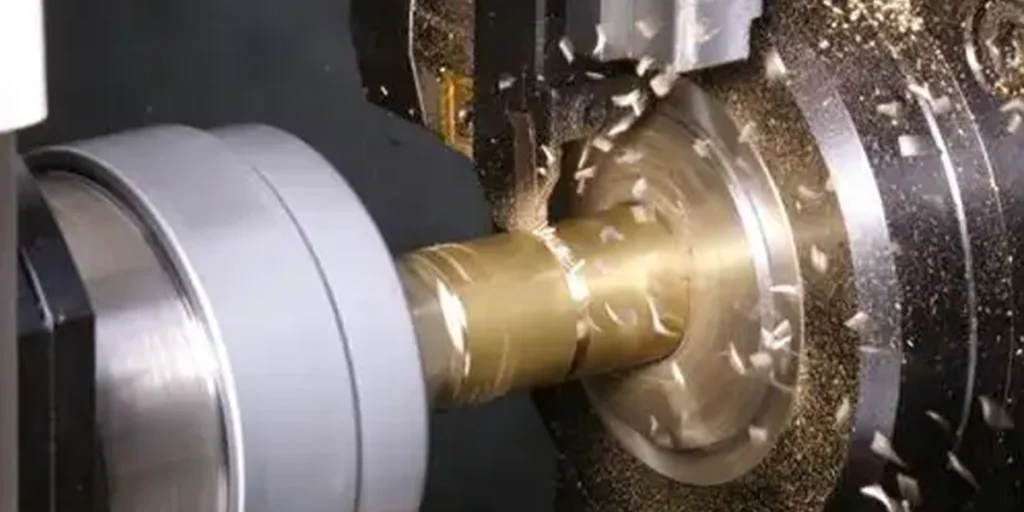
What materials cannot be processed?
In theory, CNC milling is “subtractive manufacturing,” meaning it can be machined as long as the material is stable enough and the cutting tool is capable of cutting. However, in actual production, some materials are not suitable for CNC milling—either the machining cost is extremely high, the quality is difficult to control, or there are even safety risks.
The key is not “whether it can be done”, but rather: whether it is stable, economical, and mass-producible.
What materials cannot be used in CNC milling?
The following types of materials are generally not recommended for CNC milling in actual projects:
1. Extremely soft or easily deformable materials
For example:
- Rubber-based materials
- Flexible elastomers (partial TPU)
The problem is:
- The shape cannot be maintained during the cutting process.
- The tool tends to “pull” rather than cut.
- Dimensional accuracy cannot be guaranteed
Even if these materials are processed with difficulty, they are unlikely to meet the requirements for engineering applications.
2. Materials with extremely high brittleness
For example:
- Glass
- Ceramics (unsintered or non-engineering grade)
Key risks:
- Prone to cracking during processing
- Uncontrollable damage caused by impact from the cutting tool
- Extremely low yield
Although there are specialized equipment available for processing this, it is no longer within the scope of conventional CNC milling.
3. Materials with high hardness but unsuitable for cutting.
For example:
- Some quenched steel (ultra-high hardness)
- Carbide
The problem is:
- The cutting tool wears out extremely quickly.
- Processing costs have increased significantly
- Extremely low processing efficiency
These types of materials are usually better suited for grinding or electrical discharge machining (EDM).
4. Heat-sensitive materials
For example:
- Low melting point plastics
- Some composite materials
Common problems during processing:
- Melting or sticking to the knife
- Surface burns
- Size instability
Extremely careful parameter control is required, otherwise the yield will be low.
5. Materials containing hazardous or pollution risks
For example:
- Composite materials containing harmful dust
- Flammable or explosive materials
This type of material involves:
- Operational safety issues
- Environmental and equipment risks
This usually requires specialized processing rather than standard CNC machining.
Alternative solutions
When the material or structure is not suitable for CNC milling, the appropriate approach is not to force the machining, but to switch the manufacturing process.
1. 3D printing (additive manufacturing)
Applicable to:
- Complex internal structures (such as cavities, crystal lattices)
- Flexible or difficult-to-process materials
- Rapid prototyping
Advantages:
- No tool restrictions required.
- High degree of structural freedom
- Suitable for small batches or single pieces
For example:
- Nylon (SLS / MJF)
- Resin (SLA)
- Flexible materials such as TPU
2. Injection molding
Applicable to:
- Mass production of plastic parts
- Products with relatively stable structures
Compared to CNC:
- Lower cost per unit (when volume is large)
- Higher consistency
But the premise is:
- Requires mold investment
- Longer development cycle
3. Electrical Discharge Machining (EDM)
Applicable to:
- High-hardness metals
- Complex interior angles or fine structures
Features:
- Not dependent on traditional cutting methods
- Can machine areas that are difficult to handle with CNC.
4. Laser cutting/waterjet cutting
Applicable to:
- Sheet metal parts
- Simple outline structure
The advantages are:
- Fast processing speed
- Low cost (for specific scenarios)
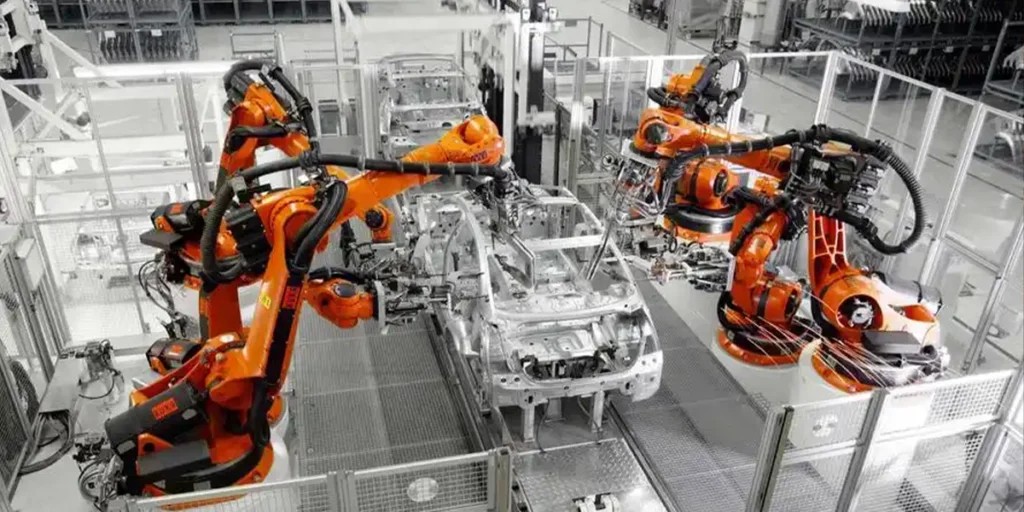
Industry Application Cases
It’s difficult to determine the true value of CNC milling by looking at materials or structure alone. A more direct approach is to examine how it’s used in specific industries and how manufacturers solve real-world problems.
The following case types represent typical industry scenarios we have long served. The focus is not on individual parts, but on how we solve the machining challenges in different applications.
Robotics and Automation
The core characteristics of this type of project are: complex structure + high assembly precision + gradual scaling up in batches.
The parts we commonly process include:
- Joint shell (multifaceted and complex structure)
- Connecting bracket (high strength + lightweight)
- Transmission-related components
Typical challenges:
- Multi-faceted machining, multiple clamping operations
- Locally thin-walled structure, prone to deformation
- Strict requirements for assembly dimension chains
Practical solution:
- Use 5-axis machining to reduce flipping
- Unify key reference surfaces to control assembly accuracy
- Staged processing reduces stress and deformation
These types of projects often start with prototyping and gradually move into small-batch production, with the requirements for consistency gradually increasing.
Medical equipment
Medical components typically do not require “complexity,” but they do have extremely high requirements for precision and stability.
Common processing contents:
- Precision housing
- Positioning structural components
- Contact or mating parts
Key requirements:
- Strict tolerance control (typically ±0.02 mm or even higher)
- Stable surface quality
- Traceable quality inspection process
Our approach:
- Conduct phased inspections during the processing (rather than just final inspection).
- Implement tool compensation management for critical dimensions
- Output test reports (meeting industry compliance requirements)
In this type of project, stability is more important than speed.
Automotive and Industrial Equipment
These types of projects focus more on cost, efficiency, and batch consistency.
Typical parts include:
- Functional structural components
- Mounting bracket
- Heat dissipation components
Challenges:
- Dimensional fluctuations in mass production
- Cost control pressure
- Stable delivery time required
Optimization strategy:
- Optimize toolpaths to improve machining efficiency
- Use specialized fixtures to ensure repeatability and positioning accuracy
- Reduce unit cost through process standardization
These types of projects often require greater supply chain capabilities than just the capabilities of a single piece of equipment.
Consumer electronics and appearance components
This category leans more towards: appearance quality + fine structure.
Common processing:
- Electronic housing components
- Panel
- Fine structural components
Key challenges:
- Surface consistency (scratches and tool marks control)
- Small-sized complex structures
- Post-treatment matching (anodizing, sandblasting, etc.)
Practical experience:
- More detailed toolpaths are used in the finishing stage.
- Control tool wear to avoid surface variations
- Consider dimensional changes caused by surface treatment in advance
If you are evaluating whether a part is suitable for CNC milling, or want to optimize an existing design: Upload your CAD file → Get a free DFM analysis + process optimization suggestions → We will provide a quote and feasibility feedback within 24 hours.