


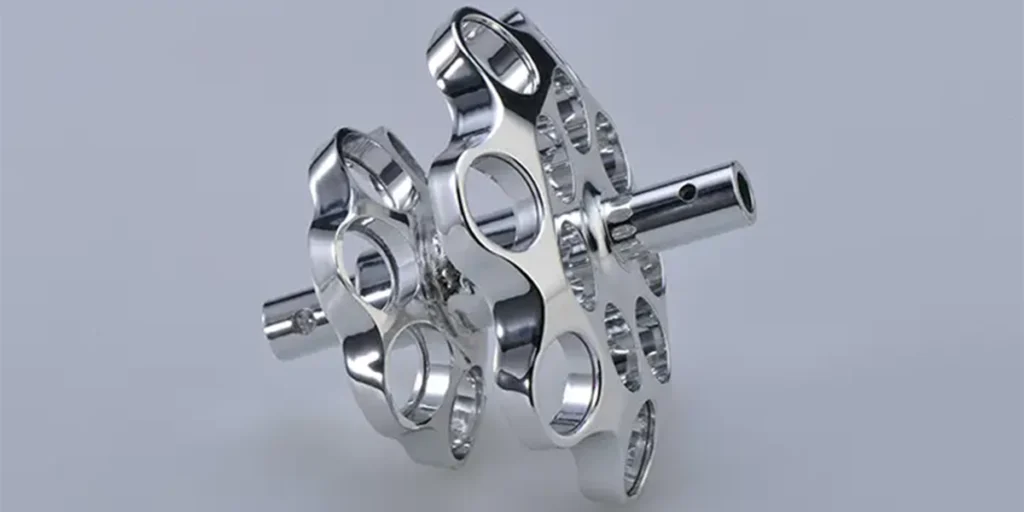
How to machine carbon fiber using CNC (Computer Numerical Control)
CNC machining of carbon fiber is not simply a matter of applying metalworking methods; it requires a thorough understanding of the material’s properties and a well-planned entire machining process. Overall, carbon fiber CNC machining can be performed through the following key steps.
1. Preliminary design and process planning
Before formal processing, a clear and accurate design and process plan must first be completed.
CAD software is typically used to create 3D models of carbon fiber parts, defining their dimensions, structure, tolerances, and assembly requirements. For parts with complex curved surfaces, thin-walled structures, or irregular contours, the accuracy of the model data is particularly crucial, directly impacting the stability of subsequent machining and the quality of the finished product.
At this stage, it is also necessary to make a basic judgment on the processing method, such as whether it involves milling, drilling or contour trimming, so as to lay the foundation for subsequent process selection.
2. Identification and preparation of carbon fiber materials
Carbon fiber is not a single material; different forms and specifications show significant differences in processing performance.
Before processing, it is necessary to confirm the type, thickness, and structure of the carbon fiber used to ensure that the material condition is suitable for CNC machining. At the same time, the material surface should be kept clean and flat to avoid impurities or warping affecting machining accuracy.
Proper material preparation helps reduce uncertainties during processing and improves the consistency of finished products.
3. Workpiece clamping and fixing method settings
Carbon fiber has high rigidity but is fragile in some areas, requiring high stability during clamping during processing.
Before CNC machining, a suitable clamping scheme should be designed according to the part structure to ensure that the workpiece will not shift, vibrate, or deform during machining. For thin-walled or complex-shaped workpieces, special attention should be paid to controlling the clamping force to avoid affecting the machining effect due to uneven force.
Stable clamping is an important prerequisite for ensuring machining quality.
4. Basic Control Principles of CNC Machining
In the actual processing, it is necessary to always focus on the core principle of “stability and controllability”.
The processing path should be as smooth as possible, avoiding unnecessary sudden stops or drastic changes; the processing rhythm should prioritize quality over speed. A well-planned processing sequence can effectively reduce the risk of material damage and improve overall processing consistency.
The goal of this stage is to complete the basic shape and size of the parts while ensuring structural integrity.
5. Basic inspection after processing
After CNC machining is completed, a preliminary inspection should be carried out on the carbon fiber parts to confirm whether the overall dimensions, contour integrity, and the condition of the machined area meet expectations.
Timely identification of problems helps to optimize subsequent processes or adjustments, avoiding impact on the final application effect.
Through the above process, basic CNC machining of carbon fiber can be achieved.
In actual production, different materials, equipment and part structures will affect the processing method. Therefore, it is necessary to make targeted adjustments based on the standard process. This is the biggest difference between carbon fiber CNC machining and ordinary material machining.
Characteristics of carbon fiber materials in CNC machining
The widespread use of carbon fiber in CNC machining is not solely due to its light weight, but also because its comprehensive properties offer significant advantages in specific scenarios. Understanding these material characteristics helps in better understanding the performance of carbon fiber in CNC machining.
1. Lightweight and high strength coexist
Carbon fiber has extremely low density and high strength, which allows it to be used in CNC machining to produce lightweight parts with high structural strength.
In applications where weight reduction is required without sacrificing structural performance, carbon fiber is often superior to traditional metal materials.
2. High rigidity and good dimensional stability
Carbon fiber materials have excellent overall rigidity and are not prone to significant deformation after processing.
During CNC machining, this dimensional stability helps maintain the geometric accuracy and consistency of parts, making it particularly suitable for components with high requirements for structural stability.
3. The composite structure exhibits significant characteristics.
Unlike metals, carbon fiber is typically composed of fibers and resins, making it a typical composite material.
This structure allows it to exhibit different mechanical properties in different directions, giving CNC machining greater design freedom, but also necessitating more targeted machining methods.
4. Corrosion resistant and adaptable to complex environments
Carbon fiber has good resistance to a variety of chemical media and is not prone to corrosion or performance degradation.
In actual use after CNC machining, carbon fiber parts can maintain stable performance in relatively complex or harsh environments.
5. Excellent fatigue resistance
Compared to traditional metal materials, carbon fiber can maintain good structural integrity under long-term repeated stress conditions.
This feature gives it a longer service life and lower maintenance requirements in CNC-machined functional parts.
6. It has good vibration reduction characteristics.
Carbon fiber itself has a certain vibration absorption capacity.
During CNC machining and subsequent use, this characteristic helps reduce the impact of vibration on structural stability and performance.
7. Performance can be customized through design.
The properties of carbon fiber materials can be adjusted by the fiber layup method.
This designability allows it to meet different structural, strength, and functional requirements in CNC machining, providing more possibilities for the design of complex parts.
Due to these material characteristics, carbon fiber exhibits unique advantages in the field of CNC machining. At the same time, these properties also determine that its processing methods differ significantly from those of traditional metal materials, a point that will be further elaborated upon later.
The challenges of machining carbon fiber materials in CNC machining
While carbon fiber boasts excellent performance, its material structure and physical properties present numerous processing challenges during CNC machining. These difficulties are the key differences between carbon fiber machining and metal machining.
1. Rapid tool wear.
Carbon fiber exhibits significant abrasive properties, continuously eroding and wearing down the cutting tool during the cutting process. Compared to ordinary metal materials, cutting tools are more prone to edge wear or performance degradation when machining carbon fiber, resulting in a relatively shorter tool life. This also places higher demands on machining stability.
2. Prone to delamination and fiber tearing.
Carbon fiber is a typical layered composite material, and the bonding between the layers differs from that of a monolithic metal structure. In CNC machining, uneven cutting forces or vibrations can easily lead to problems such as interlayer separation and fiber tearing, especially when machining holes or complex contours.
3. Surface quality is difficult to control.
During the cutting process, carbon fiber produces fine, hard chips that can easily form burrs or irregular cross-sections at the machined edges. Inadequate surface quality control can affect the assembly accuracy and appearance of parts, which is particularly critical in demanding applications.
4. Concentrated heat poses a risk of thermal damage.
Carbon fiber materials have low thermal conductivity, making it difficult to dissipate heat generated during processing. When heat concentrates in localized areas, it can cause changes in resin properties, thereby affecting the overall structural stability and service life of the parts.
5. Vibration is more pronounced during the cutting process.
Due to the anisotropy of carbon fibers, the cutting force experienced by the cutting tool varies considerably during the cutting process. This uneven stress state can easily lead to vibration problems, affecting machining accuracy and process stability, especially when machining thin-walled or complex parts.
6. High requirements for the adaptability of processing parameters
Different layup orientations and structural forms of carbon fiber exhibit significantly different responses to processing conditions. Inappropriate processing parameter settings can amplify these problems, making it difficult to maintain stability during processing. This is one of the reasons why the debugging cycle for carbon fiber CNC machining is relatively long.
Due to these processing challenges, carbon fiber CNC machining places higher demands on process understanding, equipment condition, and operational experience. These issues typically require focused consideration and targeted solutions in subsequent process and tool selection.
Processing technology and tool selection for carbon fiber materials
In CNC machining, the machining quality of carbon fiber largely depends on the selection of the process path and whether the cutting tools are matched to the material properties. A reasonable combination of process and tools is key to reducing machining risks and improving the consistency of finished products.
Common processing technology selection
1. Milling process
Milling is the most widely used method in carbon fiber CNC machining, and it is suitable for machining contours, planes and complex structures.
Climb milling is typically used during machining to reduce cutting impact and edge damage. For thicker or more complex workpieces, layered machining can be employed to improve overall stability.
2. Drilling process
In carbon fiber processing, hole machining has a particularly significant impact on quality.
Compared to traditional direct drilling, helical milling offers better control over hole quality, helping to reduce the risk of delamination and burrs. When a drill bit must be used, the requirements for tool structure and feed method are even higher.
3. Turning process
Turning is mainly used for machining shafts and cylindrical carbon fiber parts.
Due to the rigidity and structural characteristics of the material, the cutting edge must be kept sharp during processing to avoid excessive cutting resistance affecting the workpiece.
4. Grinding and finishing processes
When parts have high requirements for surface quality and dimensional accuracy, grinding or finishing can be performed after the previous process.
This process is typically used for high-precision components and requires high process stability.
Cutting tool and tool selection direction
1. Selection of cutting tool materials
In carbon fiber CNC machining, tool wear resistance is the primary consideration.
Common options include diamond-coated tools, PCD tools, and optimized carbide tools, with different solutions suitable for different machining accuracy and cost requirements.
2. Commonly Used Tool Types
Depending on the processing method, commonly used tools mainly include:
- End mills: Used for contour and surface milling
- Keyway end mills: Suitable for slotting and helical milling.
- Ball end mills: used for machining curved surfaces and transition areas.
- Specialized drill bits: used for hole machining
- Grinding wheels: used for subsequent finishing and surface treatment.
3. General Principles for Tool Use
In actual processing, the following points should be given special attention:
- Keep the knife sharp and avoid excessive wear and tear during continued use.
- Select the appropriate tool diameter and type based on the workpiece structure.
- Regularly check the condition of the cutting tools to ensure consistent machining.
Overall, there is no “universal process” or “general tool” for carbon fiber CNC machining.
Only by understanding the properties of materials and rationally combining processing techniques and tools can we improve overall processing efficiency while ensuring quality.
Application areas of carbon fiber material processing
With the maturity of CNC machining technology, carbon fiber materials have gradually penetrated from high-end fields into multiple industries. Their lightweight, high strength, and structural designability give them significant advantages in fields with high performance and precision requirements.
1. Aerospace field
Carbon fiber is mainly used in aerospace for manufacturing high-strength, lightweight structural components, such as wing structures, fuselage parts, and internal cabin support components.
CNC precision machining can meet complex shapes and strict tolerance requirements, which helps to improve the overall structural performance and reduce the weight of the aircraft.
2. Automobile manufacturing and new energy vehicle sector
In the automotive industry, carbon fiber is commonly used in body structural components, transmission components, and aerodynamic components.
CNC machining enables high-precision customized production, meeting the needs of high-performance models and new energy vehicles for a balance between lightweighting and strength.
3. Rail Transit Sector
Carbon fiber materials are increasingly being used in high-speed trains and urban rail transit systems, including in equipment compartments and structural support components.
CNC machining can reduce overall weight while ensuring structural stability, which helps improve operating efficiency and reduce energy consumption.
4. Energy and Wind Power Equipment Sector
In the wind power industry, carbon fiber is often used in the processing and manufacturing of critical load-bearing structures.
CNC machining can precisely shape complex structures, ensuring the stability and reliability of parts during long-term operation.
5. Medical Device Field
Carbon fiber is mainly used in medical devices for load-bearing structures and functional components.
CNC machining can achieve high precision and high consistency, meeting the reliability and safety requirements of medical equipment.
6. Industrial Equipment and Automation
In industrial equipment, carbon fiber is used in components such as robotic arms and structural supports.
CNC machining can effectively reduce the weight of moving parts and improve the response speed and operating accuracy of equipment.
7. Sports and Consumer Goods Sector
Carbon fiber is widely used in sports equipment, bicycles, and high-end consumer products.
CNC machining enables integrated design of appearance and structure, balancing performance, appearance, and product consistency.
Overall, CNC machining provides a stable and high-precision forming method for carbon fiber materials, enabling their continuous application and expansion in multiple high-performance industries, and further promoting the large-scale and customized development of carbon fiber parts.
At last
Carbon fiber, as a high-performance composite material, offers significant advantages in CNC machining, but also presents certain processing challenges. By understanding the material’s properties, identifying machining difficulties, and matching appropriate machining processes and tooling, carbon fiber can achieve stable and controllable high-quality machining. With the continuous maturation of CNC technology and application experience, carbon fiber components are playing a crucial role in more industries, becoming an indispensable material in high-end manufacturing.