


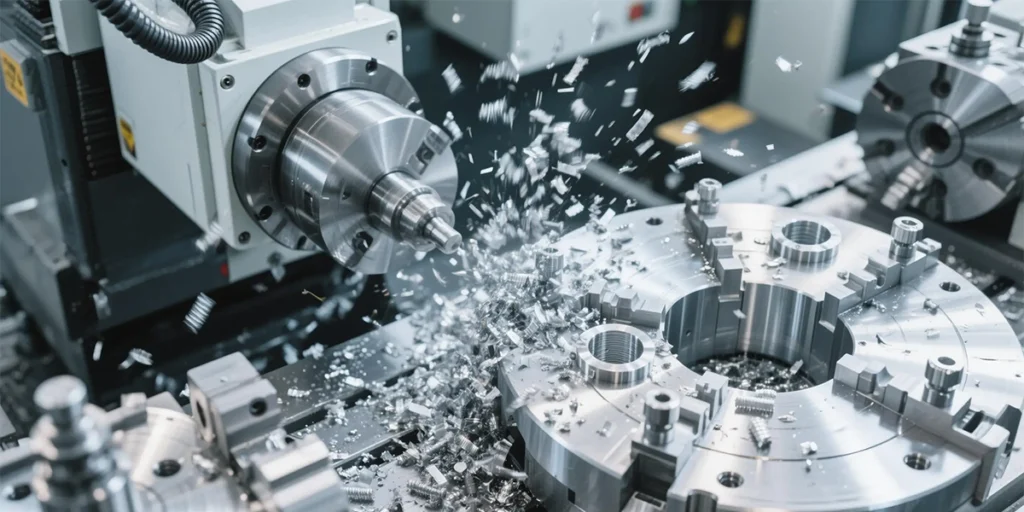
How to CNC machine aluminum materials
CNC machining of aluminum is not as simple as “directly cutting on a machine tool,” but rather a systematic process from initial planning to stable machining. In actual production, standard CNC aluminum machining can generally be summarized into the following key steps:
1. Define processing requirements and objectives
Before starting machining, it is necessary to understand the purpose, structural complexity, and precision requirements of the part. This step determines which machining method to use subsequently, whether to prioritize efficiency or precision.
2. Select suitable processing equipment
Based on the structural characteristics of the aluminum parts, select the appropriate type of CNC machine tool, such as a CNC milling machine, machining center, or CNC lathe. Matching the equipment’s capabilities is a prerequisite for ensuring smooth processing.
3. Develop processing plans and technological flows.
Before the actual processing begins, the overall processing sequence will be planned, including the allocation of roughing and finishing, and the order of processing the main surfaces, to ensure that the processing process is stable and controllable.
4. Perform CNC programming and confirm the machining path.
By programming, design intent is transformed into machining instructions that can be executed by the machine tool, and the rationality of the tool movement path is confirmed in advance to avoid unnecessary interference or machining risks.
5. Clamp the workpiece and perform initial calibration.
Fixing the aluminum material onto the machine tool and establishing accurate machining references are key steps to ensure dimensional accuracy and consistency.
6. Complete the cutting process according to plan.
The machine tool completes the cutting and shaping of aluminum material according to a predetermined program. During the processing, it is necessary to maintain stable operation to ensure that the processing quality meets expectations.
7. Preliminary inspection of processing results
After processing, a basic inspection is carried out on the parts to confirm that the overall dimensions, shape and appearance meet the requirements, in order to prepare for subsequent processes.
The above process enables efficient and stable CNC aluminum machining. The following sections will elaborate on pre-machining preparations, tool and parameter selection, and key details to focus on during the machining process.
Preparation before aluminum processing
The quality of CNC machining of aluminum materials largely depends on the adequacy of pre-processing preparation. Before starting the machine, confirming the following aspects can effectively reduce processing risks and improve overall stability.
1. Confirm the type and condition of the aluminum material.
Different aluminum alloys vary in strength, hardness, and machinability. Before processing, the grade, condition, and suitability of the aluminum material used should be confirmed to avoid affecting the final result due to material incompatibility.
2. Check the part drawings and technical requirements.
Before processing, it is necessary to fully understand the dimensions, tolerances and surface requirements in the drawings, and to identify which locations are critical processing surfaces and which dimensions need to be controlled in detail, so as to provide a basis for subsequent process planning.
3. Planning the processing sequence and technological approach
Based on the part’s structure, plan the machining sequence in advance, for example, machining the datum surface first, and then machining other structures. This helps reduce the number of clamping operations and improve dimensional consistency.
4. Select the appropriate clamping method
A proper clamping method can ensure the stability of the aluminum material during processing, avoiding accuracy problems caused by vibration or displacement. Clamping should balance stability with machining space to ensure smooth tool movement.
5. Conduct pre-processing procedure and equipment checks.
Before the actual machining process begins, it should be confirmed that the CNC program and machine tool status are normal, including coordinate settings, travel range, and safe position, to ensure that the machining process proceeds as planned.
Doing these preparatory work can lay a stable foundation for subsequent tool selection, parameter setting and actual machining, and can also significantly reduce the risk of rework and machining abnormalities.
How to select cutting tools and parameters when CNC machining aluminum?
When machining aluminum using CNC machining, the selection of cutting tools and machining parameters directly affects machining efficiency, surface quality, and machining stability. A reasonable selection principle should be based on the characteristics of the aluminum material and the machining objectives, rather than simply pursuing high speed or high precision.
1. Prioritize selecting knife types suitable for aluminum.
Aluminum is relatively soft but tends to stick to cutting tools, so sharp tools with good chip removal performance should be selected. A common practice is to use end mills or face mills specifically designed for aluminum machining to ensure smooth chip removal and reduce chip buildup.
2. Differentiate tool applications based on machining stage.
In actual machining, roughing and finishing are usually distinguished. Roughing focuses more on chip removal efficiency, and the tool needs to have good strength and chip tolerance; finishing focuses more on surface quality and dimensional stability, and the sharpness and stability of the tool edge are more critical.
3. Rationally match tool structure with machining method
Different tool structures are suitable for different machining tasks, such as machining planes, cavities, or curved surfaces. Choosing a tool type that matches the machining requirements helps improve machining efficiency and reduce unnecessary tool wear.
4. Machining parameters are based on the core principle of “stable cutting”.
Aluminum is suitable for higher cutting speeds, but the feed rate and depth of cut need to be matched with the tool capability and machine tool rigidity. Parameter settings should avoid being too aggressive to prevent problems such as vibration, decreased surface quality, or shortened tool life.
5. Adjust flexibly according to the actual processing situation.
Before formal mass production, trial cuts are usually performed to observe the chip shape, processing sound and surface effect. The parameters are then fine-tuned according to the actual situation to achieve a balance between efficiency and quality.
By following the above selection criteria, the efficiency and consistency of aluminum CNC machining can be improved while ensuring processing stability, creating favorable conditions for subsequent processing.
Key points of CNC machining of aluminum materials
In actual machining, even with correct preparation and tool selection, problems such as poor surface quality, unstable dimensions, or abnormal tool wear can easily occur if the machining process is not properly controlled. The following points are particularly important when CNC machining aluminum.
1. Ensure smooth chip removal and prevent chip buildup.
When cutting aluminum, the chips are relatively soft and easily adhere to the tool or the machining area. During processing, it is essential to ensure that the chips are removed promptly to avoid secondary cutting and surface damage.
2. Control the cutting conditions to avoid vibration and abnormal loads.
During machining, attention should be paid to whether the machine tool runs smoothly, avoiding significant vibration or abnormal noise. A stable cutting condition helps improve surface quality and also extends tool life.
3. Rationally arrange rough processing and fine processing.
Aluminum processing typically follows the principle of roughing before finishing. The roughing stage mainly removes excess material, while the finishing stage focuses on ensuring dimensional accuracy and surface quality. The two stages should not be mixed.
4. Prevent the workpiece from being heated and deformed.
Aluminum conducts heat quickly, but thin-walled or complex parts may still deform due to localized heating. During processing, continuous cutting time should be controlled to avoid heat concentration.
5. Maintain a stable clamping position.
During the machining process, it is essential to ensure that the workpiece remains in a stable clamping state to avoid dimensional deviations caused by loosening or changes in force, especially during multi-process machining.
6. Monitor real-time changes in surface quality.
During the processing, the surface condition should be observed at all times. If obvious tool marks, burrs or abnormal marks appear, the processing should be stopped and the processing method adjusted in time.
By continuously focusing on and controlling these processing points, the stability and consistency of CNC machining of aluminum materials can be effectively improved, laying a good foundation for subsequent inspection and finished product processing.
Common problems in CNC machining of aluminum materials
During CNC machining of aluminum, some problems occur frequently. Understanding these common issues in advance can effectively mitigate risks and reduce rework and material waste during actual processing.
1. Obvious knife marks or scratches appear on the surface.
This is a common problem in aluminum processing, often occurring during the finishing stage. It is usually related to unstable cutting conditions, poor chip removal, or decreased tool sharpness.
2. Aluminum shavings stick to the knife, and chips accumulate.
Aluminum is relatively soft and prone to sticking to the cutting tool during processing. If chips cannot be discharged smoothly, it can easily damage the machined surface and even cause abnormal tool wear.
3. Unstable workpiece dimensions
Inconsistencies in dimensions after machining are often related to changes in workpiece clamping, uneven stress during machining, or localized deformation, especially noticeable in thin-walled aluminum parts.
4. Vibration or abnormal noise occurs during processing.
If noticeable vibration or abnormal sounds occur during machining, it usually indicates that the cutting conditions are not ideal. Continuing to machine may affect the surface quality and may even damage the machine tool or cutting tool.
5. The cutting tool wears out too quickly.
When machining aluminum, if the tool life is significantly shorter than expected, it is often related to unreasonable machining methods or abnormal cutting conditions, and it is necessary to pay close attention to changes in the tool condition.
6. Numerous burrs on the edges
Burrs on the edges of aluminum materials are a common phenomenon after processing, especially in contour or hole processing, which will affect subsequent assembly and appearance.
Understanding and identifying these common problems can help to control risks in advance when CNC machining aluminum materials, thereby improving overall processing efficiency and product consistency.
Summarize
Aluminum is a very common material in CNC machining due to its light weight, ease of processing, and wide range of applications. However, to process aluminum parts stably and efficiently, it is not enough to just pursue speed; standardization of the process is also essential.
From material confirmation and clamping preparation before processing, to the appropriate selection of cutting tools and parameters, and then to stable control during the processing, every step directly affects the final processing quality. At the same time, understanding and identifying common problems in aluminum processing in advance helps reduce trial-and-error costs and improve overall processing efficiency.
As long as these key points are well controlled, CNC machining of aluminum materials is not complicated, and it is easier to achieve a balance between efficiency, precision and surface quality.