


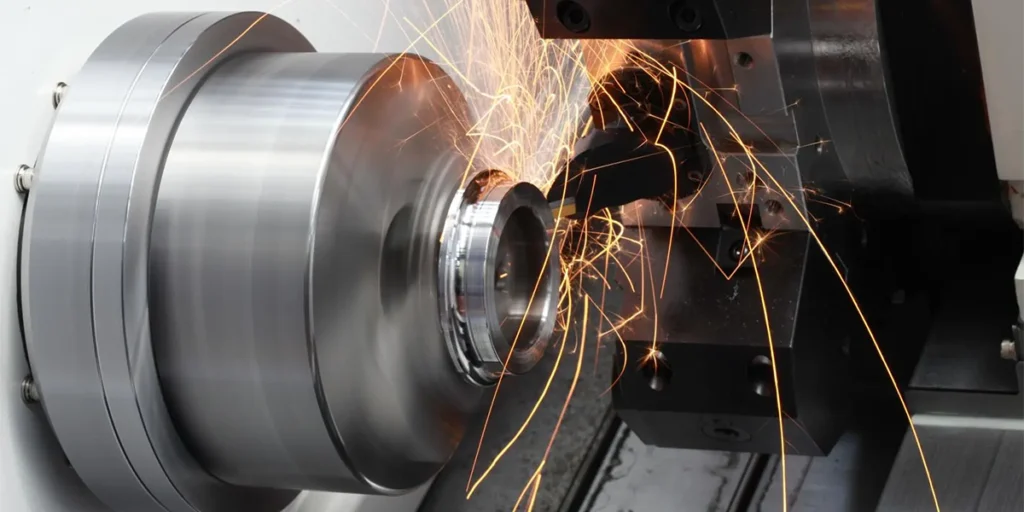
In the stainless steel parts manufacturing industry, many procurement problems do not stem from “whether it can be processed,” but rather from:
- Whether stable mass production is possible
- Can it maintain accuracy over a long period of time?
- Can the delivery time be controlled?
- Do you truly understand the challenges of stainless steel processing?
Especially for stainless steel materials such as 304, 316, and 17-4PH, processing stability is far more important than for ordinary metals.
Many projects appear to have no problems during the prototyping stage, but problems gradually emerge once mass production begins:
- Dimensional deviation
- Increased tool wear
- Unstable surface quality
- Deformation problem
- Delivery delay
This is why more and more European and American customers prefer to cooperate with professional stainless steel CNC machining factories in the long term, rather than just looking for low-priced suppliers.
Specialized Factory VS Ordinary Processing Plant
It’s not just about “whether there are machines”
Many factories can provide CNC machining, but not all factories have truly mature stainless steel processing capabilities.
Ordinary processing plants usually prefer:
- General-purpose machining
- Simple structural components
- Low-complexity parts
- Small-batch basic production
Professional stainless steel CNC machining factories pay more attention to:
- Material processing characteristics
- Process stability
- Long-term batch consistency
- Tool life management
- Precision tolerance control
Especially in high-precision stainless steel projects, processing experience is often more important than the equipment itself.
Stainless steel is more difficult to process
Compared to aluminum parts machining, stainless steel parts machining presents more technical challenges:
work hardening
Stainless steel is prone to work hardening during machining. Inappropriate toolpath, feed parameters, or cooling control can lead to:
- Rapid tool wear
- Surface burns
- Size instability
Thermal deformation problem
Stainless steel has poor thermal conductivity. During prolonged machining, heat tends to concentrate in the cutting area, affecting:
- Dimensional accuracy
- Flatness
- Hole position consistency
These problems are more pronounced for thin-walled parts or complex structural components.
Surface quality control
Many industrial customers not only focus on dimensions, but also pay close attention to:
- Surface roughness
- Deburring effect
- Assembly consistency
- Post-processing compatibility
Specialized factories typically have more complete systems in place:
- Tool Management System
- Testing process
- Surface treatment standards
This ensures the consistency of parts in a batch.
Specialized factories place more emphasis on DFM
Many clients do not fully consider manufacturability (DFM) at the beginning of a project.
Professional processing teams typically help clients optimize their processes in advance.
- Rounded corner structure: avoids small interior corners that cannot be machined.
- Thin-walled areas: reduce the risk of deformation.
- Deep cavity structure: optimizes tool accessibility.
- Tolerance allocation: Avoid excessive precision that could increase costs.
For European and American customers, a truly excellent supplier is not just someone who “processes according to drawings,” but someone who can proactively help reduce manufacturing risks for projects.
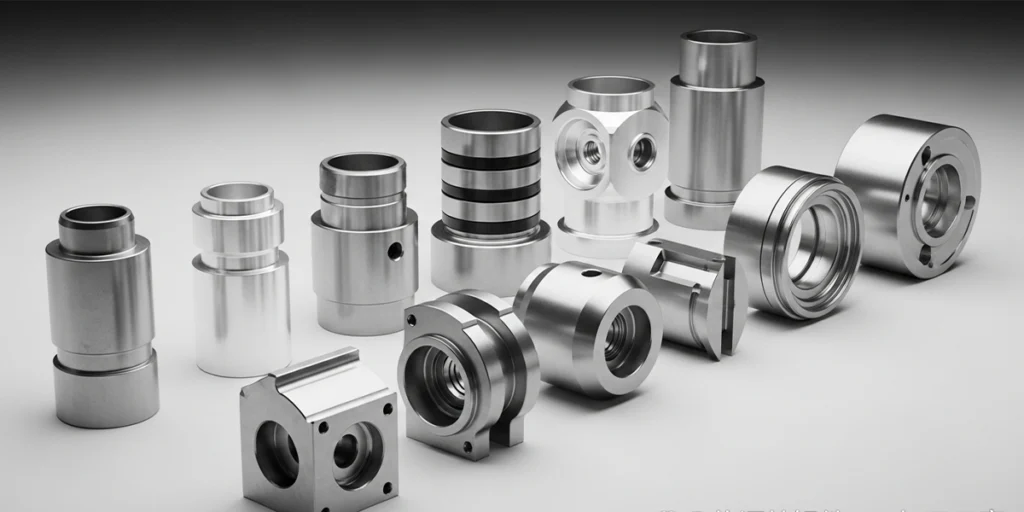
How experience affects quality
Stainless steel processing is highly dependent on experience
Stainless steel CNC machining is not simply a matter of inputting a program and having it automatically completed. Even when using the same equipment:
- Different engineers
- Different tooling strategies
- Different fixture solutions
The final processing result may be completely different.
Especially for:
- 316 stainless steel
- Thin-walled structural components
- Precision threads
- Deep hole parts
- Medical-grade parts
Experience often directly determines the final quality.
Tool experience affects stability
Many machining problems essentially stem from tool control.
Tool wear assessment
If wear and tear monitoring is not timely, it can easily lead to:
- Size drift
- Increased burrs
- Surface roughness deterioration
Cutting parameter optimization
Different stainless steel materials require different strategies:
- 303 is more suitable for high-speed machining
- 304 is easier to work harden
- 316 generates heat more easily
Experienced engineers will adjust according to the material properties:
- Rotational speed
- Feed
- Cut depth
- Cooling solution
This improves stability and tool life.
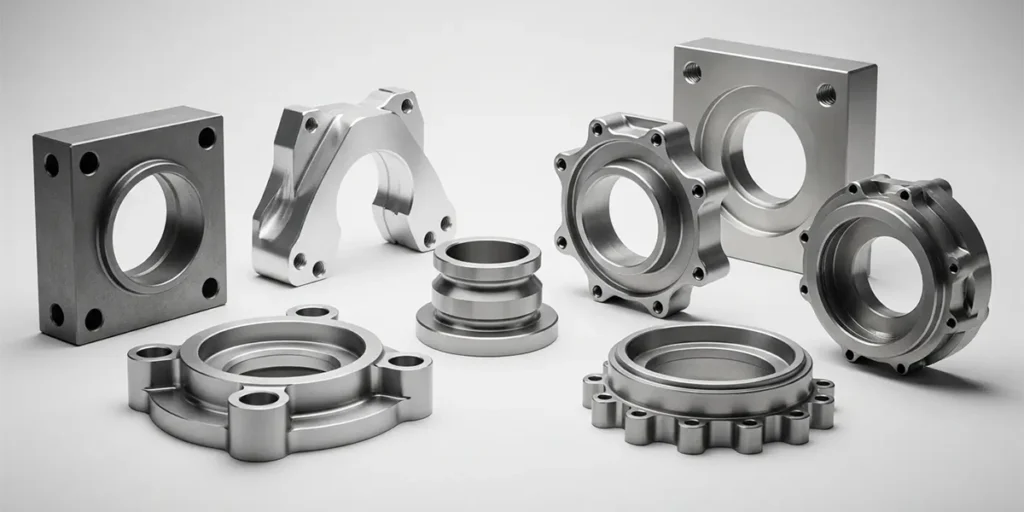
Fixture and clamping experience are crucial.
Many problems with complex stainless steel parts do not originate from the machine tool itself, but from the clamping process. This is especially true for:
- Long shaft parts
- Thin sheet metal parts
- Irregularly shaped structural components
Incorrect clamping may result in:
- Processing vibration
- Dimensional deviation
- Surface indentation
- Coaxiality issue
Specialized factories typically have more mature:
- Custom fixture experience
- Multi-station machining solution
- Anti-deformation clamping design
This is crucial for high-precision projects.
Mass production requires even more experience.
Successful prototyping does not guarantee stable mass production. The real challenge lies in:
- 100 identical
- 1000 identical
- Consistent long-cycle repetitive production
Professional stainless steel processing plants typically establish:
- Standardized process documents
- Tool life record
- First Article Inspection Process
- Batch quality tracking
This ensures long-term stable delivery.
A professional team can detect risks earlier.
Experienced engineering teams can often identify problems at the drawing stage. For example:
- Unreasonable tolerances
- Structures unsuitable for processing
- High-risk thin-walled areas
- Design of excessively deep holes
This can help customers reduce costs before formal production:
- Risk of rework
- Development cycle
- Manufacturing costs
For OEM projects, this kind of upfront engineering support is often more important than simply offering a low price.
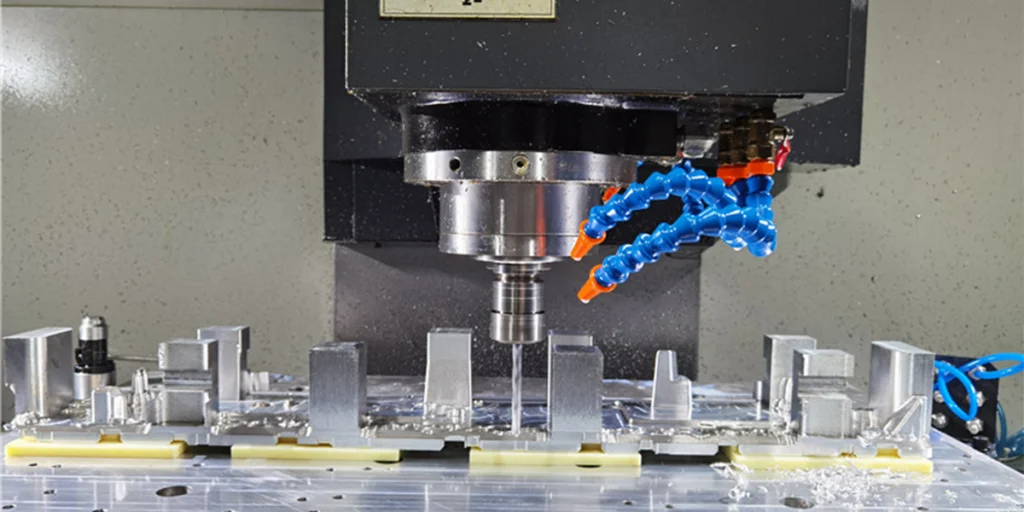
Why do complex projects need professional teams?
Complex parts are not just about “machining”.
The challenge in many complex stainless steel projects lies not only in the components themselves, but also in the stability control throughout the entire manufacturing process. This is especially true in aerospace, medical equipment, automation equipment, and industrial systems, where components often simultaneously possess:
- High precision requirements
- Multi-faceted processing structure
- Thin-walled region
- Deep cavity or deep hole
- High surface quality requirements
These types of projects usually exceed the capabilities of ordinary processing plants to “simply produce according to drawings”.
The greater value of a professional team lies in its ability to consider problems simultaneously from multiple aspects, including engineering, process, clamping, tooling, inspection, and mass production, rather than reworking after problems occur.
The engineering team determines project efficiency.
In many European and American client projects, what truly affects the development cycle is not the number of machine tools, but the speed of engineering response.
Professional stainless steel processing teams typically provide this in advance at the project’s inception:
- DFM optimization recommendations: Help customers optimize their structure and improve manufacturability.
- Tolerance assessment: Avoid unnecessary ultra-high precision requirements.
- Material recommendation: 304, 316 or other grades are recommended depending on the usage environment.
- Process planning: Determine the turning, milling, welding or surface treatment scheme in advance.
This kind of early support can significantly reduce the cost of later modifications.
Multi-process synergy is more important
More and more complex parts cannot be completed by a single process.
For example, an industrial stainless steel component may involve:
- CNC turning
- 5-axis milling
- Thread machining
- Surface treatment
- Assembly inspection
If the supply chain is fragmented, it usually leads to:
- Cumulative dimensional error
- Increased communication costs
- Delivery time is uncontrollable.
Therefore, many purchasing teams prefer to find suppliers that can provide one-stop manufacturing.
Zhuohua Hardware Support:
- 3-axis and 5-axis CNC machining
- Precision turning
- Surface treatment
- Prototyping and Mass Production
It can help clients reduce outsourcing and improve overall project efficiency.
Complex projects rely more on quality systems
For complex stainless steel parts, consistent quality is often more important than low price. Specialized factories typically establish more comprehensive quality control processes, including:
- First article inspection
- Process inspection
- Final size verification
- Surface quality inspection
- Batch traceability management
Especially in the medical, robotics and automation industries, many customers are more concerned with long-term stable delivery than with one-time low-price purchases.
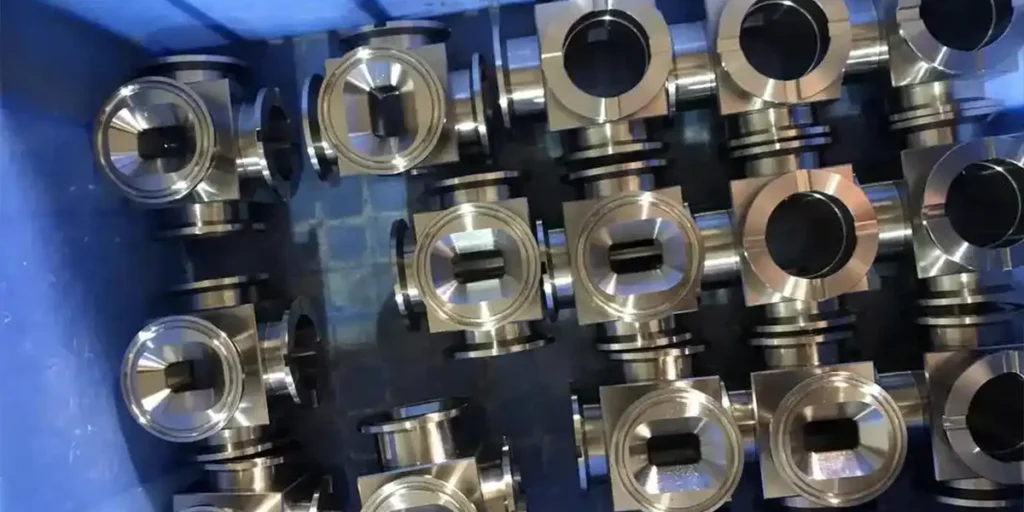
What do CNC parts customers care about most?
More than just price
In the past, many overseas procurements focused primarily on processing prices, but now more and more customers are starting to pay attention to the supplier’s overall manufacturing capabilities.
For industrial projects, the real cost is often not the unit price of parts, but rather:
- Delayed delivery
- Unstable quality
- Rework
- Assembly failed.
- Supply chain risks
Especially in the European and American markets, procurement teams are increasingly inclined to long-term and stable partnerships rather than frequently changing suppliers.
Stable delivery capability
When choosing a stainless steel CNC machining supplier, many customers first focus on:
- Whether it can maintain stable production in the long term
- Does it have batch consistency?
- Can it respond quickly?
- Does the company have export experience?
This is why Chinese factories with mature manufacturing systems are attracting increasing attention from global customers.
Engineering communication skills
For overseas clients, communication efficiency directly impacts the speed of project progress.
Professional suppliers are usually able to understand quickly:
- 2D drawings
- 3D model
- GD&T requirements
- Surface treatment standards
- Assembly requirements
At the same time, we can proactively identify potential processing risks, rather than just waiting for customers to point out problems.
Rapid prototyping and flexible production
More and more industries are shortening product development cycles. Many customers need:
- Rapid sample validation
- Small-batch trial production
- Subsequent batch expansion
Specialized factories not only need to have equipment capabilities, but also flexible production capabilities.
Zhuohua Hardware supports the entire manufacturing process from rapid prototyping to mass production, and can deliver some projects in as little as 5 business days.
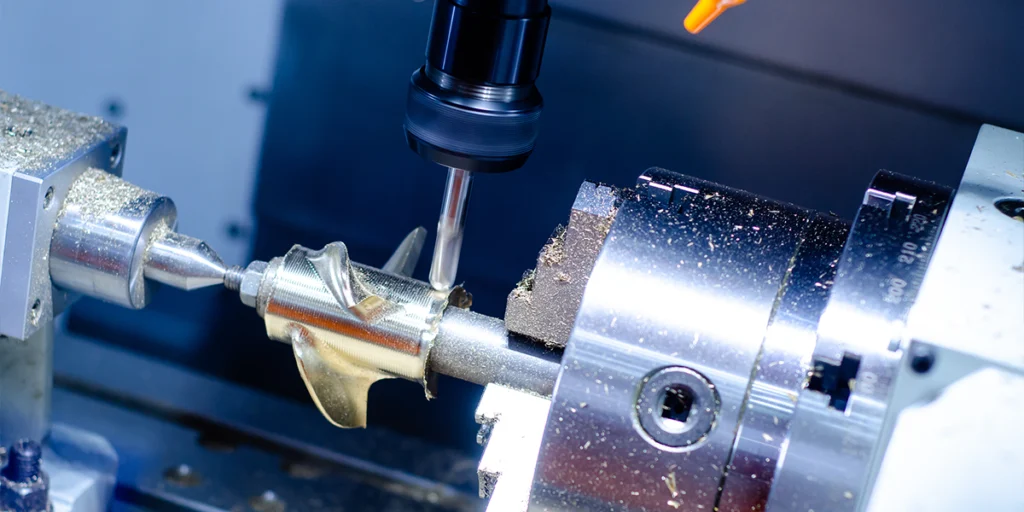
Zhuohua Hardware’s stainless steel processing capabilities
Professional stainless steel CNC machining services
Zhuohua Hardware has long focused on precision CNC machining services , supporting the machining of various stainless steel materials, including:
- 303
- 304
- 316
- 416
- 17-4PH
We can provide services tailored to different project needs:
- CNC Milling
- CNC Turning
- Multi-axis machining
- Precision hole machining
- Surface treatment support
Suitable for complex industrial parts and high-precision functional components.
Multi-axis equipment and stable production capacity
We possess:
- 30+ CNC milling machines
- 10+ CNC turning machines
support:
- 3-axis machining
- 3+2 axis machining
- 5-axis linkage machining
It can handle a wide range of project requirements, from simple structural components to complex precision parts.
Precision and quality control
For stainless steel processing projects, we can achieve the following:
- Machining accuracy ±0.02mm
- Batch consistency control
- Multi-process quality inspection
Simultaneously supports:
- Size Inspection Report
- Materials certification
- Quality document support
Helping clients meet the quality requirements of industrial projects.
From prototype to mass production
Many customers not only need processing capabilities, but also a stable, long-term supply chain. Zhuohua Hardware supports:
- Rapid prototyping
- Small-batch trial production
- OEM production
- Long-term bulk supply
The industries we serve include:
- Aerospace
- Medical equipment
- Robots and automated equipment
- Consumer electronics
- Industrial machinery
Why are more and more customers choosing “Made in China” products?
Mature supply chains, stable manufacturing capabilities, and higher cost efficiency have made China a major global manufacturing center for stainless steel CNC machining.
For overseas customers, a truly valuable supplier is not just one that can process parts, but one that can provide long-term and stable support for product development and mass production.
This is why Zhuohua Hardware continues to focus on precision manufacturing and engineering support.