


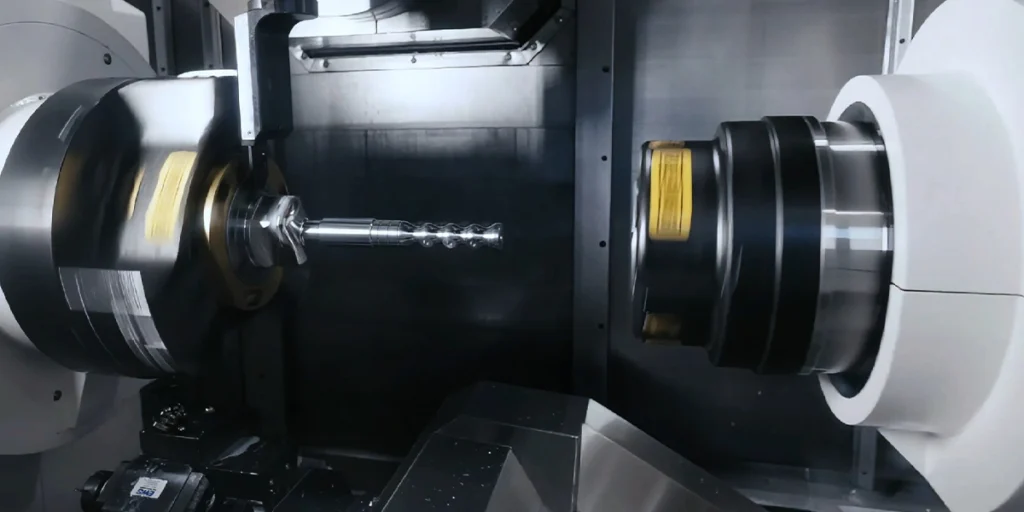
CNC turning and CNC milling
Many customers ask the same question when developing parts: Should this part be CNC turned or CNC milled?
This is a very critical issue. Choosing the wrong process often means:
- Higher cost
- Longer processing cycle
- Precision is more difficult to control
- The supply chain is more complex
As a manufacturing engineering team, we usually first determine the structure of the part, and then decide whether to use turning, milling, or a combination of both for machining.
What is CNC Turning?
The core principle of CNC turning is: the workpiece rotates and the tool moves.
The raw material is clamped in the spindle chuck and rotates at high speed. The cutting tool cuts the material along the X and Z axes to gradually form the target size.
Turning is best suited for machining rotationally symmetric parts, such as:
- Shaft-type parts
- Sleeve-type parts
- Threaded connector
- Pipe fittings
- Cylindrical outer shell
- Flange components
Common processing actions include:
- External turning
- Internal hole machining
- End face processing
- Grooving
- Cut off
- Thread machining
Because the workpiece rotates, turning is extremely efficient in machining round parts.
What is CNC milling?
The core principle of CNC milling is: the tool rotates while the workpiece is fixed or moves.
The milling cutter rotates at high speed and removes material through multi-axis motion, machining planes, curved surfaces, cavities, holes, and complex contours.
Milling is particularly suitable for:
- Square structural components
- Plate-type parts
- Bracket-type parts
- Cavity components
- Asymmetrical parts
- Multifaceted and complex parts
Common processing actions include:
- Plane milling
- Drilling
- Cavity machining
- Surface machining
- Tapping
- Multi-faceted processing
If the part is not a circular body, milling is usually more suitable.
It can be simply understood as:
| process | Rotating body | Best at structure |
| CNC turning | Workpiece rotation | Circular, shaft, threaded parts |
| CNC milling | Tool rotation | Square, irregular, and complex curved surface parts |
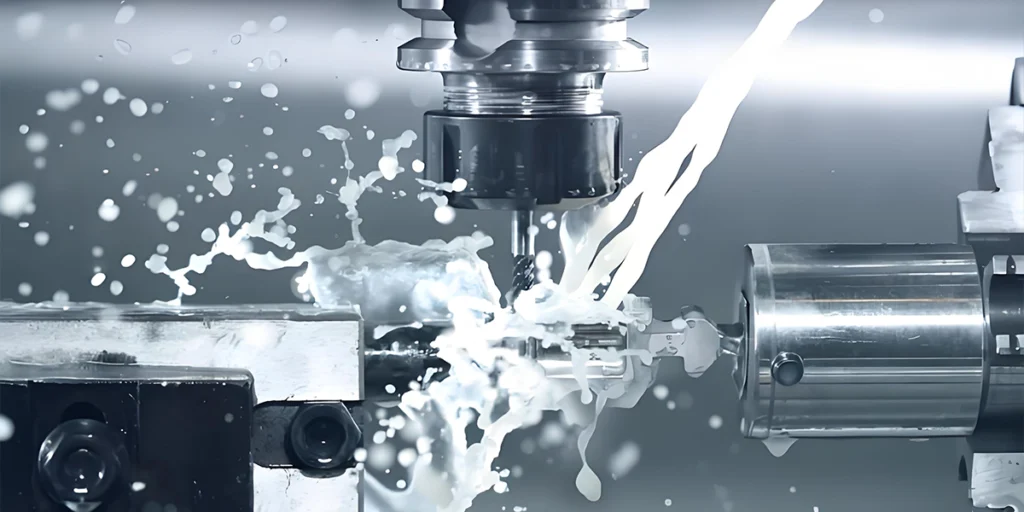
Why do many projects use both turning and milling?
Modern parts are becoming increasingly complex, and a single process may not be sufficient.
For example, a part may have a cylindrical main body, but may also require:
- Side drilling
- Milling a plane
- Hexagonal position
- Keyway
- Eccentric hole
These types of parts are usually machined by turning first and then milling, or by turning and milling in one operation. This reduces the number of setups and improves dimensional consistency.
Zhuohua Hardware’s actual manufacturing capabilities
We have long provided services to overseas clients:
- CNC turning (approximately 100 machines)
- CNC milling (300+ machines)
- 3-axis/5-axis machining
- Milling and turning composite manufacturing support
- From prototype to mass production
This means that customers do not need to determine complex process routes themselves; we can provide better manufacturing solutions directly based on the drawings.
Suitable parts types for machining
The key to choosing between turning and milling is not the name, but the geometry of the part.
If the structural assessment is accurate, the client can usually obtain:
- Lower processing costs
- Faster delivery time
- More stable quality
- Less risk of returning to work
The following is the most practical method for judgment:
Part types suitable for CNC turning
If the part unfolds around a central axis, or if the main dimensions are derived from the outer diameter, inner hole, and length, it is generally suitable for turning.
Typical parts include:
1. Shaft-type parts
- Motor shaft
- Drive shaft
- Positioning axis
- Guide shaft
These types of parts require high concentricity and stable outer diameter dimensions, making them the most efficient to machine.
2. Sleeve-type parts
- Bushing
- Bushing
- Spacer sleeve
- Coupling kit
Coaxiality of the inner and outer circles is usually required, and turning has more advantages.
3. Threads and Fittings
- Pipe fittings
- Hydraulic joint
- Brass connectors
- Nuts and screws
Turning can quickly and reliably process various thread standards.
4. Round shell type
- Aluminum casing
- Camera housing
- Lamp housing
If the body is circular, turning is generally better than milling.
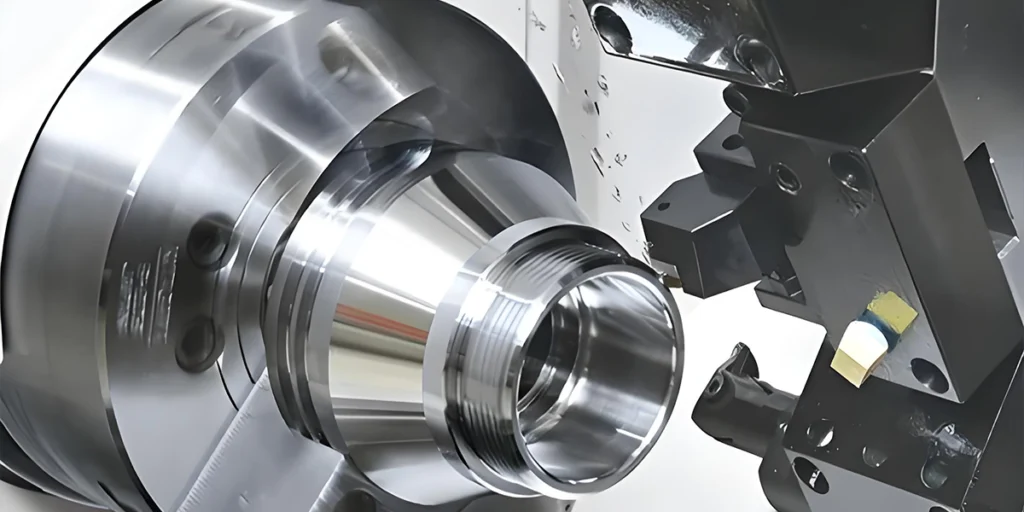
Suitable part types for CNC milling
If the parts are mainly flat, square, polyhedral, or have complex contours, milling is usually suitable.
1. Plate-type structural components
- Mounting plate
- Support plate
- Panel
2. Bracket-type parts
- L-shaped bracket
- Robot support frame
- Fixture
3. Cavity-type parts
- Aluminum alloy casing
- Battery box
- Modular box
4. Complex curved surface parts
- Medical components
- Aviation parts
- Non-standard structural components
5-axis milling is especially suitable for complex curved surfaces.
Parts that are suitable for both turning and milling
Many high-value components are modular structures, for example:
- Cylindrical body + side holes
- Shaft + Keyway
- Sleeve + Planar positioning surface
- Outer cylindrical shell + multiple perforations
For these types of parts, it is recommended to use turning + secondary milling or turning-milling combination machining, which can reduce the accumulation of errors.
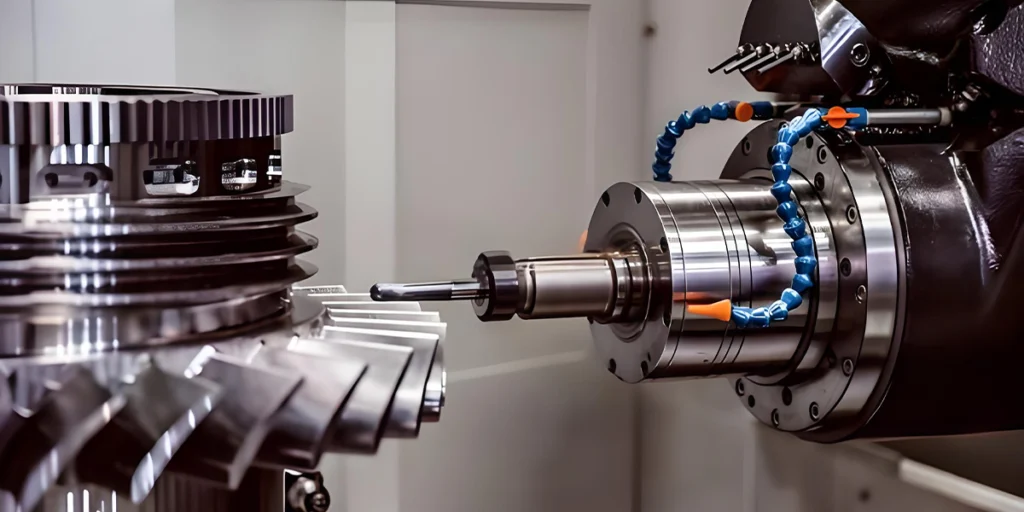
Cost vs. Delivery Time
For procurement personnel, the choice between turning and milling ultimately boils down to two core questions: How much does it cost? How long will it take to deliver? These are also the most practical criteria for judgment. Even if the part can be machined, if the cost is too high or the delivery time is too long, it is not suitable for project implementation.
CNC turning and CNC milling differ significantly in cost structure and production cycle time. Understanding these differences can help make more rational purchasing decisions.
CNC turning is usually more cost-effective
If the part is a typical rotating structure, for example:
- Shaft-type components
- Sleeve components
- Connector components
- Threaded parts
- Cylindrical outer shell
CNC turning usually has a lower unit price.
Reasons include:
- Simpler processing path
Turning mainly revolves around the outer diameter, inner hole, and end face. The machining actions are relatively concentrated, resulting in high program efficiency. - Faster single-piece cycle time
With automatic bar feeding, continuous production is possible, and its advantages are obvious when producing large quantities. - Tool costs are relatively stable.
Standard cutting tools are widely used, and their maintenance and replacement costs are relatively controllable. - Less human intervention
Mature turning projects can typically operate stably for extended periods.
CNC milling is usually more expensive
Milling involves multi-axis movement, multi-face machining, and complex toolpaths, so it can be more expensive in the following situations:
- Porous structure
- Cavity machining
- Curved surface parts
- Multiple clamping of parts
- Precision polyhedral structural components
Reasons include:
- Longer programming time
CAM programming time for complex parts can be much longer than for ordinary turned parts. - Longer processing time
The cutting tool gradually removes material, especially when removing large amounts of material, the cycle time is relatively slow. - More clamping cycles
Multi-sided processing often requires flipping or multiple steps. - Higher tool wear
This is especially noticeable when processing stainless steel and titanium alloys.
Delivery time comparison: Which is faster?
Faster turning occurs when:
- Standard shaft components
- Connector components
- Large-volume repeat orders
- Continuous production project of bar stock
Milling is faster in the following situations:
- Single-piece sampling
- Non-circular structural components
- Sheet metal parts that do not require additional turning processes
It’s not that “turning is always cheaper and milling is always more expensive,” but rather that the most suitable process is the one with the lowest total cost.
For example, if a cylindrical part is entirely machined by milling, the unit price is usually too high; while it would be unreasonable to forcibly turn a complex square cavity.
How Zhuohua Hardware Helps Customers Control Costs and Delivery Time
We support:
- CNC turning (approximately 100 machines)
- CNC milling (300+ machines)
- Milling and turning machining
- Rapid prototyping
- Production scheduling for bulk orders
- Delivery within 5 business days (depending on the project)
For our customers, we not only provide quotations, but also suggestions for more reasonable manufacturing paths.
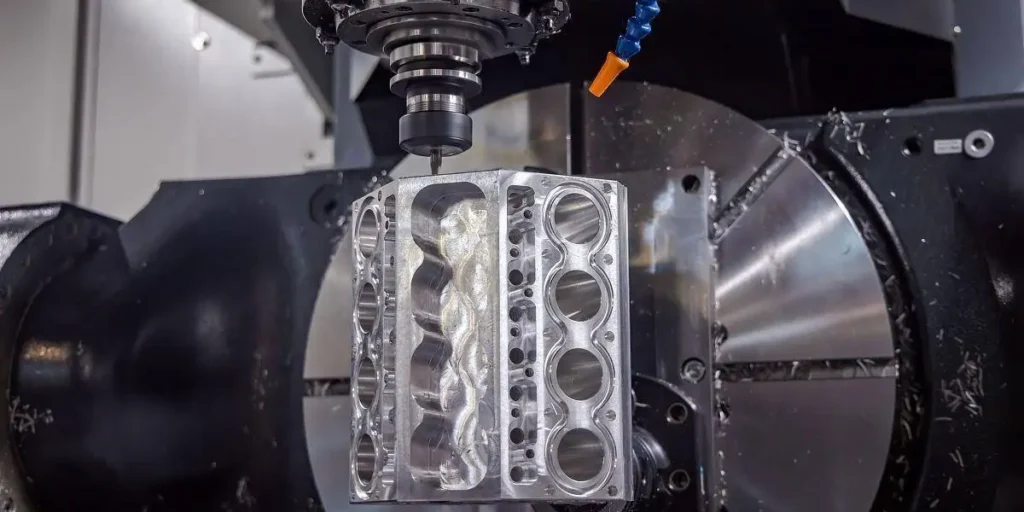
Accuracy Comparison
Many customers ask the following when requesting a quote:
- Can you do it with a tolerance of ±0.02mm?
- How to ensure the coaxiality of the holes?
- Can the consistency of dimensions across multiple surfaces be maintained?
Both CNC turning and CNC milling can achieve high-precision manufacturing, but they have different advantages in different structures.
Precision advantages of CNC turning
Turning is generally more advantageous when dealing with rotating structures, especially:
- Outer diameter
- Inner hole size
- Concentricity
- Circular jumping
- Shoulder position dimensions
Because the workpiece rotates in the spindle, it is naturally machined along the central axis, making it easier to maintain axial consistency.
Suitable for high-precision projects:
- Motor shaft
- Medical shaft components
- Sealing mating parts
- High-speed rotating components
- Precision connectors
Precision advantages of CNC milling
Milling is better suited for control:
- Flatness
- Verticality
- Hole position coordinate dimensions
- Multi-faceted relative position accuracy
- Complex contour dimensions
Especially 3-axis and 5-axis equipment can handle complex geometries.
Suitable for high-precision projects:
- Fixtures and fixtures
- Robot structural components
- Aluminum alloy casing
- Medical surgical instrument components
- Complex structural components for aerospace
Zhuohua Hardware’s precision control capabilities
We have a long history of providing precision parts manufacturing support, and our capabilities include:
- Standard accuracy controlled to ±0.02mm (depending on structure)
- Incoming material inspection
- First item confirmed
- Process inspection
- Final inspection before shipment
- Batch consistency control
For projects with high requirements, we can also develop specialized testing plans based on the drawings.
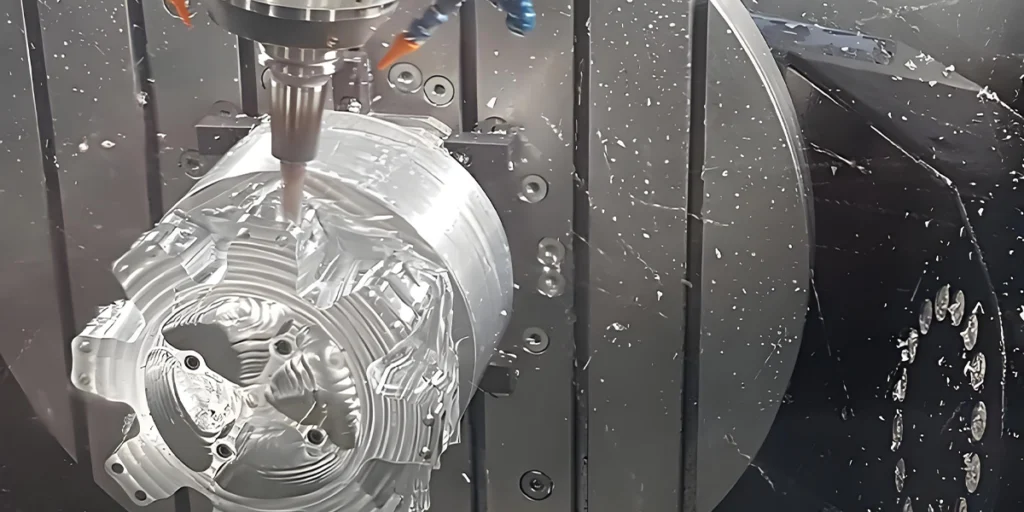
How to choose the right process
For many customers, the real difficulty is not finding a processing plant, but deciding whether the part should be CNC turned or CNC milled.
If the correct process is selected, it usually means:
- Lower unit price
- Faster delivery time
- More stable accuracy
- Lower communication costs
- Subsequent mass production went more smoothly.
If the wrong process is chosen, even if the part can be manufactured, additional costs may be incurred. Therefore, the key to selecting the correct process is not to look at what the supplier recommends, but to look at the part’s structure, quantity, precision requirements, and project objectives.
1. First, examine the component structure: This is the most important criterion for judgment.
If the part is mainly circular and axially symmetrical, CNC turning is usually the first choice.
For example:
- Shaft-type parts
- Sleeve-type parts
- Threaded connector
- Cylindrical outer shell
- Flange-type parts
Turning is naturally suitable for machining external diameters, internal holes, threads, and concentric structures, and is more efficient.
If the parts are mainly planar, polyhedral, or irregularly shaped, CNC milling is usually the preferred method.
For example:
- Stent
- Panel
- Cavity shell
- Mounting base
- Complex structural components
Milling is better suited for machining planes, holes, contours, and multiple surfaces.
2. Check if the part is a composite structure.
More and more parts are not simply round or square, but rather composite structures.
For example:
- Cylindrical body + side holes
- Shaft + Keyway
- Sleeve + Milling plane
- Connector + Hexagonal socket
For these types of parts, it is generally recommended to perform turning followed by secondary milling or a combined turning and milling process in one operation. This can reduce clamping errors and improve efficiency.
3. Check the order quantity
Small batch/sampling stage
- Fast response time
- High programming efficiency
- Easy to adjust process route
At this point, the engineering capabilities of a professional supplier are more important than the unit price.
Medium to large volume orders
- Single piece beat
- Automation capabilities
- Production capacity stability
- Long-term consistency
For example, for a large number of shaft parts, turning usually has a significant cost advantage.
4. Check the accuracy requirements.
Different structures require different precision control methods.
High-precision requirements for rotary applications:
- Outer diameter tolerance
- Internal hole fit
- Concentricity
- Jumping requirements
Turning is usually more reasonable.
High precision requirements for multi-faceted structures:
- Hole position coordinates
- Flatness
- Verticality
- Multi-faceted assembly dimensions
Milling is usually more reasonable.
5. Check the delivery time requirements.
If the project timeline is tight, the correct process route is crucial.
For example:
- Turning is generally faster for cylindrical parts.
- Plate-type structural components are faster to machine directly.
- Complex parts can reduce processing steps by using composite machining methods.
Many projects are delayed not because of slow equipment, but because of incorrect judgments in the early stages of the process.
How Zhuohua Hardware Helps Customers Choose the Right Process
It’s normal that many customers are unsure how to proceed when they send us their drawings.
We can quickly assess your drawings:
- Is turning or milling more suitable?
- Is mill-turn composite machining recommended?
- Which option is more cost-effective?
- Which route has a faster delivery time?
- Which method is more suitable for subsequent mass production?
We possess:
- CNC turning (approximately 100 machines)
- CNC milling (300+ machines)
- 3-axis/5-axis machining capability
- Accuracy up to ±0.02mm
- Prototype to mass production support
If you are evaluating whether a part should be machined using CNC turning or CNC milling , Zhuohua Hardware can assist with process selection, cost optimization, and quick quotes.