


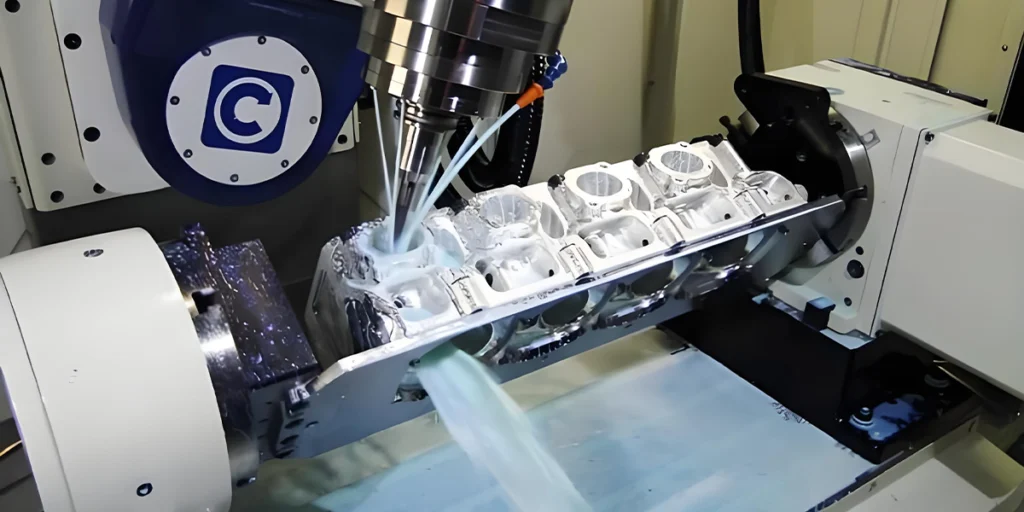
Precision Stainless Steel Machining Definition
High-precision stainless steel CNC machining refers to the manufacturing process of stainless steel parts that achieves high dimensional accuracy, high surface quality, and high consistency through advanced CNC equipment, stable machining technology, and strict quality control.
Compared to ordinary metal processing, stainless steel itself has the following advantages:
- Higher cutting resistance
- More pronounced work hardening
- Higher heat accumulation
- More prone to tool wear
Therefore, high-precision stainless steel processing relies not only on equipment, but also on processing experience, process strategies, and quality management systems.
For industries such as medical, aerospace, automation equipment, robotics, and high-end industrial equipment, dimensional errors, hole deviations, or surface defects can directly affect product performance and assembly stability.
This is why more and more OEM customers prefer to choose CNC manufacturers with professional experience in stainless steel processing.
What does high-precision machining mean?
Strict dimensional tolerances
High-precision parts typically require:
- Micrometer-level size control
- High coaxiality
- High flatness
- High repeatability
In actual projects, different parts have different precision requirements.
For example:
- Medical components place greater emphasis on surface and dimensional stability.
- Automated parts require greater attention to assembly precision.
- Aerospace components place greater emphasis on the consistency of complex structures
Zhuohua Hardware currently offers machining accuracy up to ±0.02mm, supporting the stable production of complex stainless steel parts.
Higher surface quality
Stainless steel parts often require not only dimensional accuracy, but also:
- Lower surface roughness
- No obvious knife marks
- Burr-free
- No processing burns
Especially in food processing equipment, medical devices, and structural components, surface quality directly affects the performance and visual appeal of the final product.
Therefore, high-precision machining is not only about “dimensional accuracy” but also about “machining quality”.
Batch Consistency
The real challenge is not producing a single high-precision part, but maintaining consistent quality across dozens, hundreds, or even thousands of units produced.
Batch consistency typically depends on:
- Equipment stability
- Tool life management
- Processing parameter control
- Online detection capability
- Process standardization
For long-term mass production projects, these factors are more important than single-batch processing capacity.
Why is high-precision machining of stainless steel more difficult?
The material is easy to work harden
Stainless steel tends to harden rapidly during cutting. If the tool parameters are not appropriate, it can lead to:
- Accelerated tool wear
- Surface quality deteriorates
- Size drift
- Increased thermal deformation
Therefore, stainless steel machining requires higher control over cutting parameters.
Heat is harder to release
Compared to aluminum, stainless steel has lower thermal conductivity because the heat generated during processing is more easily concentrated in:
- Knives
- Workpiece surface
- Cutting area
This makes stainless steel processing easier to achieve the following:
- Size variation
- Deformation
- Surface burns
More prone to tool wear
Stainless steel machining will continuously increase the tool load.
Especially in:
- Deep cavity machining
- Small hole machining
- Thin-walled structure
- High-hardness stainless steel
In this scenario, tool life control directly affects machining accuracy and production costs.
Therefore, to ensure long-term stable processing, established stainless steel CNC machining plants typically establish:
- Tool life database
- Processing parameter standards
- Process solutions corresponding to different materials
Tolerance control methods
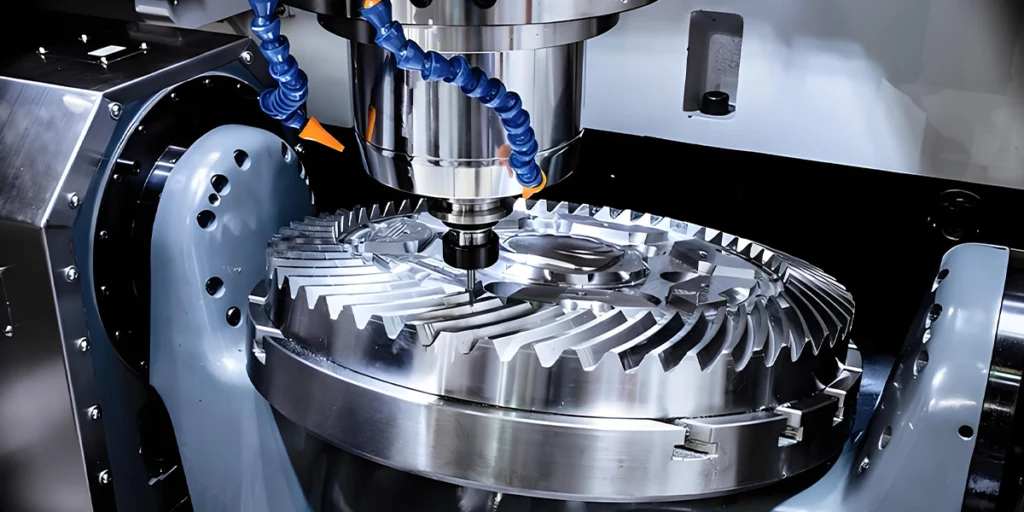
In high-precision stainless steel CNC machining, the core factor that truly determines the quality of parts is not just the equipment itself, but the entire tolerance control system.
For precision parts, even the slightest deviation can lead to:
- Assembly failed.
- Poor sealing
- Motion Interference
- Product lifespan decline
Especially in the medical device , robotics, aerospace and automation equipment industries, customers typically have stricter requirements for dimensional consistency.
Therefore, professional stainless steel processing suppliers will establish a complete tolerance control process before, during and after processing.
Reasonable processing strategy
Separation of roughing and finishing
High-precision parts are usually not formed in one piece.
- Standard processes typically include:
- Rough machining
- Semi-finishing
- Finishing
The purpose of doing this is:
- Relieve internal stress in materials
- Reduce thermal deformation
- Improve final dimensional stability
This is especially important for materials that are difficult to process, such as 316 stainless steel.
Controlling cutting parameters
In stainless steel machining, the rotational speed, feed rate, and depth of cut all directly affect the final tolerance.
If the parameters are not reasonable, it can easily lead to:
- Size drift
- Tool vibration
- Rough surface
- Work hardening
An experienced engineering team will, based on:
- Material grade
- Component structure
- Tool type
- Surface requirements
Adjust the processing parameters to the most suitable level.
The Importance of High Rigidity Equipment
High-precision stainless steel machining places extremely high demands on equipment stability. Especially in:
- Small tolerance hole position
- Deep cavity structure
- Thin-walled parts
- Long shaft parts
During the processing, equipment vibration can directly affect dimensional accuracy.
Zhuohua Hardware is equipped with large-scale CNC machining equipment, including:
- 3-axis CNC machining center
- 3+2 axis equipment
- 5-axis linkage machining equipment
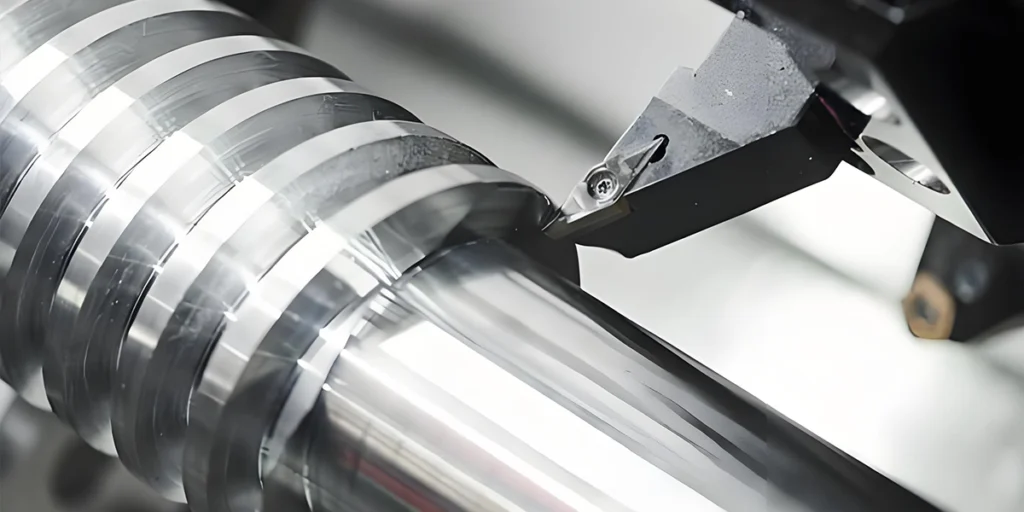
- High-precision CNC turning equipment
It can support the stable processing of complex stainless steel parts.
Tool Management System
Many machining errors actually originate from tool wear, and professional factories typically establish:
- Tool life management
- Tool compensation system
- Regular tool changing mechanism
This can avoid:
- Size gradually shifts
- Decreased batch consistency
- Unstable surface quality
Especially in mass production, tool management is a key aspect of ensuring consistency.
Tooling and Fixture Design
Fixture stability directly affects machining accuracy. Inappropriate clamping force can easily lead to:
- Part deformation
- Dimensional deviation
- Vibration problems
Therefore, for complex stainless steel parts, specialized factories usually design special fixtures for the project.
Such targeted fixture solutions often determine the final machining results, especially in:
- Thin-walled structure
- Irregular structure
- Precision positioning parts
How to avoid thermal deformation
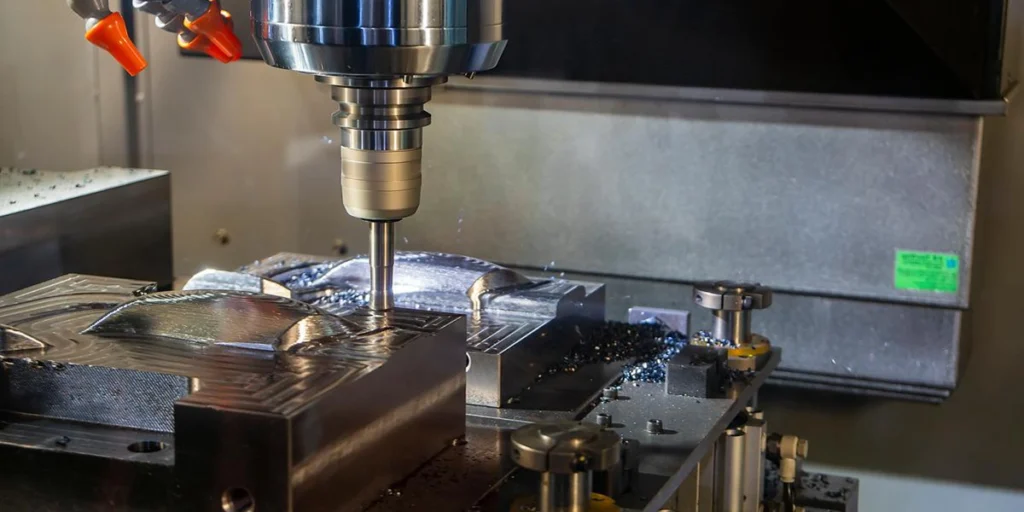
Thermal deformation is one of the most common problems in high-precision machining of stainless steel. Due to the low thermal conductivity of stainless steel, the heat generated during machining tends to concentrate in the cutting area. If thermal control is not properly managed, it can lead to dimensional drift, surface burns, or even part deformation.
Thermal deformation is particularly pronounced when machining thin-walled structures, deep-cavity parts, small precision components, and long shaft parts. Therefore, professional stainless steel CNC machining is not just about “cutting,” but also about controlling heat, stress, and material conditions.
Optimize cutting parameters
The most direct way to control heat is to set the cutting parameters appropriately.
Excessive spindle speed, excessive cutting depth, or unstable feed rate can all lead to a rapid increase in localized temperature, accelerating work hardening and tool wear. Experienced engineers typically develop different cutting strategies based on the specific stainless steel material, such as 304, 316, or 17-4PH, to reduce heat buildup.
For high-precision parts, stable machining is often more important than simply pursuing high-speed machining.
Use a stable cooling system
Coolant not only cools the air, but also affects:
- Chip removal stability
- Tool life
- Surface quality
- Size consistency
In stainless steel processing, especially in deep hole, precision hole and continuous processing scenarios, stable cooling can significantly reduce the risk of thermal deformation.
Zhuohua Hardware selects appropriate cooling solutions based on different processing structures to improve the long-term stability of complex stainless steel parts.
Phased processing
For complex stainless steel parts, they are usually not machined to the final size in one go.
Many high-precision projects use:
- Rough machining
- Semi-finishing
- Finishing
The purpose of the phased processing method is to gradually release the internal stress of the material and reduce the large amount of thermal deformation caused by a single cutting.
Reduce clamping stress
Many parts deform not entirely from cutting heat, but from the clamping method.
If the clamping force is too large, especially in the machining of thin-walled stainless steel parts, the workpiece is prone to springback deformation after being released from the clamp. Therefore, professional factories usually optimize the fixture design according to the part structure to reduce the impact of clamping stress on dimensional accuracy.
Testing and Quality Control
The real challenge in high-precision stainless steel machining is not just the “machining” itself, but how to consistently ensure that each batch of parts meets the requirements of the drawings.
For OEM customers, batch consistency, traceability, and long-term stability are often more important than the precision of individual samples. Therefore, established stainless steel CNC machining suppliers typically establish comprehensive quality control systems.
First article inspection
Before mass production begins, a first-article inspection is typically conducted. The purpose is to confirm:
- Do the dimensions match the drawings?
- Is the tolerance stable?
- Is the processing path reasonable?
- Does the surface quality meet the standards?
This allows problems to be identified before mass production, reducing the risk of rework later.
Process quality control
High-precision parts are not “inspected after machining”.
A truly stable factory will continuously monitor critical dimensions during the processing.
Especially for:
- Small tolerance hole position
- High coaxiality structure
- Precision assembly area
- Complex parts with multiple processes
Process inspection can effectively avoid batch deviations.
Precision testing equipment
High-precision machining must be matched with high-precision testing capabilities.
Professional stainless steel processing plants typically have the following equipment:
- CMM coordinate measuring machine
- Altimeter
- Roughness testing equipment
- Thread inspection tools
- Projection measurement equipment
Used to verify critical dimensions and surface quality.
Zhuohua Hardware can provide dimensional inspection reports and quality documents according to customer requirements, meeting the needs of industrial, medical, and high-end manufacturing projects.
Batch Consistency Management
For long-term mass production projects, consistency is truly crucial.
Mature factories are typically established as follows:
- Standardized processing parameters
- Tool life management
- Process recording system
- Production traceability process
This ensures consistent quality across different batches, reducing the risks associated with subsequent assembly and after-sales service for customers.
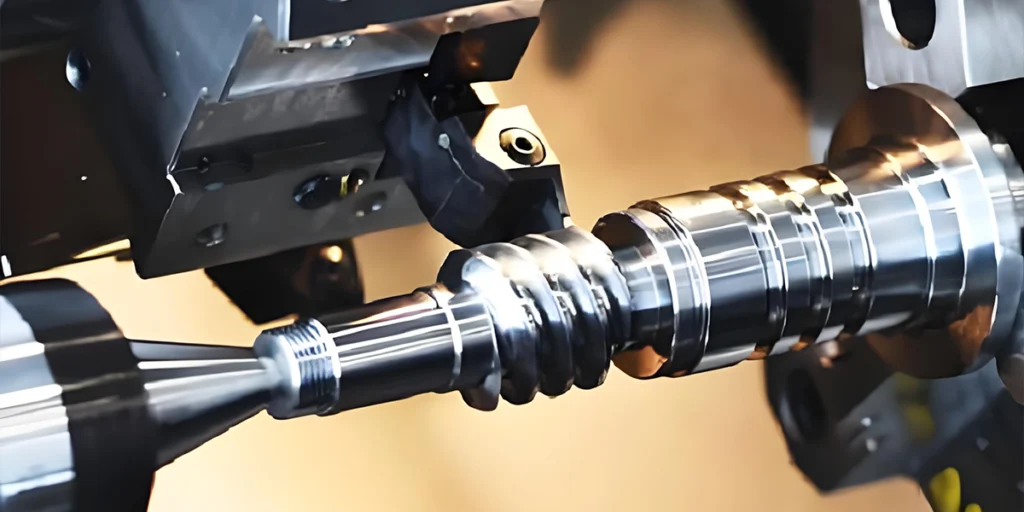
Core Competencies of Professional Factories
When looking for stainless steel CNC machining suppliers, many customers tend to overlook one point: high-precision machining capability is not just about equipment capability, but about the capability of the entire manufacturing system.
Especially for materials like stainless steel, which are difficult to process, equipment, processes, engineering experience, quality control, and production management all directly affect the quality of the final parts.
Engineering experience
Even using the same equipment, different factories may produce completely different final results.
Because stainless steel processing relies heavily on:
- Tooling strategy
- Processing sequence
- Thermal control experience
- Fixture design
- Tolerance Management
An experienced engineering team can identify processing risks in advance and optimize production plans during the DFM (Design for Manufacturing) phase.
Multi-axis machining capability
Complex stainless steel parts typically require:
- Multi-faceted processing
- Deep cavity structure
- Surface machining
- High positioning accuracy
Therefore, the capabilities of multi-axis equipment directly affect part quality and processing efficiency.
Zhuohua Hardware Support:
- 3-axis CNC machining
- 3+2 axis machining
- 5-axis linkage machining
It can reduce the need for secondary clamping and improve the machining accuracy of complex parts.
From prototype to mass production
Many factories are good at prototyping, but not at mass production.
A truly mature supplier needs to possess the following qualities:
- Rapid prototyping capability
- Small-batch trial production capability
- Large-scale stable production capacity
This allows customers to maintain a stable supply chain throughout the product development and mass production process.
One-stop manufacturing capability
Modern manufacturing projects increasingly emphasize supply chain efficiency . In addition to stainless steel CNC machining itself, customers typically require:
- Surface treatment
- Precision turning
- CNC Milling
- Assembly support
- Quality Inspection
Zhuohua Hardware provides one-stop manufacturing support from raw material processing to post-processing, helping customers reduce supply chain communication costs and shorten the overall project cycle.