


Which parts are suitable for CNC turning?
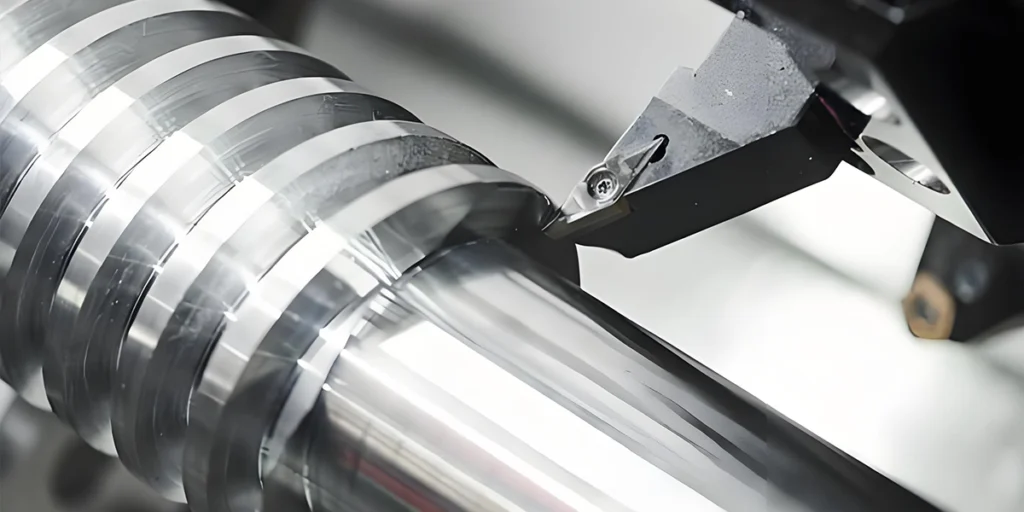
CNC turning of stainless steel is mainly used to machine parts with “rotational symmetry” as the core feature.
During turning, the material rotates at high speed while the cutting tool maintains a fixed path for machining. Therefore, this process is particularly suitable for cylindrical, shaft-shaped, and parts that require high concentricity.
Compared to milling, turning typically has the following advantages:
- Higher roundness consistency
- More stable coaxial accuracy
- Faster processing efficiency
- Lower batch processing costs
For a large number of standard round parts, turning is usually a more economical and efficient solution.
Typical CNC turning parts
Common stainless steel machined parts include:
- Shaft-type parts
- Connector
- Bushing
- Valve assembly
- Medical connectors
- Threaded parts
- Tubular parts
- Precision pin
Especially in the medical device , automotive parts , industrial automation and fluid control industries, the demand for stainless steel machined parts is very stable.
Why stainless steel is suitable for CNC turning
304, 303, 316 and 416 stainless steel are all common turning materials.
- 303 stainless steel has better machinability
- 316 stainless steel is suitable for corrosion-resistant environments.
- 416 stainless steel is suitable for high-precision mechanical parts.
For long-term use, stainless steel machined parts are generally more wear-resistant and corrosion-resistant than ordinary steel parts.
The core advantages of CNC turning
For round parts, turning stainless steel usually has significant advantages:
Higher production efficiency
Turning is well-suited for batch processing, especially for long shafts, threaded parts, and standard connectors, where the machining cycle is typically faster than milling.
More stable dimensional consistency
Turning is naturally well-suited for coaxiality control.
- Bearing fit
- Precision connection
- Sealed structure
Stable concentricity is crucial.
Lower unit cost
For large-volume production of round parts, turning typically has the following advantages:
- Less material waste
- Shorter processing time
- Lower tool wear
Therefore, the overall cost is more competitive.
Our stainless steel CNC turning capabilities
Zhuohua Hardware provides high-precision stainless steel CNC turning services , supporting:
- Maximum turning diameter: 431mm
- Maximum length 990mm
- Accuracy up to ±0.02mm
- Can process a variety of stainless steel materials
Supports rapid prototyping to mass production, suitable for global OEM industrial parts projects.
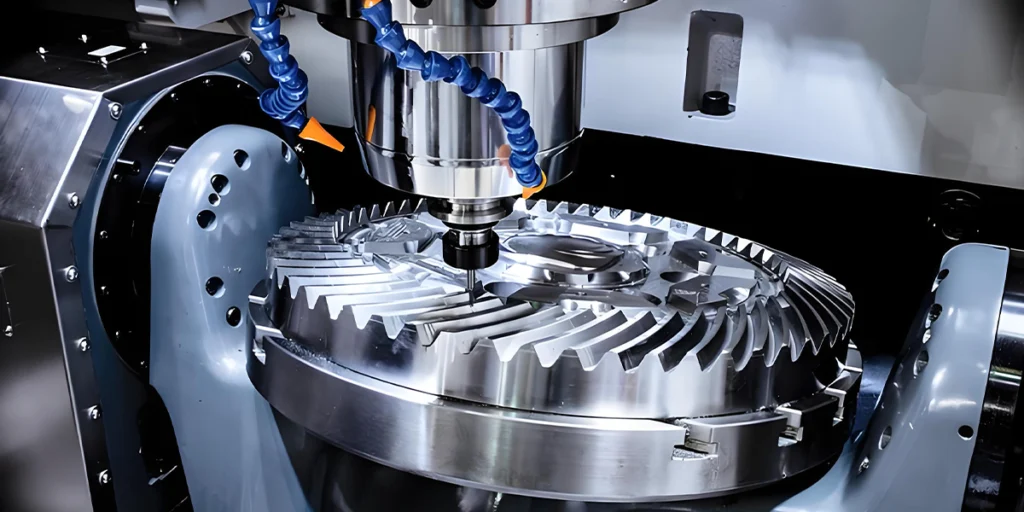
Which parts are suitable for CNC milling?
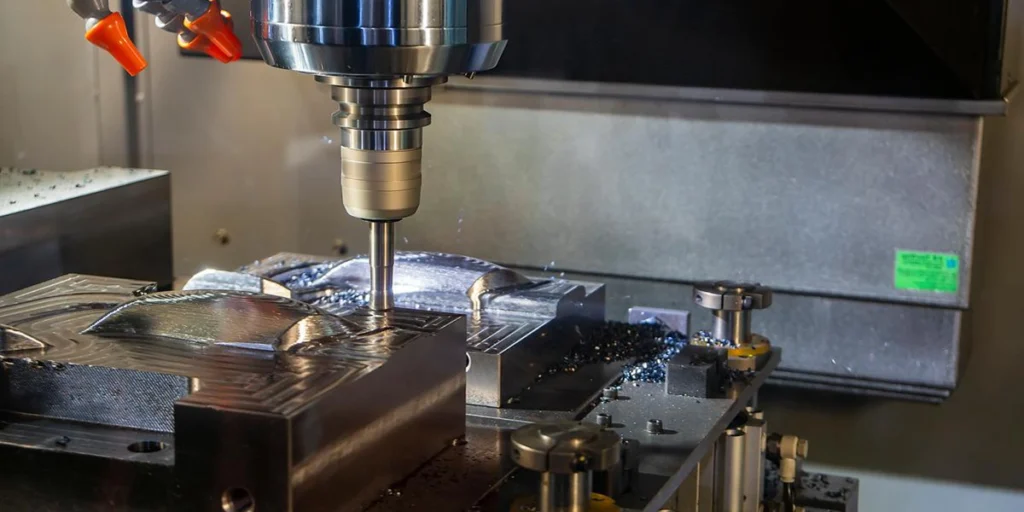
CNC milling of stainless steel is more suitable for parts with complex geometries.
Unlike turning, milling cuts a stationary workpiece by rotating a cutting tool, thus enabling the machining of:
- Plane
- Curved surface
- Cavity
- Slot
- Multifaceted structure
This makes milling an important process for manufacturing complex functional parts.
Typical CNC milled parts
Common stainless steel milled parts include:
- Structural components of automated equipment
- Medical device components
- Robot parts
- Industrial clamps
- Precision housing
- Mounting bracket
- Complex connection board
Parts with multiple facets, in particular, usually have to be machined using CNC milling.
Why do complex parts rely more on CNC milling ?
The biggest advantage of milling lies in its machining freedom, which allows it to achieve:
- Multi-angle processing
- Deep cavity structure
- Irregular outline
- Minor features
- Complex hole positions
For highly complex parts in modern industry, milling is almost irreplaceable.
3-axis, 4-axis and 5-axis CNC milling
3-axis machining
- Basic planar parts
- Conventional structural components
Lower cost.
4-axis machining
- Partial side processing
- Reduce the number of clamping operations
Suitable for parts of moderate complexity.
5-axis machining
- Complex surfaces
- Multi-angle structure
- High-precision aerospace parts
- Complex medical components
It can significantly reduce error accumulation.
Challenges of CNC Milling Stainless Steel
Compared to machining aluminum parts, milling stainless steel is more difficult. The main reasons include:
- Material hardening is obvious
- Tools wear out faster
- Concentrated heat
- More difficult to remove debris
Therefore, stainless steel milling is suitable for:
- Equipment rigidity
- Tooling strategy
- Engineering experience
The requirements are higher.
Our stainless steel CNC milling capabilities
Zhuohua Hardware provides high-precision stainless steel CNC milling services , supporting:
- 3-axis CNC milling
- 3+2 axis machining
- 5-axis linkage machining
We are capable of machining complex stainless steel structural components and support:
- Small-batch trial production
- Mass production
- Surface treatment
- Quality Inspection
- DFM optimization
Helping customers shorten development cycles and reduce overall manufacturing costs.
How to select the process for complex structures
For stainless steel parts, the choice between turning and milling is not just a matter of “equipment type,” but is essentially determined by the structure of the part.
If the parts are mainly cylindrical, such as shafts, joints, threaded parts, bushings, etc., CNC turning is usually the preferred choice because turning has advantages in terms of coaxiality control, machining efficiency and batch cost.
But if the part contains:
- Multifaceted structure
- Irregular outer contour
- Deep cavity
- Side holes
- Complex surfaces
CNC milling would be more suitable.
Many clients tend to overlook one issue at the beginning of a project: a part is not necessarily suitable for only one process.
In fact, many complex stainless steel parts in modern industry often require a combination of turning and milling to complete.
For example:
A stainless steel connector may include:
- Outer circular structure
- Thread
- Planar positioning surface
- Side holes
- Internal structure
Using a single process is not only inefficient, but may also increase clamping errors.
Therefore, in actual production, engineers usually base their decisions on:
- Part geometry
- Tolerance requirements
- Batch size
- Surface quality
- Cost target
To determine the best processing plan.
The difference between small-batch and mass production
For prototyping and low-volume production, process flexibility is often more important.
Engineers will be given priority consideration:
- Shorten delivery time
- Reduce development risks
- Reduce programming complexity
During mass production, the focus shifts to:
- Unit cost
- Automation efficiency
- Stable consistency
This is why the same part may be processed using different strategies at different stages of production.
Common challenges in complex stainless steel parts
Stainless steel parts with complex structures often face the following challenges:
- Processing deformation
- Concentrated heat
- Tool wear
- Multiple clamping errors
- Difficulty in removing debris from deep cavities
In particular, 316 stainless steel and some high-strength stainless steel materials require higher standards of equipment stability and process experience.
If the supplier lacks experience with complex stainless steel projects, the following issues can easily arise:
- Size instability
- Poor surface quality
- Processing cycle is too long
- Batch consistency issues
The Importance of DFM Optimization
In many projects, the real factor affecting cost is not materials, but structural design.
A seemingly simple small change, for example:
- Adjust inside corners
- Increase tool space
- Optimize hole layout
- Reduce deep cavity
All of these could significantly reduce the difficulty of processing.
Therefore, professional CNC machining plants usually provide DFM (Design for Manufacturing) advice at the beginning of a project to help customers optimize manufacturing costs while ensuring functionality.
In projects involving complex stainless steel parts, Zhuohua Hardware will consider the following:
- Material properties
- Processing path
- Tolerance requirements
- Clamping method
We provide manufacturability optimization advice to our clients to help reduce subsequent mass production risks.
Advantages of mill-turn machining
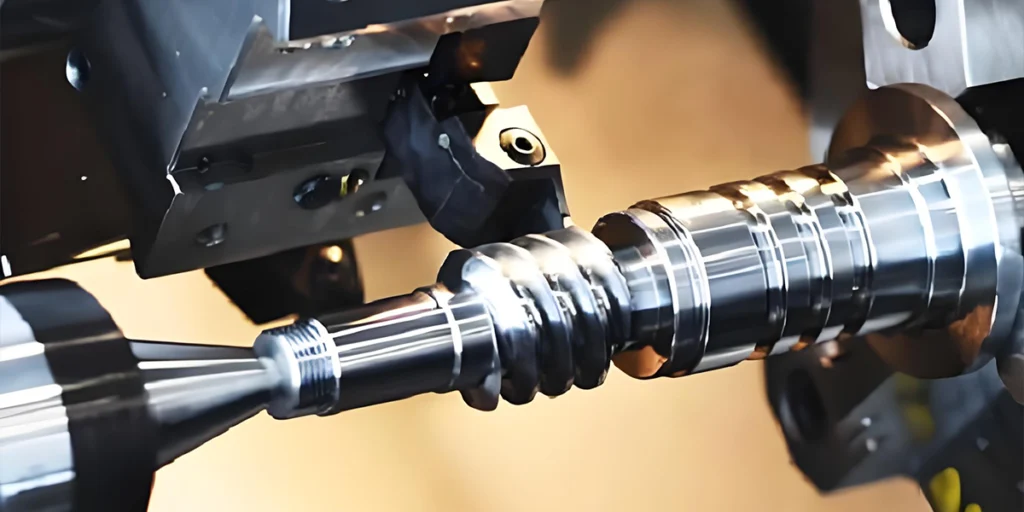
With the increasing demand for complex parts, more and more stainless steel parts are being machined using turn-mill machining. The biggest advantage of this method is that it reduces the need for repeated clamping of parts between different machines.
This is especially important for high-precision stainless steel parts, because each additional clamping operation may increase the accumulation of errors.
Reduce clamping error
In traditional manufacturing methods, a complex part might require:
- Turn first
- Remilling
- Re-drilling
- Secondary positioning
Each reclamping may have the following effects:
- Coaxiality
- Flatness
- Hole position accuracy
Milling and turning machines can complete more processes in a single setup, thereby improving overall accuracy and stability.
Improve processing efficiency
Milling and turning can also significantly reduce:
- Process changeover time
- Manual handling time
- Secondary calibration time
For medium and large batch projects, the efficiency improvement is very significant.
Especially in:
- Medical parts
- Automation parts
- Aviation connectors
- Precision mechanical components
In industries such as [unspecified], milling and turning composite machining is becoming increasingly common.
More suitable for complex stainless steel parts
Stainless steel is inherently difficult to process, and traditional multi-process methods often increase the following:
- Risk of thermal deformation
- Surface damage risk
- Accuracy deviation
Milling and turning can improve the overall quality consistency of parts through a more continuous machining process.
Our milling and turning capabilities
Zhuohua Hardware supports integrated machining solutions for stainless steel CNC and complex parts .
We can flexibly select based on the structure of the customer’s parts:
- CNC turning
- CNC milling
- Milling and turning
- Multi-axis machining
For complex stainless steel OEM parts projects, we can also provide:
- DFM Analysis
- Rapid prototyping
- Small-batch trial production
- Mass production
- Surface treatment and inspection support
It meets the one-stop manufacturing needs from development to mass production.