


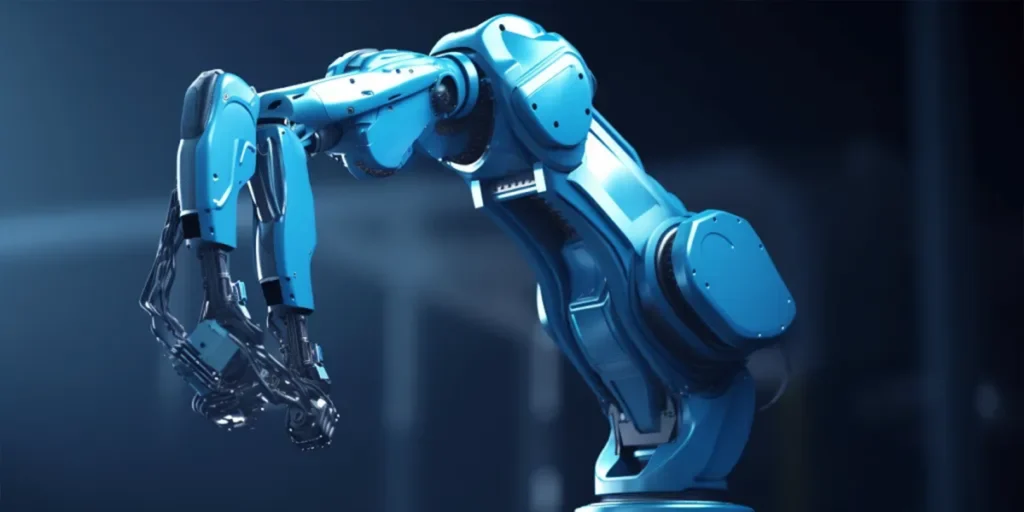
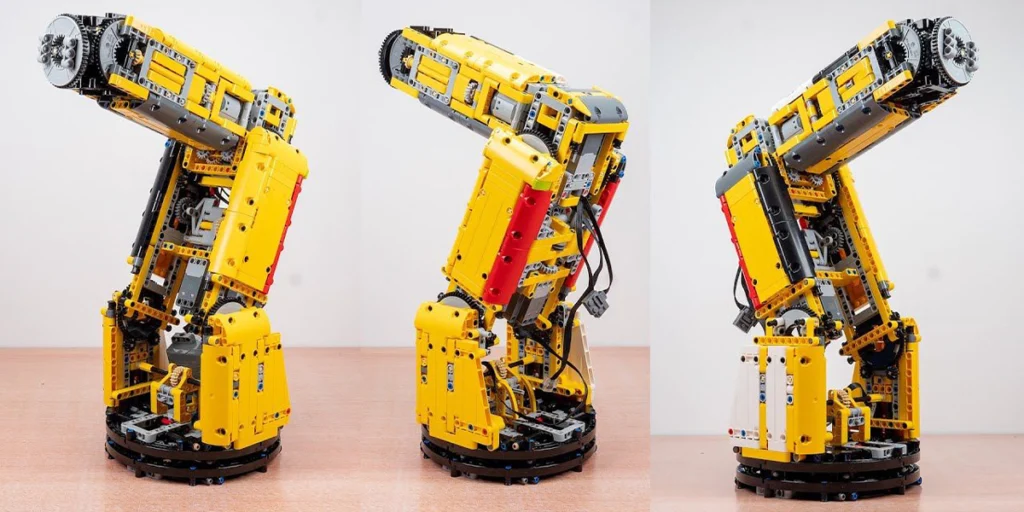
An articulated robotic arm is composed of multiple mechanical and transmission components, each of which performs a different function and together determines the overall motion capability, precision, and stability of the machine.
Structurally, a typical robotic arm mainly consists of the following core components:
- Joint system (shoulder joint, elbow joint, wrist joint)
- Linkages and structural components
- Gears and transmission systems
- End effector
- Sensors and mounting structure
These components form a complete kinematic chain, realizing the entire process from power input to end-effector execution.
Joint system (shoulder joint, elbow joint, wrist joint)
Joints are the core motion units of a robotic arm. Each joint provides a degree of rotational freedom, and complex movements are achieved through the combination of multiple joints.
Commonly classified as:
- Shoulder joint: Connects the base to the upper arm, bears the weight of the entire machine, and is a high-load component.
- Elbow joint: Connects the upper arm and forearm, responsible for expanding the range of motion.
- Wrist joint: Located at the end of the wrist, primarily used for posture adjustment and fine motor skills.
Joints are typically integrated with:
- Electric motor
- Gear reducer
- Bearing system
- Output structure
Its structural features are:
- High integration
- High-precision fit
- High requirements for coaxiality and assembly precision
In practical applications, the joint portion directly affects:
- Motion accuracy
- Repeatability
- Overall stability
Therefore, joint-related components are usually among the most demanding in terms of machining requirements for robotic arms.
The joint system determines “how the robotic arm moves” and is the most critical and complex part of the entire machine. Its performance depends not only on the design but also on the machining precision and assembly quality of the components.

Linkage structure and main frame
The linkage structure is the main part of the robotic arm, used to connect the various joints and transmit power from one joint to the next.
Structurally, a connecting rod typically includes:
- Upper Arm
- Forearm
- Various connecting plates and supporting structures
These components together form the skeleton of the robotic arm, determining its overall rigidity and working range.
Structural features
Compared to joint systems, linkage structures do not perform drive functions, but they are equally important to the overall performance of the machine.
- It needs to have sufficient strength and rigidity.
- At the same time, minimize weight as much as possible (reduce inertia).
- Ensures no deformation during long-term operation
The design typically employs the following:
- Hollow structure or reinforcing rib design
- Lightweight materials (such as aluminum alloys)
- Integrated structure reduces assembly errors
Impact on accuracy
The machining quality of the linkage structure directly affects the overall precision of the robotic arm. For example:
- Deviations in parallelism and perpendicularity can lead to errors in motion trajectory.
- Insufficient structural rigidity can cause micro-deformation under load.
- Multi-stage linkages amplify cumulative errors.
These issues will ultimately be reflected in the positioning accuracy of the end effector.
Processing requirements
Typical connecting rod parts usually have the following machining characteristics:
- Larger size but requires stable precision
- Multi-faceted machining (requires multi-axis or multiple clamping operations)
- There are many mounting surfaces and mating holes.
Key control points include:
- Hole position accuracy and positional accuracy
- Flatness of the mounting surface
- Overall structural consistency
Therefore , it can be seen that although the linkage structure itself does not participate in the drive, it determines the rigidity of the robotic arm and its precision transmission capability. Its manufacturing quality directly affects the stability and long-term performance of the entire machine.
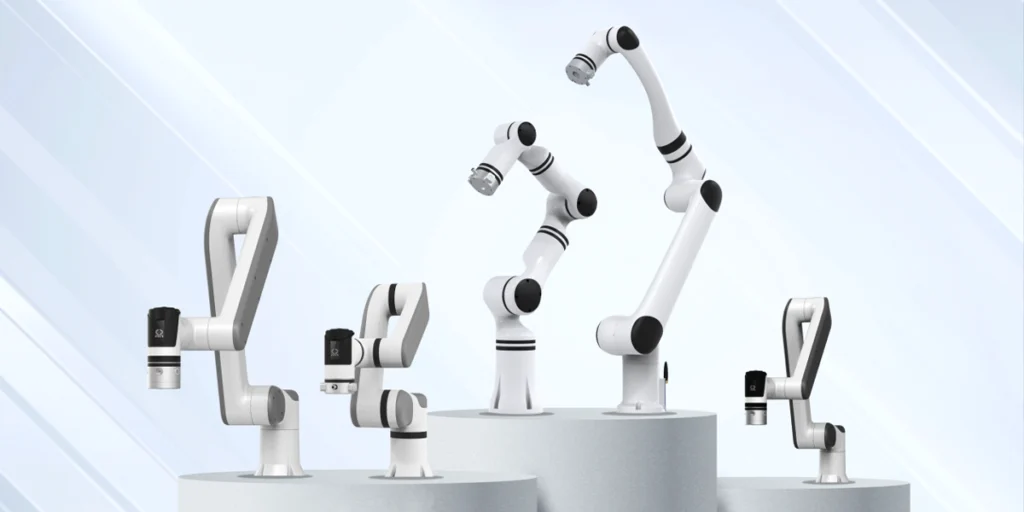
Gears and transmission systems
Gears and transmission systems are used to transmit power inside the robotic arm and to convert speed and torque. They are a key component connecting the motor and the actual moving structure.
In articulated robotic arms, common transmission methods include:
- Gear transmission
- Planetary transmission structure
- Internal transmission components of the reducer (RV, harmonics)
These structures are typically integrated inside the joint, forming a complete drive unit together with the motor and output shaft.
Structural features
The core function of the transmission system is:
- Convert the motor output into torque suitable for joint use.
- Ensure a smooth and controllable movement process
- Reduce vibration and energy loss
Therefore, these types of components typically have the following characteristics:
- High-precision meshing requirements
- High surface quality requirements
- Wear resistance during long-term operation
Impact on robotic arm performance
The quality of the transmission system directly affects the performance of the robotic arm, for example:
- Gear errors can lead to uneven transmission.
- Excessive gap can affect positioning accuracy.
- Poor meshing can cause vibration and noise.
In multi-joint systems, these problems are amplified at each stage, ultimately affecting the accuracy of end-effector execution.
Processing and manufacturing requirements
Gears and transmission components are typical high-precision parts, requiring high manufacturing standards.
- Tooth profile accuracy and meshing accuracy
- Coaxiality and roundness control
- Dimensional stability after heat treatment
- Surface roughness control
At the same time, these types of parts usually require:
- Precision turning and grinding processes
- Strict tolerance control
- Stable batch consistency
Therefore, it can be seen that gears and transmission systems determine the stability and accuracy of power transmission, and are one of the key foundations of robotic arm performance. Their machining quality directly affects the robotic arm’s accuracy, noise level, and service life.
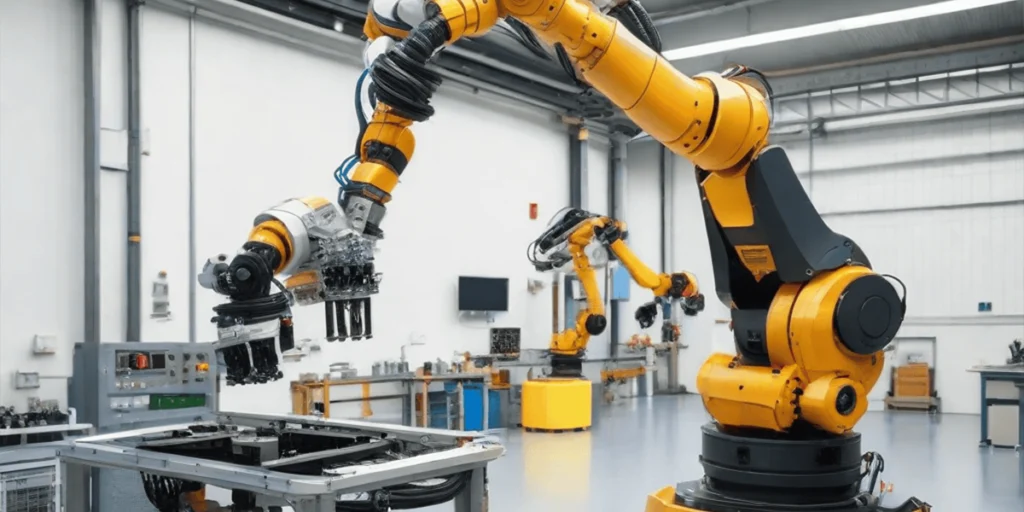
End effector
The end effector is the part of the robotic arm that directly contacts the workpiece and is used to complete specific tasks. It is the final link in realizing the function of the robotic arm.
Depending on the application scenario, end effectors come in various forms, with common types including:
- Gripper (used for grasping and moving)
- Vacuum suction cups (for lightweight handling)
- Welding tools (such as welding torches)
- Grinding and cutting tools
- Custom tooling and fixtures
Structural features
End effectors typically have the following characteristics:
- Customized design for specific processes
- High replacement frequency (adaptable to different tasks)
- Relatively compact structure
In practical applications, the end effector needs to consider the following:
- Functionality implementation capability
- Weight control (affects overall machine load)
- Ease of installation and replacement
Impact on robotic arm performance
Although the end effector is located at the end of the system, its design directly affects the overall performance of the robotic arm:
- Excessive weight increases joint load.
- Structural instability can affect accuracy.
- Installation errors can lead to positioning deviations.
Especially in precision operation scenarios, the manufacturing quality of the end effector directly determines the operation result.
Processing characteristics
End effectors are typically custom-made parts, and their manufacturing requirements have the following characteristics:
- Primarily small-batch or single-piece production
- Complex structure, mostly non-standard design
- A balance needs to be struck between strength and weight
Key control points include:
- Installation interface accuracy
- Functional surface processing quality
- Overall structural consistency
Therefore, it can be seen that the end effector determines what the robotic arm “does,” but its design and manufacturing quality directly affect the specific application effect.
In actual production, these types of parts often need to be customized according to specific processes, requiring high processing flexibility and precision.
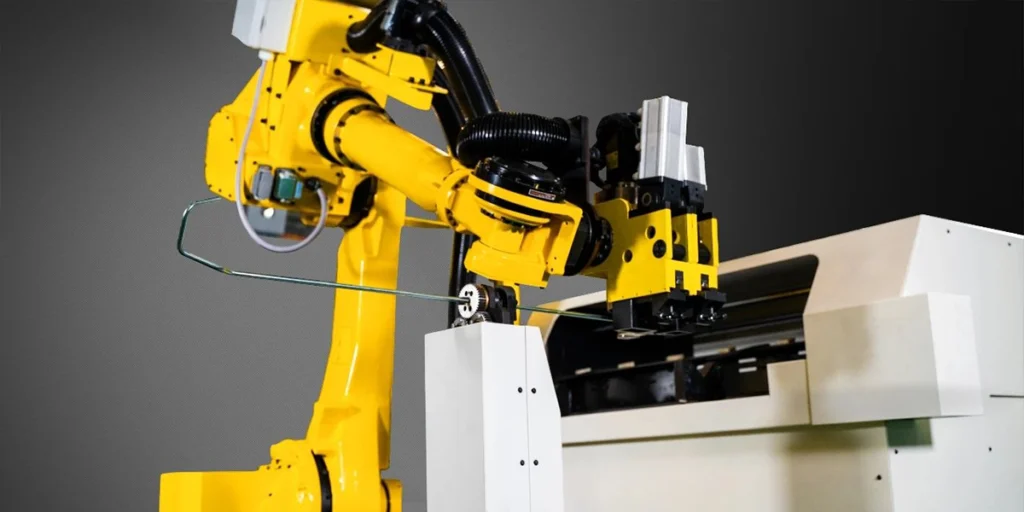
Sensors and mounting structure
Sensors are used to acquire various status data during the operation of a robotic arm, and are an important component for achieving precise control and stable operation.
Common types include:
- Encoder (position and angle feedback)
- Force/torque sensor
- Vision system (camera)
- Proximity or position sensor
These sensors themselves do not participate in structural support, but their installation method directly affects data accuracy.
The function of the installation structure
To ensure stable and accurate operation of the sensor, a specialized mounting structure is usually required, such as:
- Sensor bracket
- Mounting base and connecting plate
- Adjustment and positioning structure
These structures need to ensure:
- Accurate installation location
- No offset occurs during long-term operation
- Unaffected by vibration and deformation
Impact on accuracy
The accuracy of a sensor depends not only on its own performance, but also on the quality of the manufacturing process of the mounting structure.
- Uneven mounting surfaces can affect measurement results.
- Positional deviations can lead to inaccurate feedback data.
- Structural loosening can cause signal fluctuations.
In high-precision robotic arms, these kinds of errors are also amplified, ultimately affecting the overall control performance.
Processing requirements
Sensor mounting components typically have the following characteristics:
- Small in size, but requires high precision.
- Strict requirements for mounting surface and hole positions
- Requires good consistency in repeated installations
Key control points include:
- Hole position accuracy
- Flatness of the mounting surface
- Stability after multiple assembly
Although these parts are small in size, they have a direct impact on the overall accuracy and stability of the robotic arm.
Professional precision parts manufacturer
If you have any needs for machining robotic arm-related parts, we can provide you with high-precision CNC machining services . We are a professional precision parts manufacturer with extensive experience in machining robot structural components, joint components, transmission systems, and various custom parts.
For all core components of robotic arms, including joint structures, linkages, gear transmissions, end effectors, and sensor mounts, we can manufacture them according to strict tolerances and assembly requirements to ensure the precision, stability, and consistency of parts.
It supports a variety of materials, including aluminum , stainless steel , tool steel , titanium alloy , and engineering plastics , and can deliver stably from prototype prototyping to mass production.
If you are developing a robot project, you can submit your drawings or requirements directly, and we will provide you with processing solutions and quotations.